Bungo Noriyuki
豊後則行 (Bungo Noriyuki)
Lineage: the signature does not state the generation
Line of swordsmiths of the Takada school in Bungo, active from the Kanbun era (1661-1673) and throughout the Edo period.
Profile
Noriyuki (則行) was a name handed down within the Fujiwara branch of the Takada (高田) school, based in Bungo province in Kyūshū. School tradition holds that the first to use it worked around the Kanbun era (1661-1673), was called Abe Saburōemon (阿部三郎右衛門) and trained under Aizawa Masayuki (藍沢正行); a second Noriyuki, named Chōjirō (長次郎), appears around the Tenna era (1681-1684), and the line remained active through the Edo period. They signed Bungo jū Fujiwara Noriyuki (豊後住藤原則行) or Bungo Takada jū Noriyuki (豊後高田住則行), the Fujiwara surname being the one the Takada smiths revived in the Edo period. Like the rest of the school at the time, they worked across several traditions, from Yamashiro-style suguba to Bizen-flavoured gunome and chōji, with touches of Sōshū and Mino, on solidly built blades with a high shinogi.
Swords available
-
Noriyuki
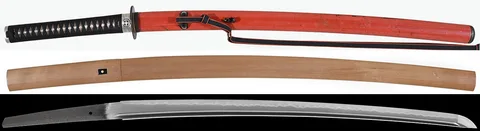
Shintō katana signed by Fujiwara Noriyuki of Bungo province, with an NBTHK Tokubetsu Hozon Tōken certificate. It comes with a red-lacquer koshirae and also a shirasaya. Shintō katana signed "Bungo jū Fujiwara Noriyuki", from the Takada group of smiths in Bungo province, active from Muromachi times to the end of the Edo period; the original seller places the start of the Noriyuki line around the Kanbun era and follows it through six generations. The blade measures 67 cm nagasa and 1.5 cm sori, with 3.75 cm motohaba and 2.35 cm sakihaba. The photographs show a suguha hamon with gentle undulations, a bōshi that turns back evenly and a polish that lets the edge be read without difficulty. The nakago, dark and evenly patinated, keeps a single mekugi-ana and the full signature, with no sign of shortening. The NBTHK origami, photographed, certifies the Tokubetsu Hozon Tōken level. The photographs also record a complete mounting — iron tsuba with relief work and gilt accents, tsuka wrapped in black ito over same, light-metal fuchi-kashira bearing a cross-in-circle mon, silver habaki and red-lacquer saya with its sageo — together with a wooden shirasaya.
56.3/100
€7,490