Guide
What you need in order to read a record: what each part is called, what separates one period from the next, and what each NBTHK paper certifies.
-
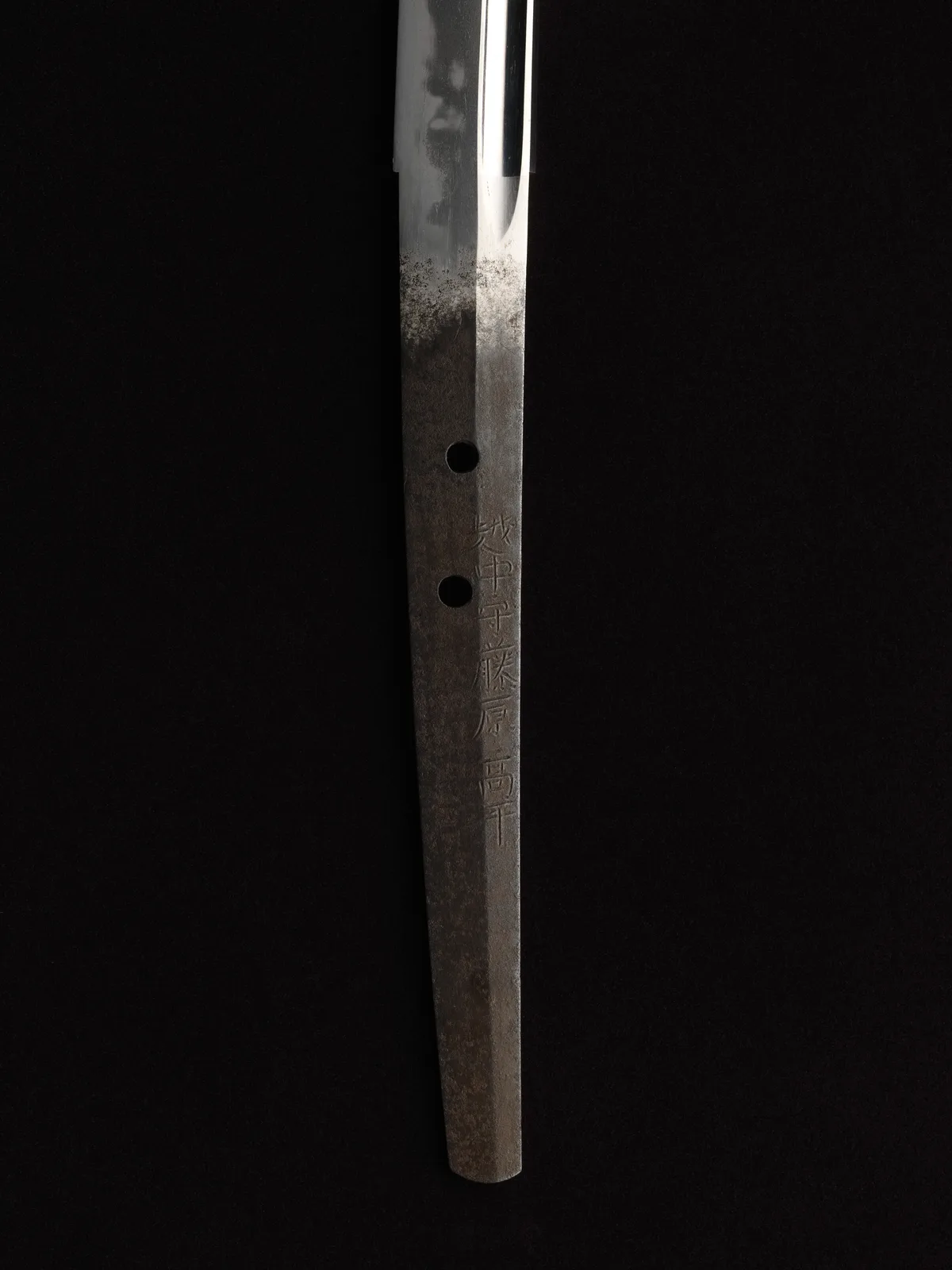 Anatomy of the katana
A katana is a composite object: a forged blade that may be centuries old, and a mounting that is almost never of the same date. Naming its parts is the first step to reading a listing or a certificate, because nearly all collecting vocabulary describes geometry — where the point ends, how much of the original tang survives, which fitting holds which. These are the thirty-two terms that come up most.
-
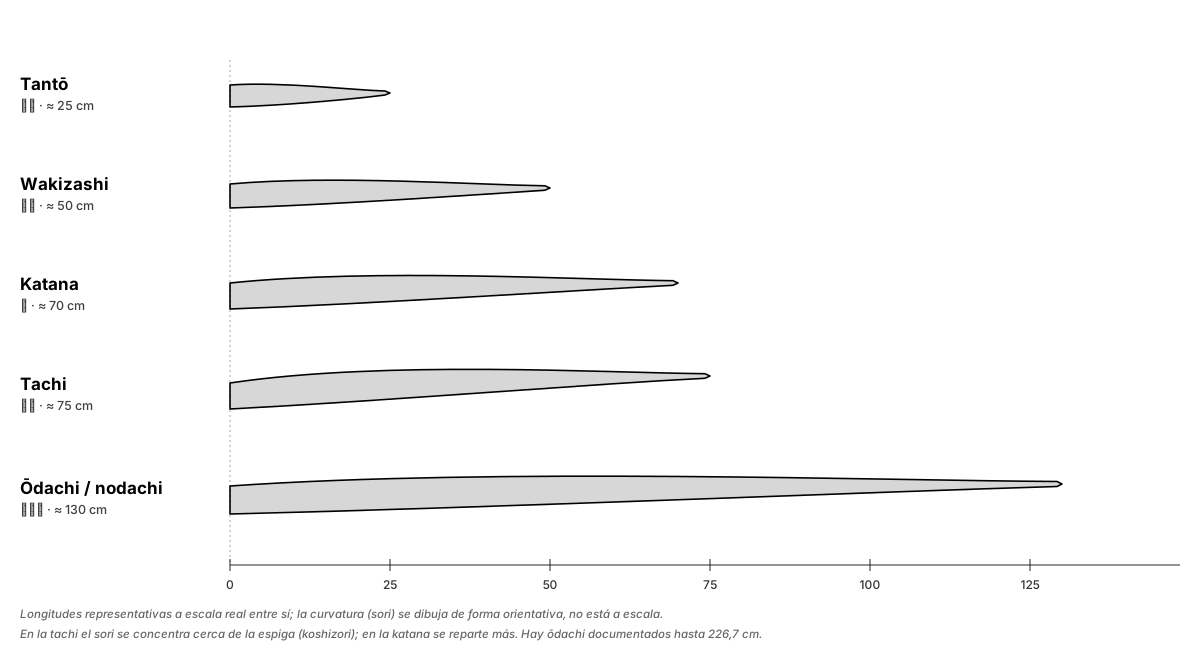 Blade types
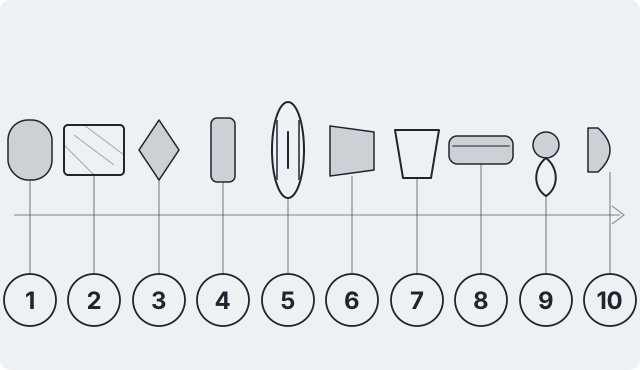
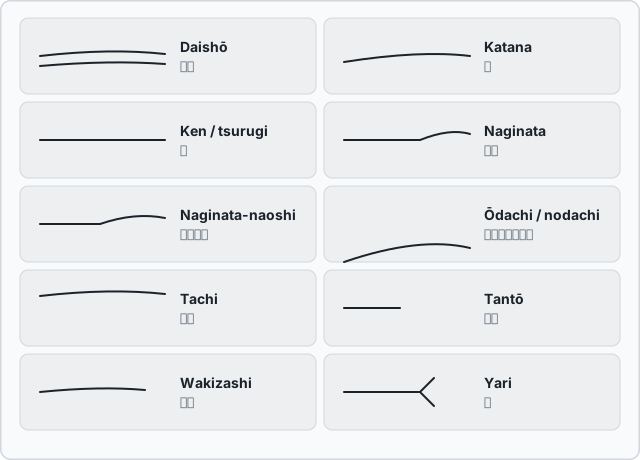
Japanese swords are classified first by blade length, then by the mounting they were worn in, and only last by the cross-section of the blade. Knowing which family a blade belongs to places its date and explains what it was made for. Here are the forms that turn up in catalogues, with their measurements in centimetres and in shaku.
-
 Mounting styles (koshirae)
A mounting is an object with a history of its own: it is dated, attributed and certified separately from the blade it holds. A blade from 1500 may sit in an 1850 mounting with nothing out of place, and recognising the style tells you its period and how the sword was carried. These are the ensembles named in catalogues, and what lies behind the label «period mounting».
-
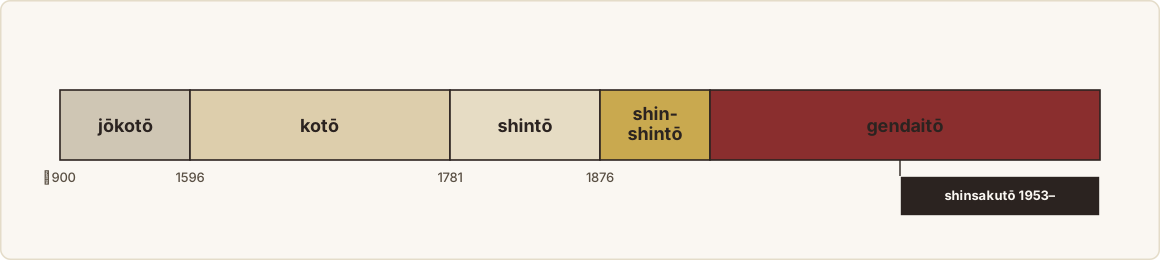 Periods: from jōkotō to shinsakutō
Japanese swords are sorted into a handful of classes that are not style labels but technical and legal boundaries: each one marks a change in the steel, in the shape of the blade, or in the law that governed it. Placing a blade in its class is the first step of any kantei (鑑定), and it sets what you can expect from its steel, its outline and its papers.
-
 The gokaden and the schools
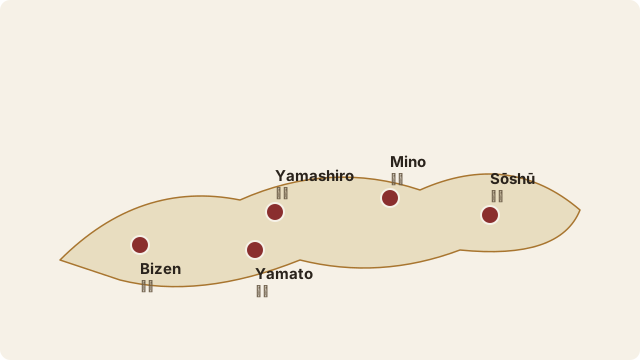
The gokaden (五箇伝), "the five traditions", groups the kotō schools by province: Yamashiro, Yamato, Bizen, Sōshū and Mino. It is not a chronology but an appraisal tool: you read the steel, the temper line and the outline, settle on a tradition, and only then work down to school and smith. It serves blades from the mid-Kamakura to the Nanbokuchō well, and blurs as soon as shintō begins.
-
 Famous smiths, period by period
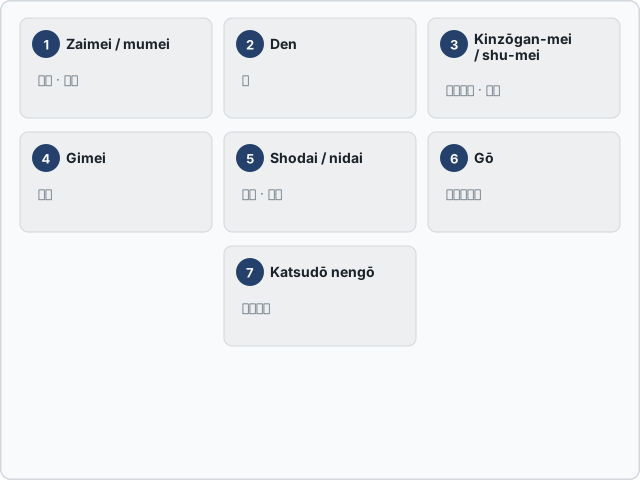
A thousand years of swords leave a few thousand names and a few dozen that everyone ends up knowing. This is a quick reference, ordered by period, with the working dates the surviving blades support, each smith's school, and the concrete reason he matters. At the end, the cutting-ability lists published by the Yamada Asaemon family.
-
 NBTHK papers
A paper does not turn a blade into a work of art: it records what a panel decided about it on a particular day, against published criteria. Knowing who issued it, at what level and in what year is half of reading a listing. The other half is knowing what it does not certify: the Japanese registration of a sword, for instance, says nothing about its authenticity.
-
 Glossary of the Japanese sword
Over 170 terms grouped by category (blade types, shape, forging, hamon, bōshi, tang, carvings, mounting, fittings, assessment, papers and periods), and alphabetically within each one. This is the closed vocabulary used to write dealers' descriptions and Japanese certificates; knowing it is enough to read a full description and see what it claims and what it leaves out. Long vowels carry a macron, as in jūyō or tokubetsu, and terms that can be drawn or photographed carry a figure alongside the text.