Famous swords and legends
A handful of Japanese swords have a name of their own, a chain of owners that can be followed and a legend that often outweighs the history. This topic keeps the two apart: what a meibutsu is and who catalogued them, which are the five swords under heaven and where they are today, what is known about Masamune and Muramasa beyond the myth, and which famous swords have been lost. Where the story is a legend or the opinion of a single author, it says so.
What a meibutsu is
A meibutsu (名物), a “famous thing”, is strictly speaking a sword listed in the Kyōhō meibutsuchō (享保名物帳), the catalogue of famous swords that the shōgun Tokugawa Yoshimune (徳川吉宗) commissioned from the Hon'ami (本阿弥) family of appraisers. The order dates from 1718 and the catalogue was closed in 1719 under Hon'ami Kōchū (本阿弥光忠). The original does not survive: what exists are copies from several branches that do not fully agree, so every count should be read “according to the copy”.
The most quoted count gives 248 swords, of which some eighty had already been lost when it was written, almost always in fires; with the later supplements the total reaches 274. Some famous pieces are missing for a very practical reason: certain daimyō did not declare their best blades for fear that the shogunate would keep them. Each entry gives the sword's name, the smith, the length and the chain of owners, and the nickname attached to the smith's name —Heshikiri Hasebe, Daihannya Nagamitsu— nearly always hides an anecdote.
The sword as political currency
Long before the catalogue, the sword was the expected gift between warriors. In the Muromachi period there were fixed occasions for giving one —New Year, a visit from the shōgun, a succession, a promotion— and etiquette manuals explained which blades were worthy of being offered to a superior: neither shortened nor unsigned, and from a short list of classical smiths. From the late Muromachi period written valuations were also set, daizuke (代付), and in the Edo period the Hon'ami recorded them in their certificates, origami (折紙; see “NBTHK papers”). A few pieces were declared “priceless”, mudai (無代), the highest distinction there was.
The Daihannya Nagamitsu (大般若長光) is the textbook case: its Muromachi valuation matched in number the six hundred scrolls of the Daihannya-kyō (大般若経) sutra, hence the name. It passed from the Ashikaga shōguns to Oda Nobunaga, who gave it to Tokugawa Ieyasu after the battle of Anegawa (1570); Ieyasu handed it to Okudaira Nobumasa for his defence of Nagashino castle (1575). Today it is a national treasure in the Tokyo National Museum.
The five swords under heaven (tenka goken)
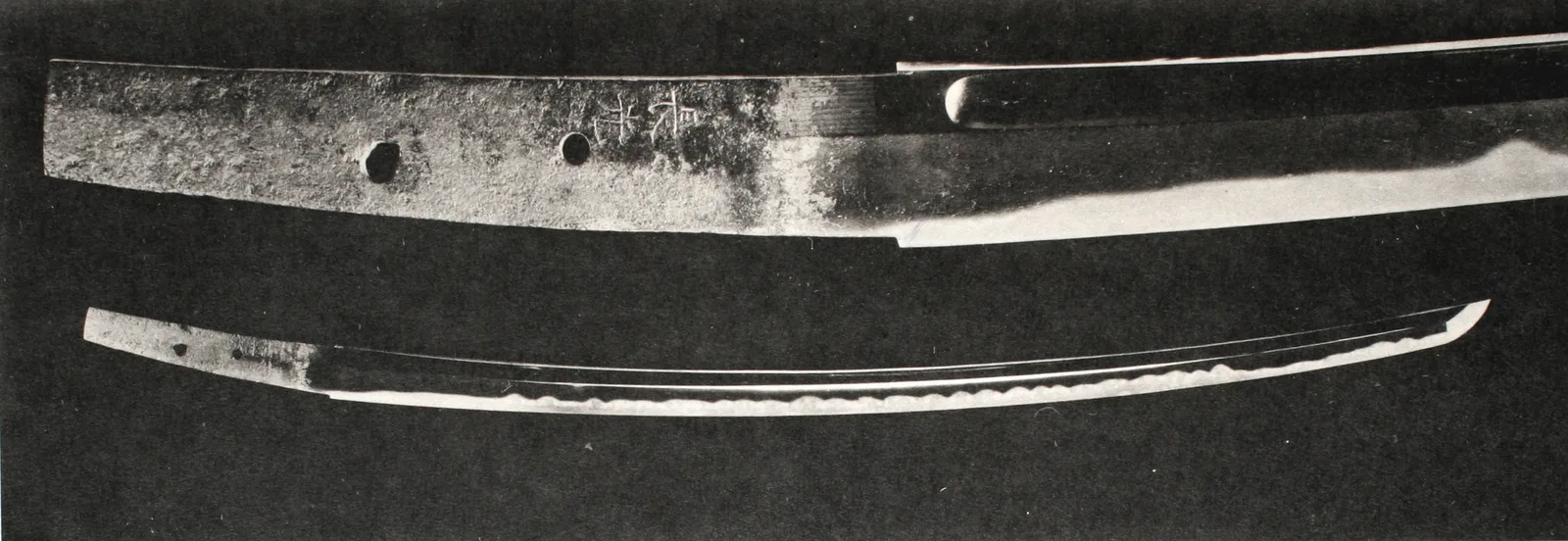
The tenka goken (天下五剣), “the five swords under heaven”, are the most quoted group of famous swords. Two things are worth knowing before the list. First, the group is from the Edo period, not the Muromachi. The earliest known text that brings the five together is an Edo manuscript related to the Kyōhō catalogue, the Shoke meikenshū (諸家名剣集), and no document supports the tradition of an older origin. Second, they are not “the five best”. The expert Satō Kanzan described them as masterpieces with an illustrious history behind them, and the historian Hiroi Yūichi points out that none of them is from Bizen, the tradition that produced the most swords.
| Sword | Smith | Where it is today | Status |
|---|---|---|---|
| Dōjigiri (童子切) | Yasutsuna (安綱), Hōki province | Tokyo National Museum | National treasure, kokuhō (国宝) |
| Mikazuki (三日月) | Sanjō Munechika (三条宗近), Kyoto | Tokyo National Museum | National treasure |
| Ōdenta (大典太), also read Ōtenta | Miike Mitsuyo (三池光世), Chikugo province | Maeda Ikutokukai Foundation | National treasure |
| Onimaru (鬼丸) | Awataguchi Kunitsuna (粟田口国綱), Kyoto | Imperial collection | Property of the Imperial Household, gyobutsu (御物), outside the cultural property system |
| Juzumaru (数珠丸) | Tsunetsugu (恒次); whether Ko-Aoe or Ko-Bizen is debated | Honkō-ji (本興寺) temple, Amagasaki | Important cultural property, jūyō bunkazai (重要文化財) |
Legend and fact for each one
- Dōjigiri. Legend: with it Minamoto no Yorimitsu (源頼光) beheaded the ogre Shuten Dōji (酒呑童子) on Mount Ōe. Fact: the legend was written down in the Muromachi period, centuries after the blade, and the chain of owners before the Edo period has no contemporary document. It passed to the State in 1963.
- Mikazuki. Legend: the shōgun Ashikaga Yoshiteru is said to have fought with it in his last battle, in 1565. Fact: no source on that death names the sword; its secure history begins with Kōdai-in, the widow of Toyotomi Hideyoshi, who bequeathed it to Tokugawa Hidetada in 1624. The name, “crescent moon”, comes from the crescent-shaped marks in its temper, uchinoke (打除け).
- Ōdenta. Legend: laid beside the bed of a sick daughter of the Maeda, it healed her; once returned, the illness came back, until the third time the family kept it as a gift. It was stored in a storehouse where, people said, crows would not perch. Fact: the Maeda of Kaga kept it throughout the Edo period, and today their foundation looks after it.
- Onimaru. Legend: according to the Taiheiki (太平記), the sword left its scabbard by itself and cut down the small demon tormenting a Hōjō regent in his dreams; the versions do not agree on which regent. Fact: it passed through the Ashikaga shōguns and is today the property of the Imperial Household.
- Juzumaru. Legend: it was the sword of the monk Nichiren (日蓮), who tied a Buddhist rosary, a juzu, to its hilt, which gives the name. Fact: it disappeared from the Kuon-ji (久遠寺) temple in the eighteenth century, resurfaced around 1920 and ended up at the Honkō-ji; its school is still debated.


The three great smiths (tenka sansaku)
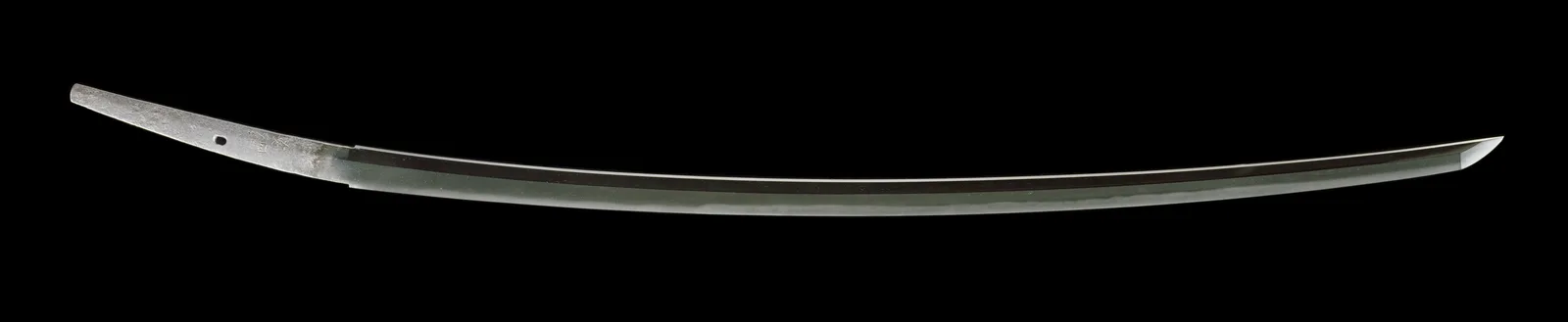
Three names dominate the Kyōhō catalogue, and that is why they are called the tenka sansaku (天下三作), “the three works under heaven”: Masamune (正宗), of Sagami; Awataguchi Yoshimitsu (粟田口吉光), the “Tōshirō” (藤四郎) of Kyoto and master of the tantō; and Gō Yoshihiro (郷義弘), of Etchū. According to the count given by Wikipedia, the catalogue holds 59 works by Masamune (18 already lost), 34 by Yoshimitsu (18 lost) and 22 by Gō (11 lost). Other copies give different figures —Markus Sesko, working from another branch of the text, counts considerably fewer— so the numbers mainly tell how much each name weighed in Edo taste.
The title is not a verdict on quality but a reflection of what the great lords collected and of what the Hon'ami attributed. Sadamune (貞宗), Masamune's successor, has as many works in the catalogue as Gō, and tradition did not add him to the trio. And there is a paradox: Gō Yoshihiro left no signed blade, and everything of his is attribution. In the Edo period people said there are two things nobody has ever seen: a ghost and a Gō.

Masamune: the name, the man and the doubt
Less is known about Masamune (正宗), called Gorō Nyūdō Masamune (五郎入道正宗), than his fame suggests. He worked in Kamakura at the end of that period, and his work is placed between 1288 and 1328; the birth and death dates that circulate (1264–1343) come from a late book. His name already appears in a genealogy of Sagami smiths included in the Meizukushi (銘尽), a text dated 1316 that survives in a copy of 1423.
He signed very little. A few tantō are accepted as signed —the Fudō, the Kyōgoku and the Daikoku Masamune— and almost nothing else; the rest of what is attributed to him is mumei or carries the attribution inlaid in gold by the Hon'ami. Tradition explains the missing signatures by modesty: what was forged for the Kamakura government or as a gift to a superior was not signed. It is an explanation, not a document. The same custom explains other excellent unsigned blades: what was offered to a shrine or a temple, or forged on a great lord's order, was left nameless out of respect, and workshops say this is why so many old Yamato blades, from a land of great temples, are mumei. Today he has nine national treasures, four katana and five tantō.
When the Hon'ami attributed an unsigned blade, they had two ways of putting it in writing: inlaying the name in gold, kinzōgan-mei (金象嵌銘), or writing it in red lacquer, shu-mei (朱銘), which does not touch the metal. In workshop practice gold is kept for tangs that have already been shortened, where nothing original is left to protect; inlaying an attribution into an intact, unsigned tang takes away for good what was original about it, and serious collectors regard it as disrespect to the blade.
Masamune's “ten disciples”, the Masamune jittetsu (正宗十哲; also transcribed juttetsu), are a late list: the dates of several of them do not fit the master's. Sadamune, Gō Yoshihiro and the others are in “Famous smiths, period by period”.
The doubt of 1896
In 1896 Imamura Chōga (今村長賀), sword appraiser to the Imperial Household, argued in a series of articles in the Yomiuri newspaper that Masamune had not existed as he was described, or that he had been an ordinary smith whose fame was inflated by Toyotomi Hideyoshi and the Hon'ami. His arguments: there were no reliable signatures, and the Muromachi lists of smiths did not single him out. The thesis, known as the Masamune massatsuron (正宗抹殺論), “the theory that erases Masamune”, started a controversy that lasted for years. It is given here for what it was: the opinion of an expert of his time. Later research accepted that Masamune existed; what remains open is how much of the work attributed to him is by his hand.
Muramasa: the curse and the theatre
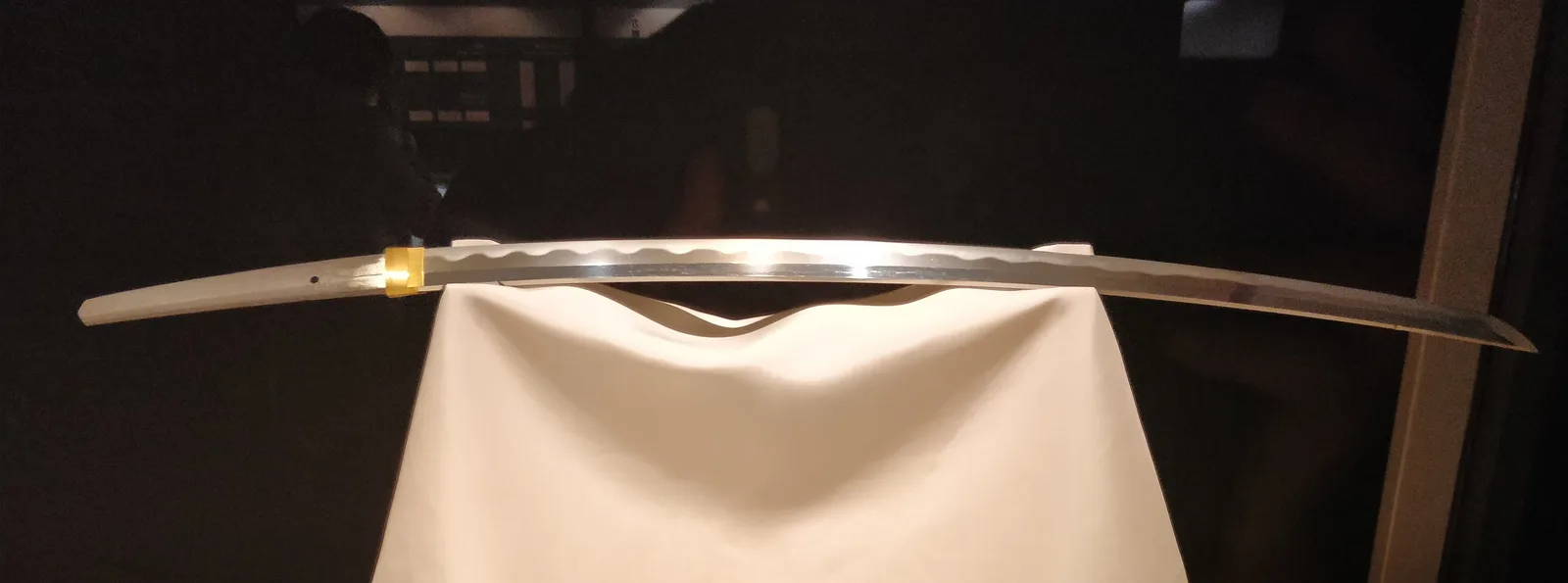
Muramasa (村正) was a school from Kuwana, in Ise province, with at least three generations; the oldest dated blade is from 1501. Its blades cut very well and had an aggressive style. None is a national treasure or an important cultural property: the best known, the Myōhō Muramasa (妙法村正) of 1513, is an important art object, jūyō bijutsuhin (重要美術品). The byname Sengo (千子) has several legendary explanations and no certain one.
How the curse was born
The Mikawa retainers who served the Matsudaira, the family of Tokugawa Ieyasu, used many Muramasa blades because they cut well. By sheer statistics, several of the family's misfortunes bear that signature: Ieyasu's grandfather, Matsudaira Kiyoyasu, was killed in 1535 by a retainer wielding a Muramasa; his father, Hirotada, was wounded by another, also with a Muramasa according to tradition; and in 1579 his son Nobuyasu, forced to commit seppuku, was beheaded with a Muramasa.
What is missing from that story is the ban. The Tokugawa kept Muramasa blades, and the Owari branch preserved one as a family heirloom. The claim that Ieyasu held them cursed and banned them from his house comes from a book of 1787, the Kashiwazaki monogatari (柏崎物語), and entered the house's official chronicle, the Tokugawa jikki (徳川実紀), in 1849. The bloodthirsty sword comes from the theatre and predates that book: kabuki popularised it from 1781 onwards, and plays such as Kago-tsurube sato no eizame (籠釣瓶花街酔醒, 1888) fixed it in the popular imagination. In the Bakumatsu (1853–1868) the shogunate's enemies sought Muramasa blades as a symbol, and many were forged; conversely, there are plenty of Muramasa with the signature filed off or altered so they could be worn without trouble.
The tale of the stream
The legend that is told most often pits the two names against each other, nearly always as master and pupil: each places his blade in a stream; Muramasa's cuts everything the current carries, dead leaves and fish alike, while Masamune's cuts nothing innocent: the floating leaves steer clear of it. The moral —the best sword is not the one that cuts most— is a good one, but the scene is impossible: between Masamune, around 1300, and Muramasa, around 1500, lie some two hundred years.
Workshops read it instead as a portrait of two eras, and read that way the story works. Masamune worked at the end of the Kamakura period, when Japan had just repelled two Mongol invasions and was bracing for a third: his blade has a measured shape and exceptional quality. Muramasa worked in the thick of the Sengoku, a century of wars in which lords fought even their fathers and brothers and nobody trusted anybody: his blade has a little more curve, a slim profile that cuts well and an irregular, steep temper; it is made to be used. The difference between the two blades is the difference between their times.

Named swords: legend and fact
Many famous swords carry a nickname that tells a story. Here are a few, with the legend kept apart from what can be checked; nearly all the legends come from war tales such as the Heike monogatari (平家物語) or from stage plays, and should be read as such.
- Heshikiri Hasebe (へし切長谷部). Smith: Hasebe Kunishige (長谷部国重), held to be a disciple of Masamune. Where it is today: Fukuoka City Museum. The legend: Oda Nobunaga caught up with a servant hiding under a kitchen cabinet and cut him through the cabinet, pressing the blade rather than swinging it: that is what heshikiri means, “cutting by pressing”. What is known: National treasure since 1953. According to the Kyōhō catalogue it went from Nobunaga to Toyotomi Hideyoshi and from him to Kuroda Nagamasa; the Kuroda chronicles give another route. The name is also written Heshikiri (圧切).
- Nikkari Aoe (にっかり青江). Smith: Aoe (青江) school, Bitchū province. Where it is today: Marugame city museum, since 1997. The legend: A warrior cuts down at night the ghost of a woman who smiles at him —nikkari is that smile— and the next morning finds a stone lantern split in two. What is known: Ō-wakizashi, important art object since 1940. The versions disagree on who the warrior was.
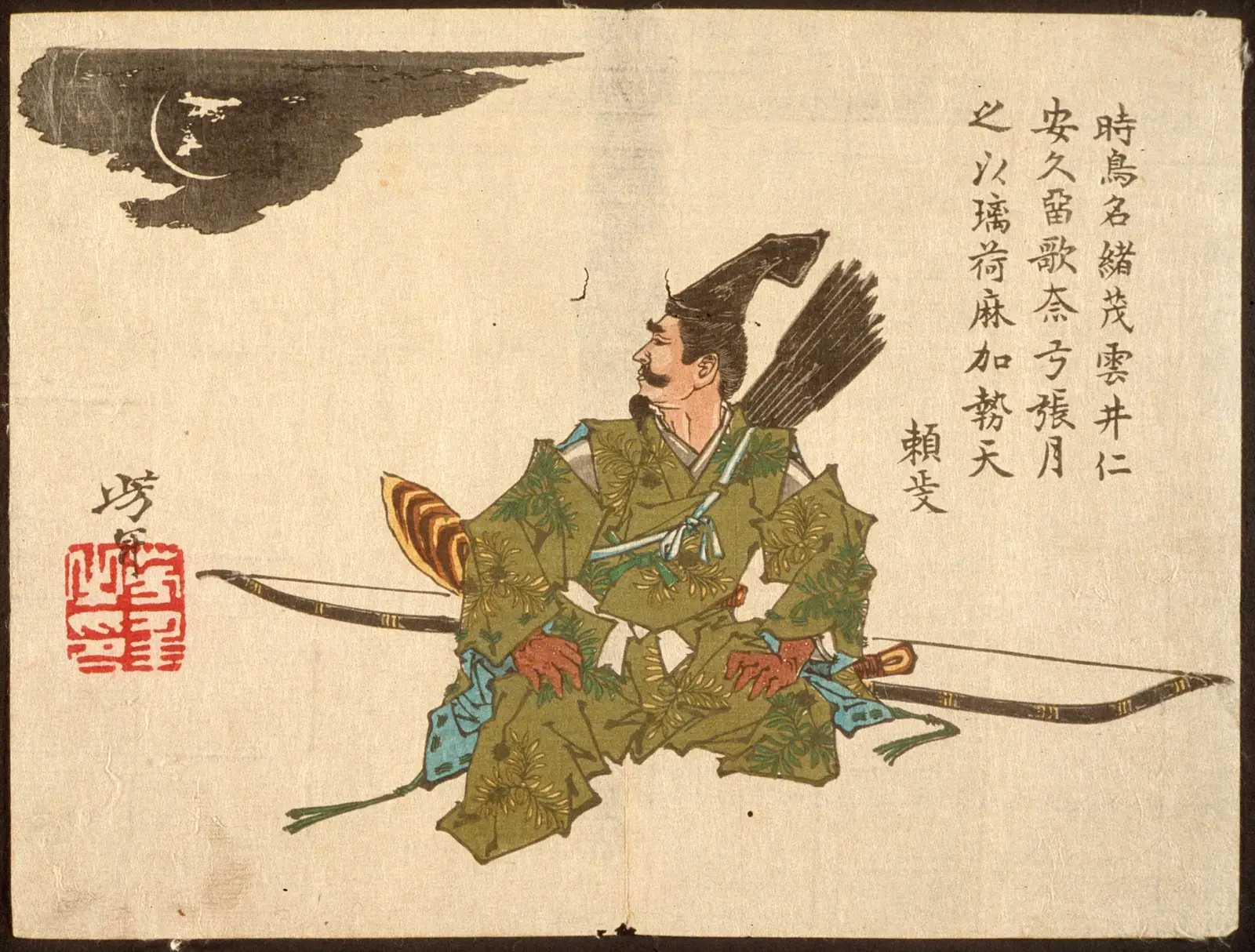
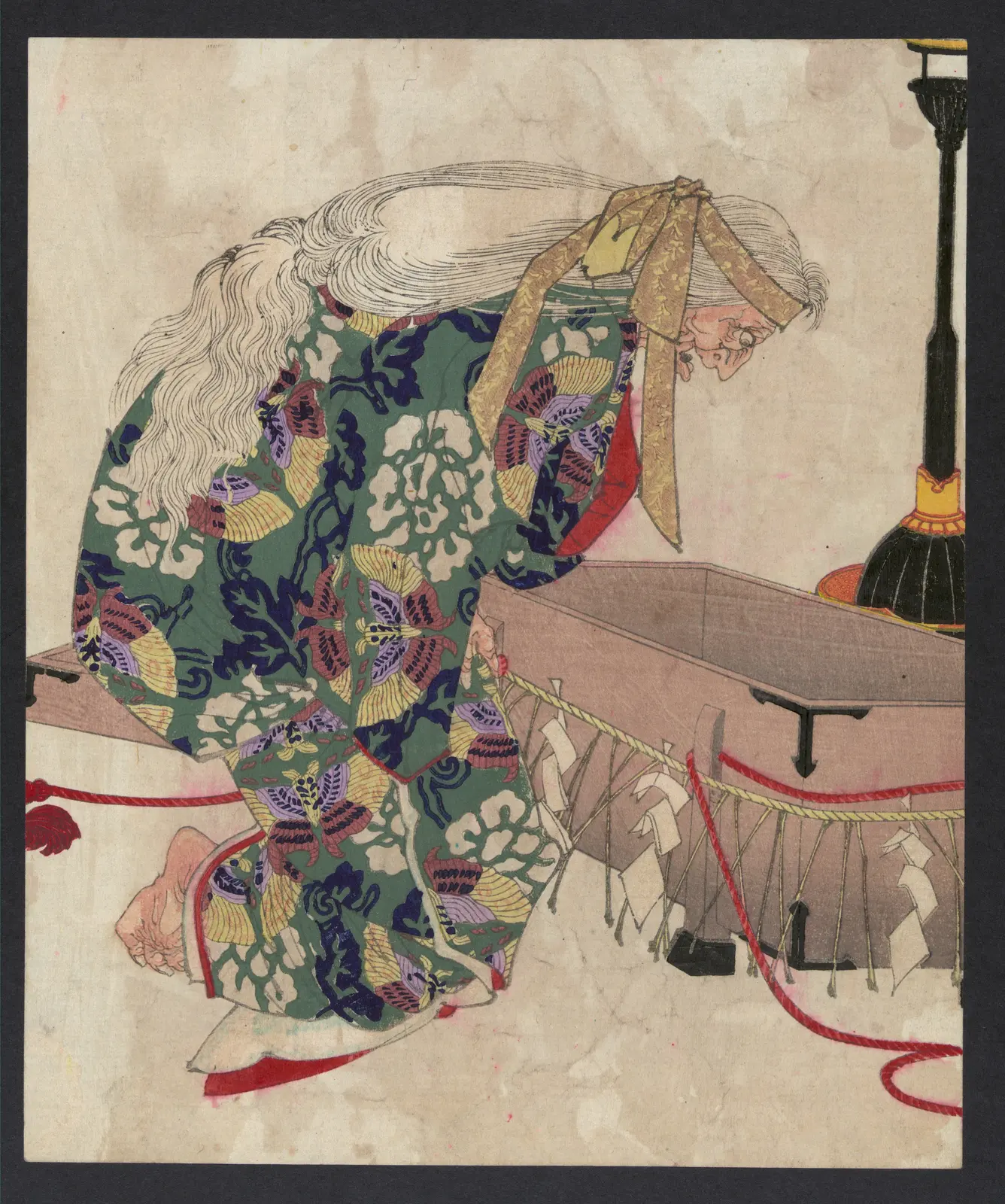
- Shishiō (獅子王). Smith: Unsigned; Yamato style. Where it is today: Tokyo National Museum. The legend: The emperor rewards Minamoto no Yorimasa (源頼政) with it for bringing down the nue (鵺), a chimera that came over the palace every night wrapped in a black cloud and robbed him of sleep. Yorimasa brings it down with one arrow and his retainer, Ino no Hayata (猪早太), finishes it off with his dagger; by torchlight it turns out to be a monster with the face of a monkey, the legs of a tiger and the tail of a snake, which is set adrift on the river in a boat. What is known: Heian-period tachi with its mounting, important cultural property. Whether the surviving blade is the one in the legend has been questioned. Behind the monster there is most likely a real bird: the mournful night call of the scaly thrush, tora-tsugumi (虎鶫), which in Japanese is still called nue. The scene of Yorimasa, Hayata and the nue is a common motif on sword fittings, sometimes split between the two metal pieces at the ends of the hilt (see “Mounting styles (koshirae)”).
- Higekiri (髭切). Smith: Attributed to Yasutsuna (安綱). Where it is today: Kitano Tenmangū (北野天満宮) shrine, Kyoto. The legend: The Minamoto pair of swords, Higekiri and Hizamaru (膝丸), change names from one episode to the next; with Higekiri, Watanabe no Tsuna cuts off a demon's arm. What is known: The blade the shrine keeps under that name, also called Onikirimaru, is an important cultural property; its Yasutsuna signature was retouched to read Kunitsuna.
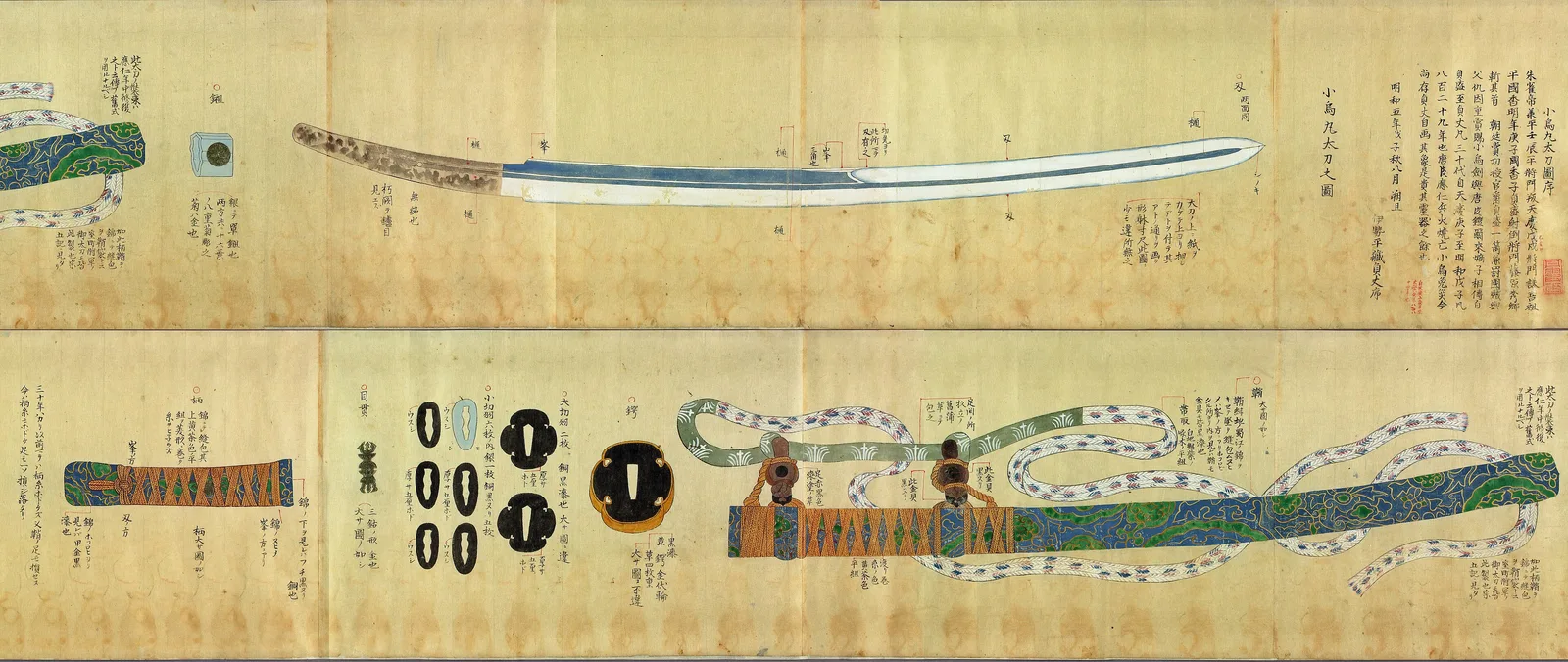
- Kogarasumaru (小烏丸). Smith: Attributed to the legendary Amakuni (天国). Where it is today: Imperial collection. The legend: A treasure of the Taira; one of the explanations of its name, “little crow”, says it was brought by a crow sent by the gods. What is known: A kissaki-moroha-zukuri (鋒両刃造) blade, double-edged along its front half, a transitional form between the straight and the curved sword. It is dated between the late Nara and the mid-Heian periods; the Ise family kept it during the Edo period; the Sō of Tsushima later bought it and in 1882 gave it to the Meiji emperor. In workshop practice, a long double edge is rare in the Japanese sword for a craft reason: in hardening, the blade curves by itself, and with two hardened edges that stress, and later the stress of a blow, has nowhere to go; some smiths hold it to be a form only a master can manage. As the samurai age was ending, the form came back out of nostalgia: in the Bakumatsu and Meiji periods several smiths made copies, among them one by Gassan Sadakazu (月山貞一) dated 1903.
- Ichigo hitofuri (一期一振). Smith: Awataguchi Yoshimitsu (粟田口吉光). Where it is today: Imperial collection. The legend: “The one of a lifetime”: the only tachi Yoshimitsu, a tantō specialist, is supposed to have forged. What is known: Toyotomi Hideyoshi had it shortened, keeping the signature on a plaque, gakumei (額銘); it burned in Osaka castle in 1615 and was re-tempered by Yasutsugu (康継).
- Kiku gosaku (菊御作). Smith: The retired emperor Go-Toba (後鳥羽), with the smiths he summoned to his palace. Where it is today: Several survive; the one in the Kyoto National Museum is an important cultural property. The legend: Go-Toba forged blades himself and marked them with a chrysanthemum, and that is supposedly where the chrysanthemum became the emblem of the imperial house. What is known: In the early 13th century Go-Toba brought smiths to his palace in monthly shifts, mostly from Yamashiro, Bizen and Bitchū, the goban kaji (御番鍛冶); the blades of that workshop with the chrysanthemum engraved on the tang are the “imperial chrysanthemum works”. In workshop practice, the likeliest reading is that the emperor took part only in the hardening, yaki-ire (焼き入れ), the stage an amateur can do well under a master's guidance; the rest was the work of the smiths on duty.
Lost swords
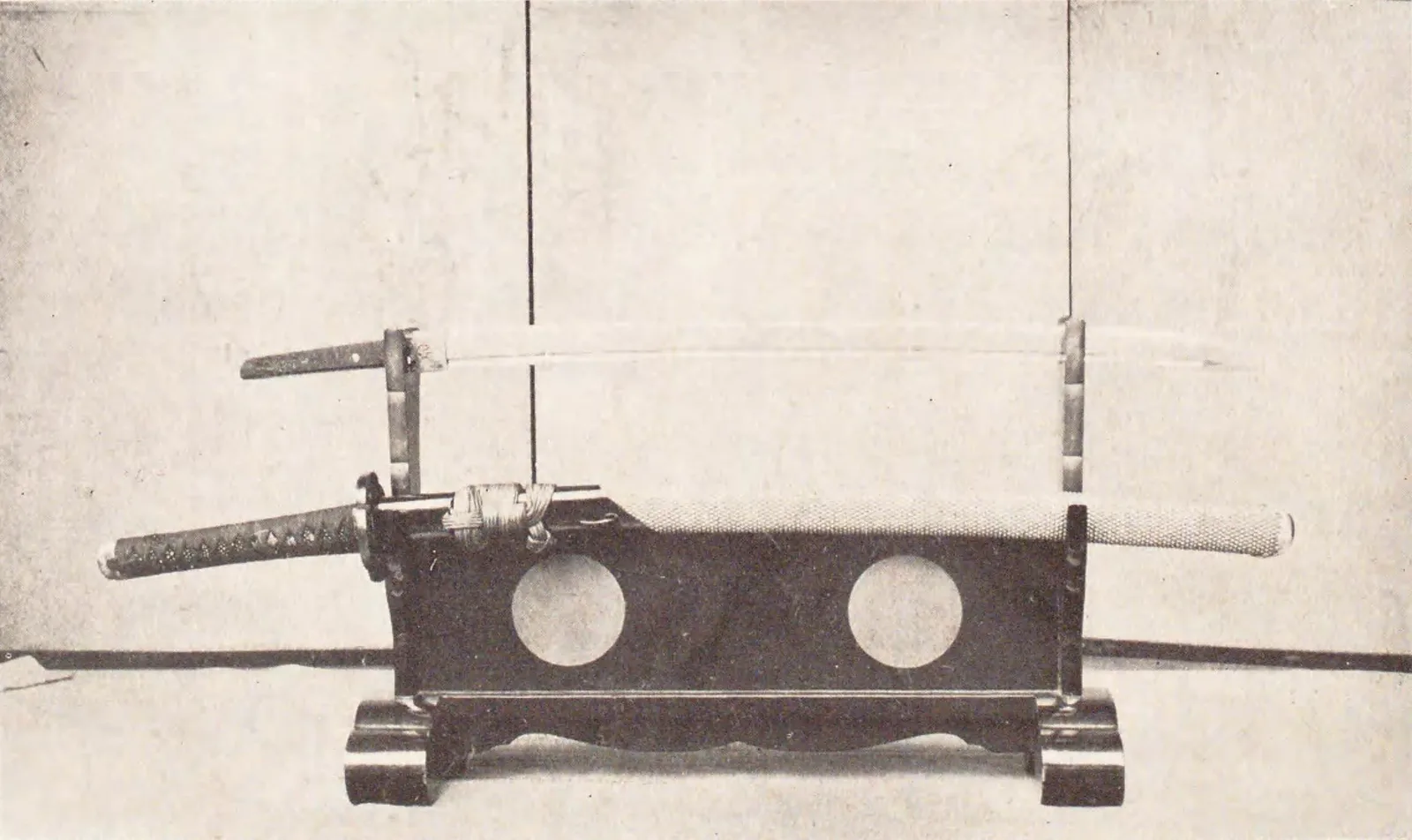
The list of famous swords that no longer exist, or of which nothing is known, begins in the Kyōhō catalogue itself: some eighty of its entries were already destroyed swords when it was written. Three losses weigh especially heavily.
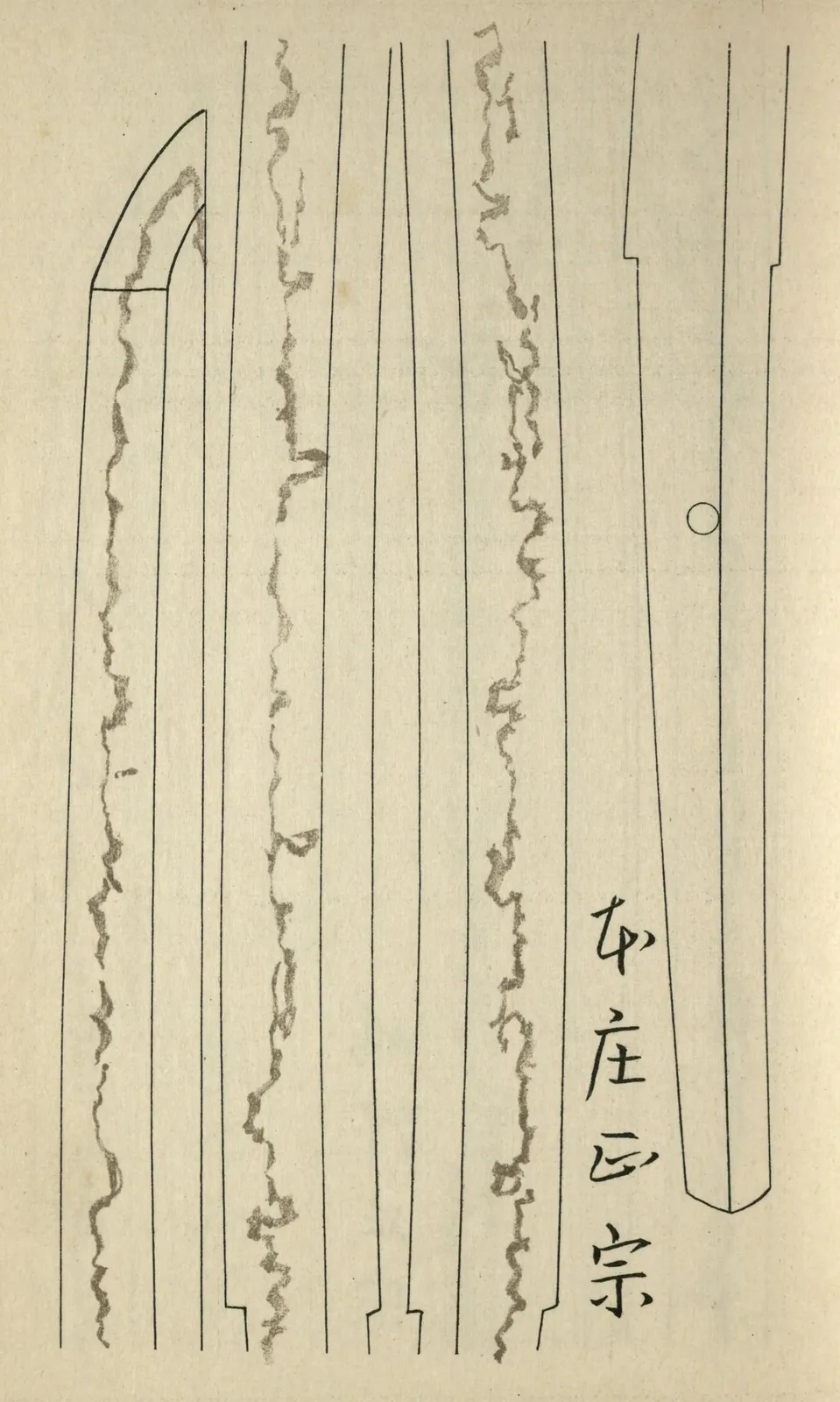
- Honjō Masamune (本庄正宗). The most famous Masamune. It takes its name from Honjō Shigenaga (本庄繁長), a Uesugi general, who won it in 1588 at the battle of Jūgorigahara (十五里ヶ原), taking it in combat from Tōzenji Katsumasa (東禅寺勝正). It passed through Toyotomi Hideyoshi and other lords to the Tokugawa; the Kishū branch held it until 1667, when it offered it to the shōgun, and from then on it headed the swords each shōgun handed down to his successor. It was designated a national treasure in 1939, under the system of the time. In December 1945 Tokugawa Iemasa, head of the main Tokugawa house, handed it, with other family swords, to the Mejiro police station in Tokyo, and in January 1946 the police gave it to a sergeant of the United States army. Its whereabouts have been unknown ever since. What remains are its drawings, oshigata (押形).
- Hotarumaru (蛍丸). An ōdachi by Rai Kunitoshi (来国俊) kept by the Aso shrine, in Kumamoto. The legend tells that after a fourteenth-century battle its owner dreamt of fireflies mending the nicks in the blade, and on waking found it whole. Protected from 1931 under the pre-war system, it disappeared with the post-war sword surrenders and has not been seen again.
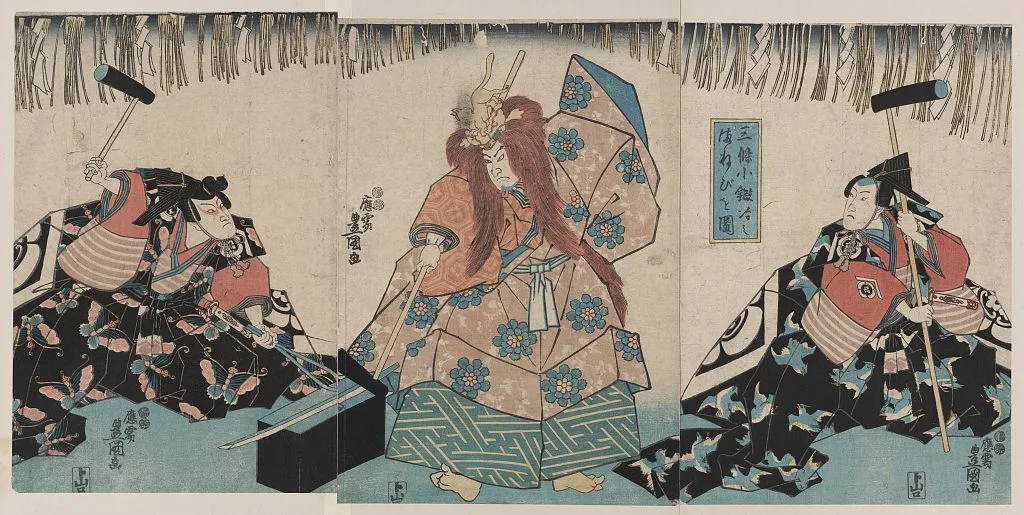
- Kogitsunemaru (小狐丸). The sword of the nō play Kokaji (小鍛冶): Sanjō Munechika forges it for Emperor Ichijō with the help of the god Inari, who appears to him as a fox. The play is recorded from 1578; the sword of the legend is considered lost.
Further reading
- Markus Sesko · Japanese Sword Legends The legends of the famous swords one by one, with their Japanese sources and what is known about each piece.
- Wikipedia · Tenka-Goken The five swords under heaven, their history and where they are kept.
- Wikipedia · Masamune The smith, his named works and his place in the Kyōhō catalogue.
- Wikipedia · Muramasa The Kuwana school and how the legend of the cursed sword was born.
- Japanese Wikipedia · Kyōhō meibutsuchō The 1719 catalogue: who made it, its copies and how many swords it lists for each smith. In Japanese.