On this page
Quick profile
- Name
- Morihide, of Chōshū HD
- Kanji and reading
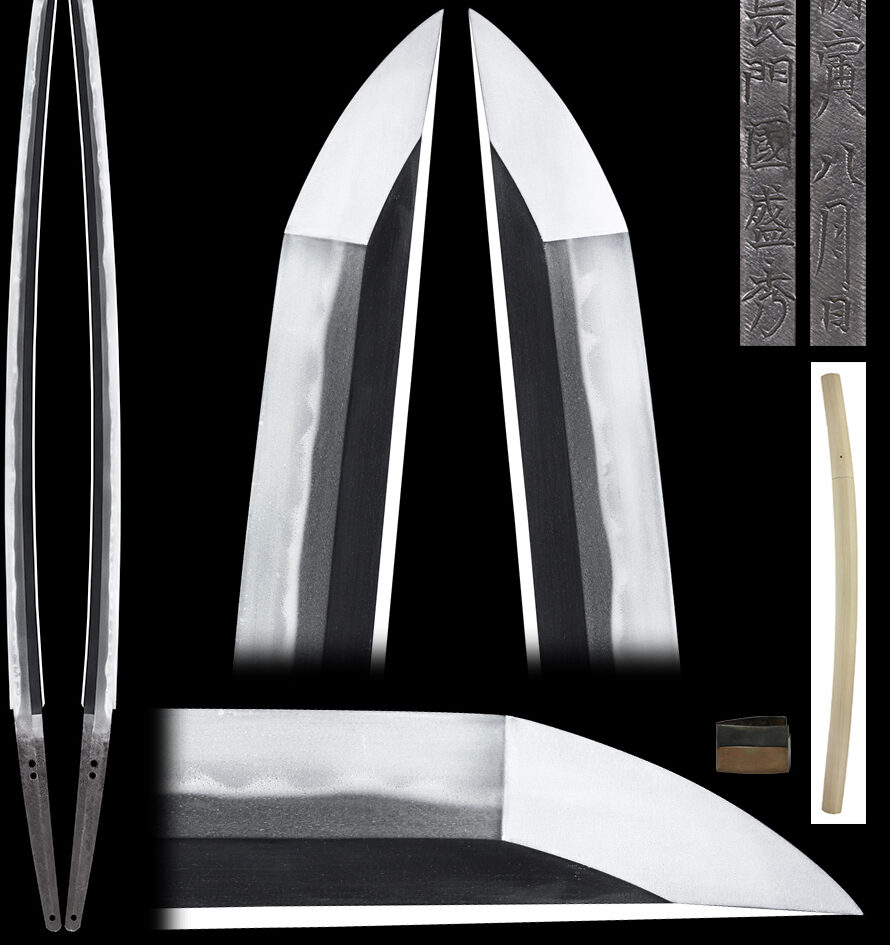
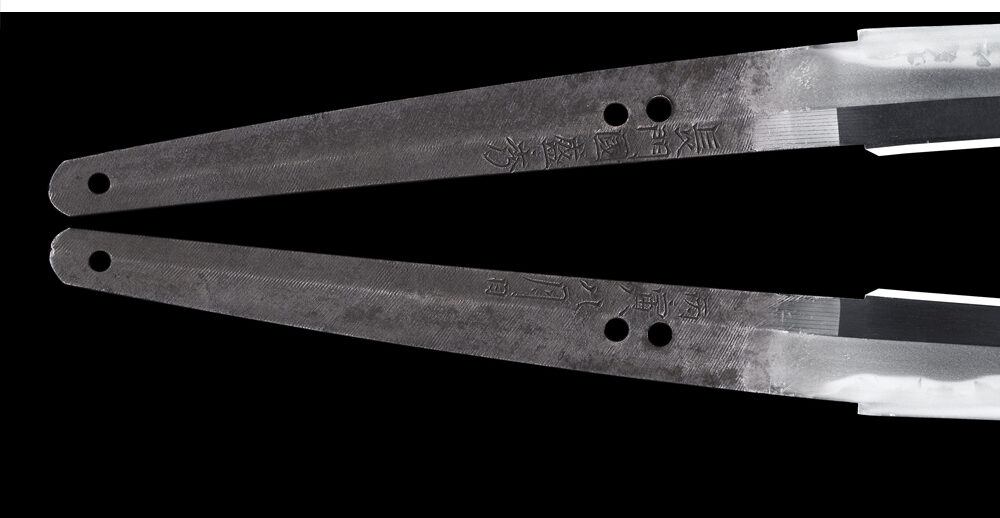
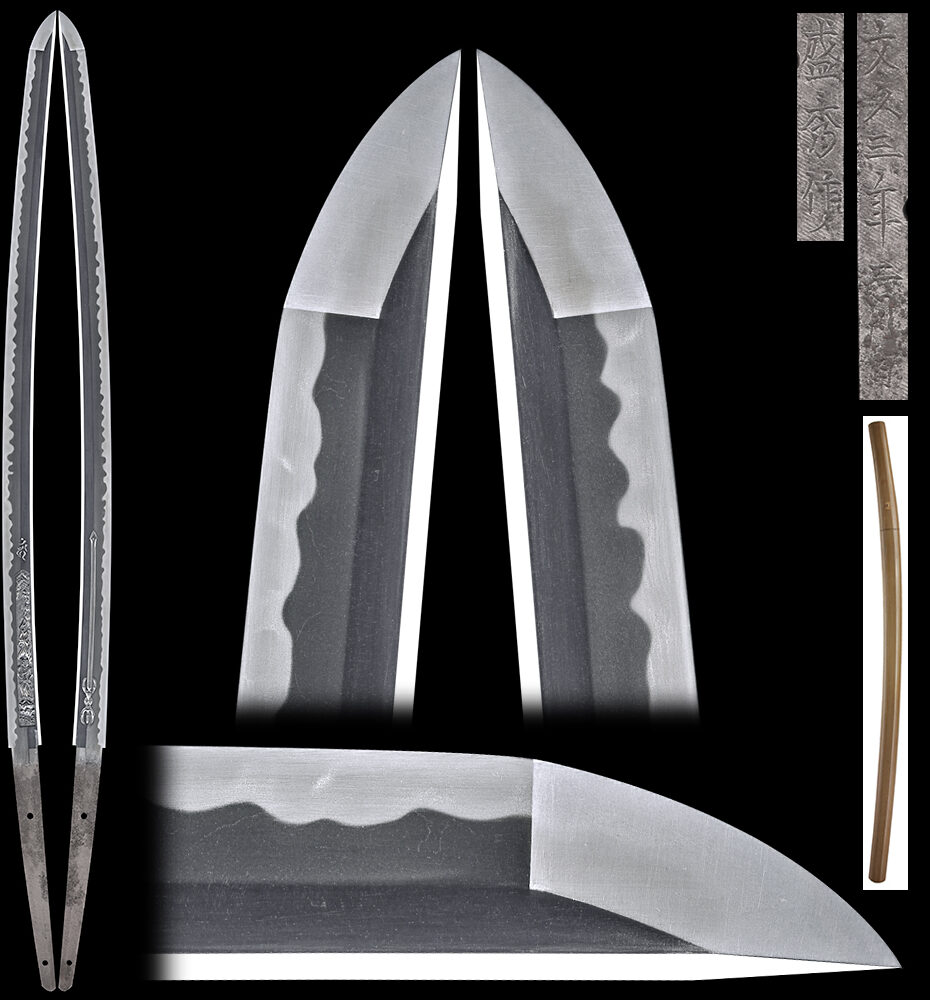
- 盛秀 (Morihide); signature 長門国盛秀 (Nagato no Kuni Morihide) or 盛秀作 (Morihide saku) HD
- Period
- Shinshintō, late Edo period: a katana dated 1863 (Bunkyū 3). The other bears a year of the fire tiger (丙寅, hinoe-tora) which, judging by the shape of the blade, is 1866. HD
- Province
- Nagato (長門, Nagato), the western half of Chōshū (長州, Chōshū), today Yamaguchi HD
- School
- Not recorded in the sources consulted PC
- Master
- Not recorded in the sources consulted PC
- Rank
- Not recorded in the lists or treatises consulted PC
- Documented fact and tradition
- Documented: his signatures and dates, on the tangs of his blades. From tradition: nothing on record. HD
In short
The two katana that can be seen have an undulating temper and the medium point of the blades of their time; the 1863 one bears carvings at the base, on one side a bonji and a figure among flames, and on the other a sword with a vajra hilt. His life, his dates, his school and his master are not recorded in the sources consulted, and no blade of his is recorded in a museum.