On this page
His blades
| Work | Signature | Date |
|---|---|---|
| Katana with carvings | 盛秀作 (Morihide saku) | 文久三年二月日 (Bunkyū sannen nigatsu hi): 1863 |
| Katana | 長門国盛秀 (Nagato no Kuni Morihide) | 丙寅八月日 (hinoe-tora hachigatsu hi) (1866, judging by the shape of the blade) |
Sugata
Both are katana in shinogi-zukuri with a moderate curve and a medium point, with the tang unshortened.
Hamon
The 1863 one has a regular undulating temper, with broad waves, that continues into the point; the Nagato one, a lower and calmer temper, gently undulating.
Horimono
The 1863 one bears at the base, on one side, a bonji and a panel with a seated figure among flames, which appears to be Fudō Myōō, and on the other, a sword with a vajra hilt (三鈷柄剣, sankozuka-ken).
Nakago and mei
The signature is on one side of the tang and the date on the other: 盛秀作 (Morihide saku) with 文久三年二月日 (Bunkyū sannen nigatsu hi), and 長門国盛秀 (Nagato no Kuni Morihide) with 丙寅八月日 (hinoe-tora hachigatsu hi).
Gallery
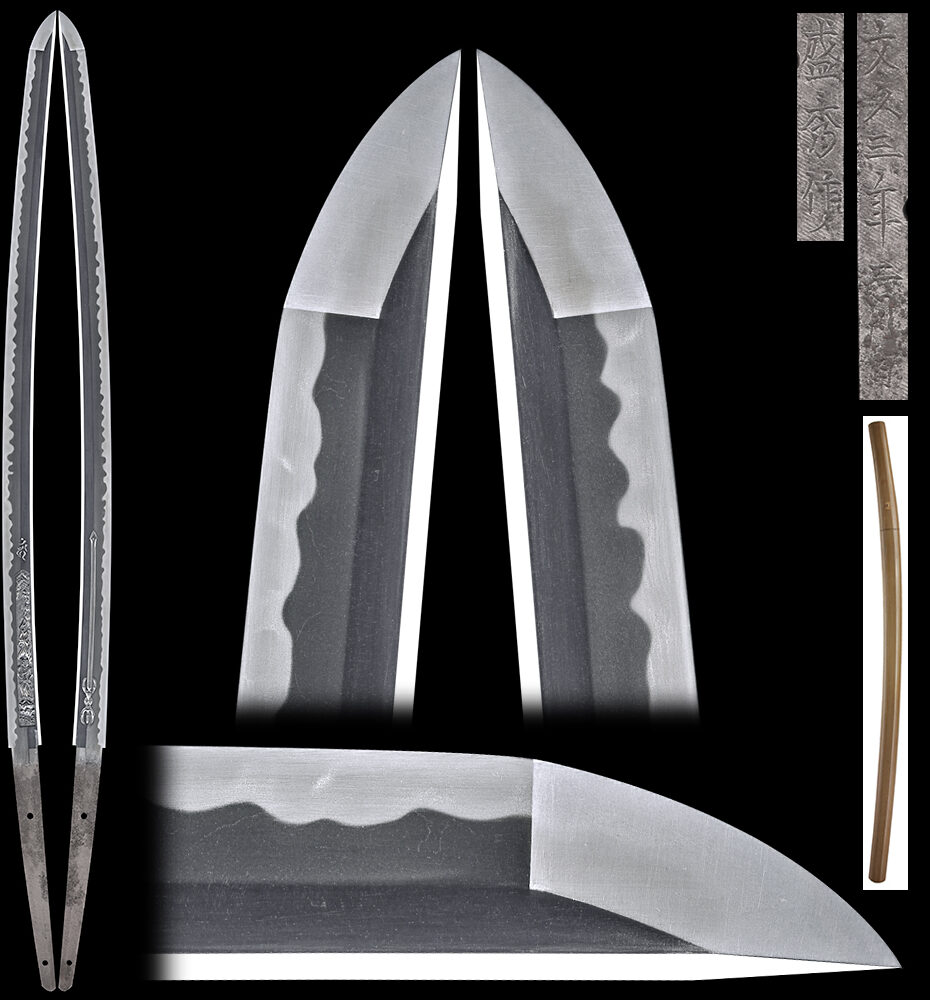
Katana signed 盛秀作 (Morihide saku) and dated 文久三年二月日 (Bunkyū sannen nigatsu hi), February 1863. Photo: dealer in Japan 
The temper of the 1863 katana, against the light. Photo: dealer in Japan 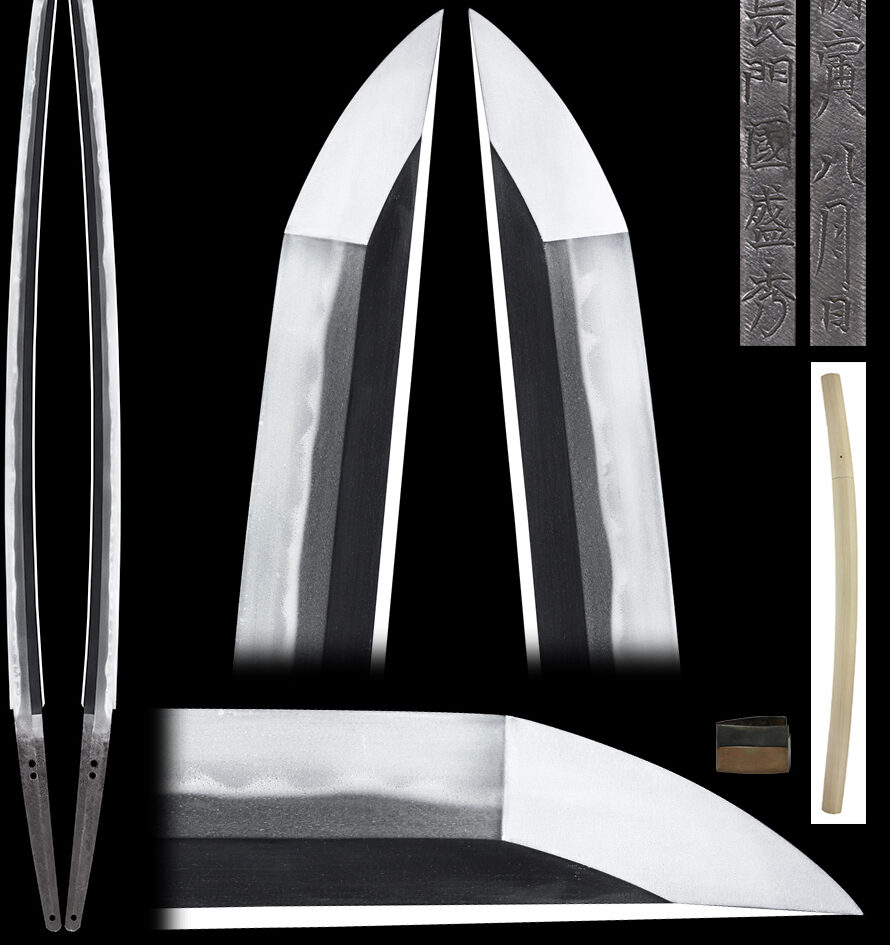
Katana signed 長門国盛秀 (Nagato no Kuni Morihide) and dated 丙寅八月日 (hinoe-tora hachigatsu hi). Photo: dealer in Japan 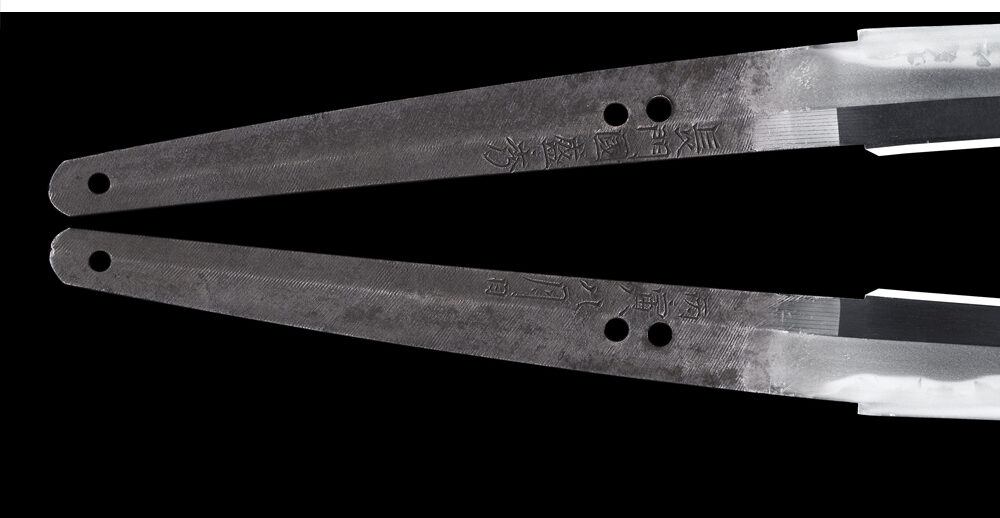
The tang of the Nagato katana, with the signature and the date. Photo: dealer in Japan