Daidō
大道 (Daidō)
Lineage: the signature does not state the generation
Name signed by several Mino smiths; the first, Mutsu no Kami Daidō, worked in Seki in the second half of the 16th century.
Profile
Daidō (大道), also read Ōmichi, is a name signed by several Mino smiths from the end of the Muromachi period into the Edo period. The first and best known, Mutsu no Kami Daidō, worked in Seki in the last decades of the 16th century as part of the Sue-Seki school, and early on signed Kanemichi (兼道). Tradition holds that in 1569 he made a blade for Emperor Ōgimachi and in return received the character 大 (dai) and the title Mutsu no Kami; for some years he signed Ō-Kanemichi (大兼道) before settling on Daidō. Another tradition identifies him with Mishina Kanemichi (三品兼道), father of the smiths who founded the Mishina school in Kyoto, though the question remains open. He worked mainly in the Mino tradition, with gunome-midare, kenbō-midare and nie-rich notare reminiscent of the Shizu school, and also in the manner of Bizen and Yamato. The Kyoto National Museum holds a tantō signed 陸奥守大道作 (Mutsu no Kami Daidō saku).
Rankings
- Listed in Tomita Kiyama’s ranking of shintō smiths (1935), in the unranked list
Swords available
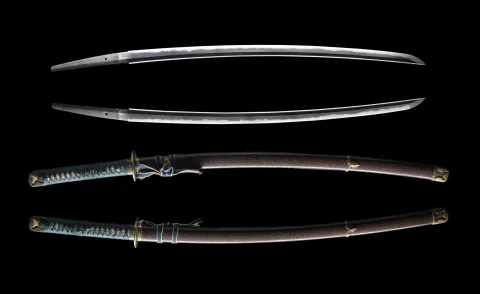
Rank 145
€16,040
current max. 255 Points: 116.4 points · current max. 255