On this page
His style
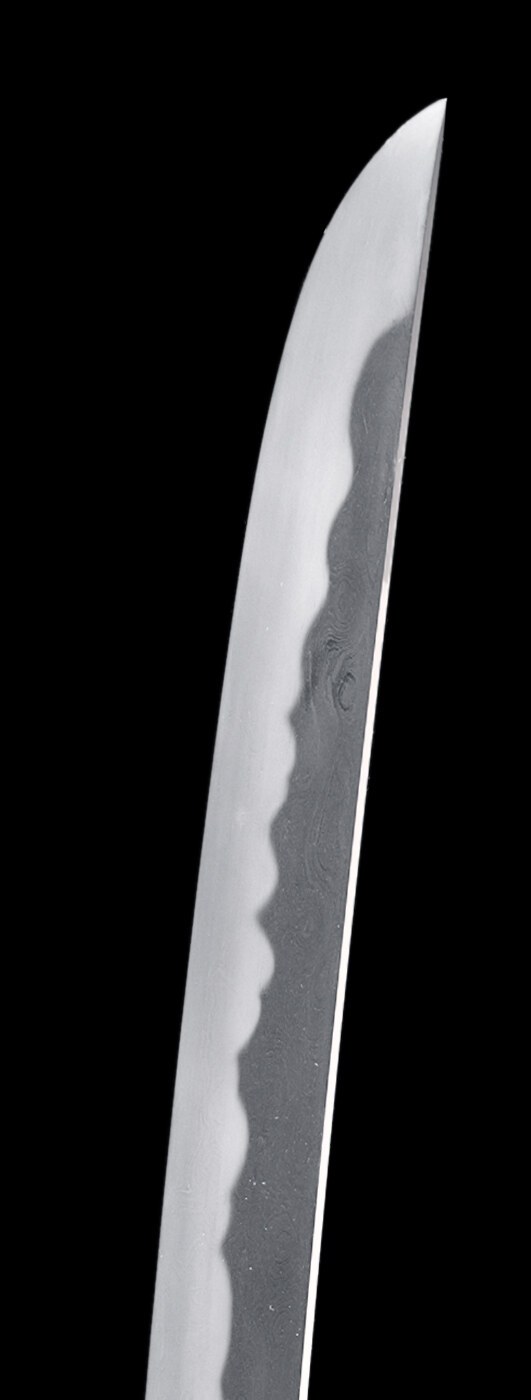
- A hamon of notare with gunome (湾れ互の目, notare gunome), with abundant nie, sunagashi and kinsuji.
- In the 1997 katana made with his father, the jihada is an ōitame with masame, with thick ji-nie and broad chikei.
- A 2002 tantō in hira-zukuri has a ko-itame with utsuri, a midare hamon and a komaru bōshi; its tang has never been shortened.
Dated works
| Year | Work | Signature |
|---|---|---|
| 1985 | Katana | dated 昭和六拾年三月 (Shōwa rokujū-nen sangatsu) |
| 1989 | Katana | 伊豆住貞人作之 (Izu-jū Sadahito saku kore) |
| 1997 | Katana, with his father | 湧水心貞吉貞人合作 (Yūsuishin Sadayoshi Sadahito gassaku) |
| 2002 | Tantō | 貞人作 (Sadahito saku) |
| 2004 | Katana, with his father | 伊豆住貞吉貞人作 (Izu-jū Sadayoshi Sadahito saku) |
| 2018 | Katana | 三嶋住貞人作 (Mishima-jū Sadahito saku) |
The signatures of 1985, 1989 and 1997 can be read in the photos on this page; the others cannot be seen in them.
Gallery of works
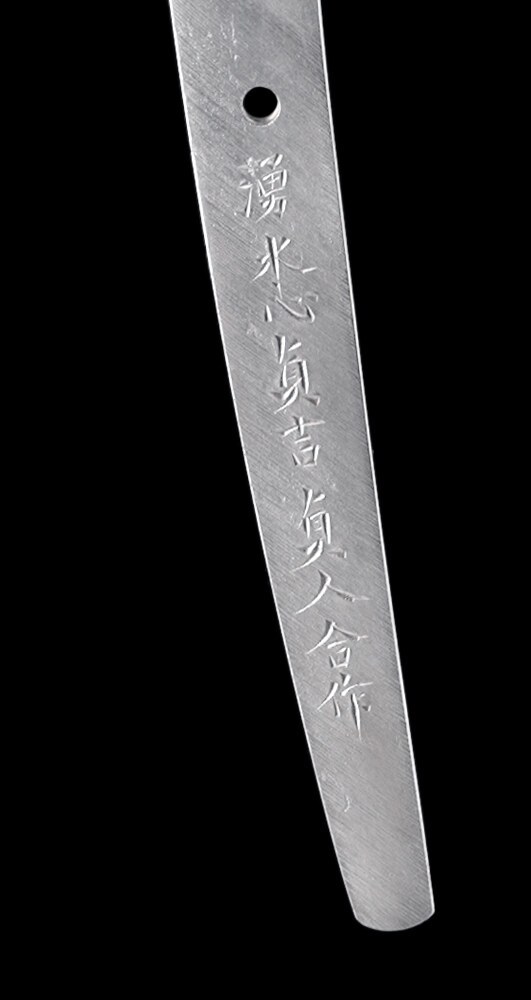
1997 katana made jointly with his father: “湧水心貞吉貞人合作” (Yūsuishin Sadayoshi Sadahito gassaku). Photo: dealer in Japan 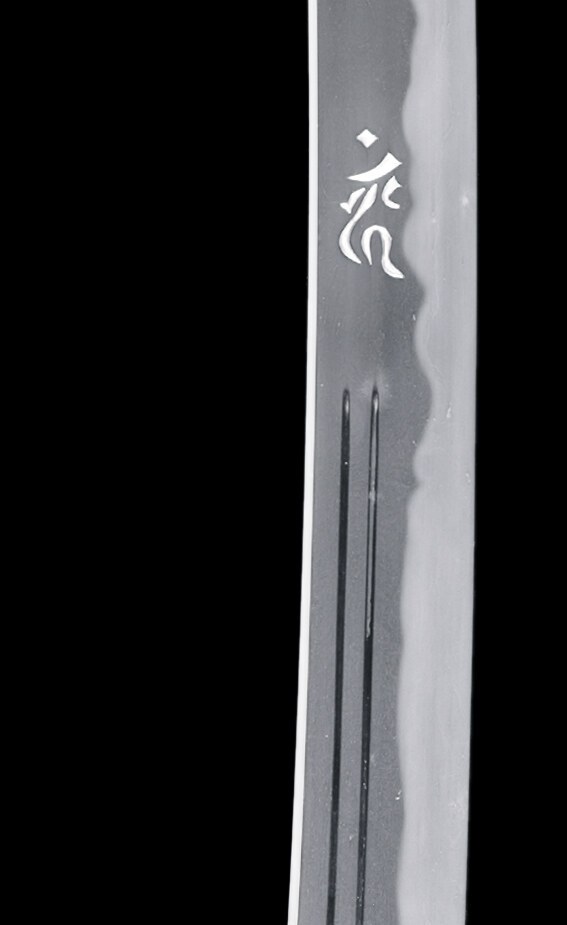
An engraved bonji and two grooves on the 1997 katana, dated November 1997 (平成九年十一月日, Heisei kyūnen jūichigatsu hi). Photo: dealer in Japan 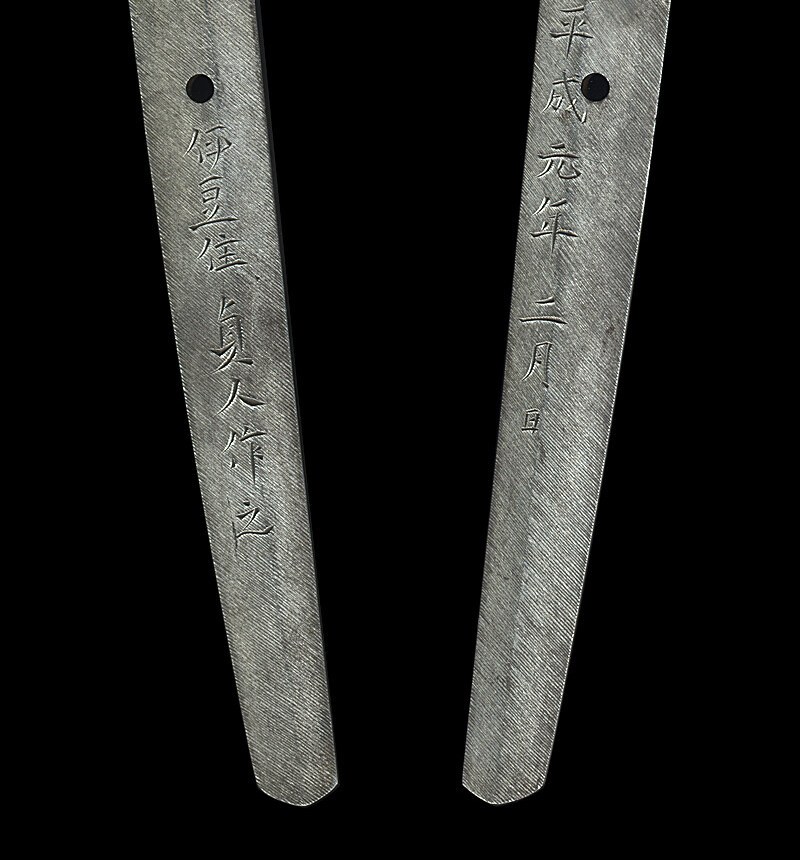
1989 katana: “伊豆住貞人作之” (Izu-jū Sadahito saku kore) and “平成元年二月日” (Heisei gannen nigatsu hi), February 1989. Photo: dealer in Japan 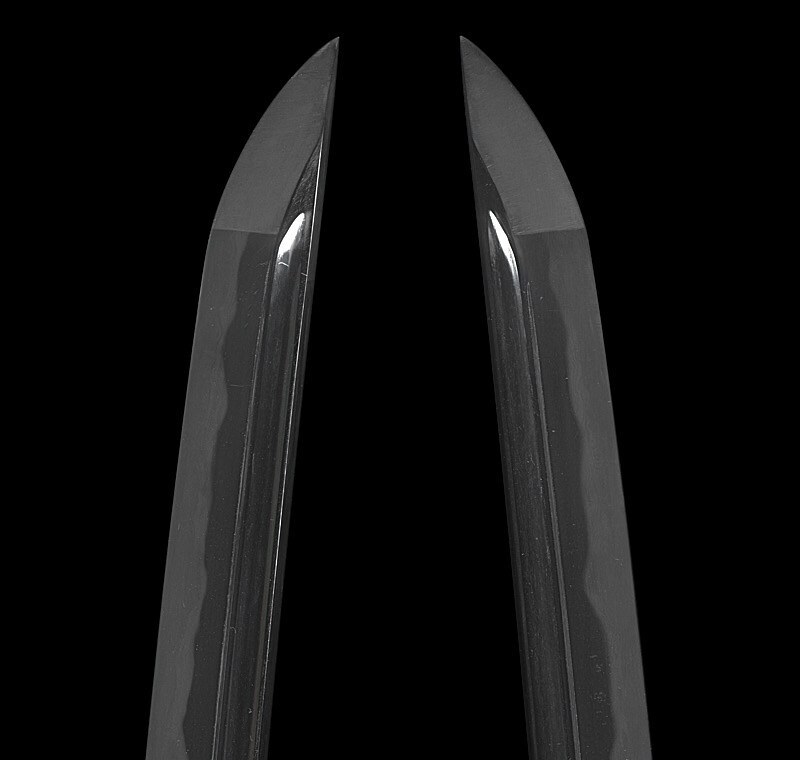
The point (kissaki) of the 1989 katana. Photo: dealer in Japan 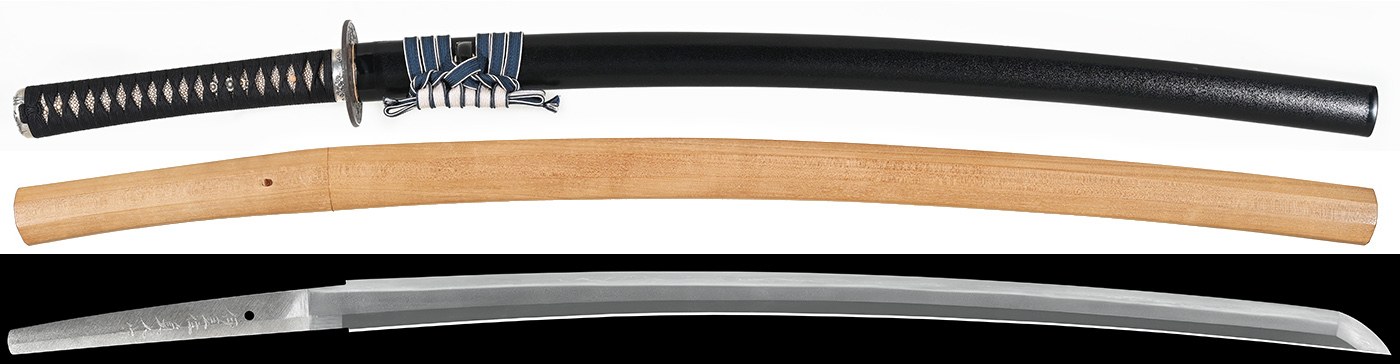
Katana of March 1985 (昭和六拾年三月, Shōwa rokujū-nen sangatsu), with its koshirae and its shirasaya. Photo: dealer in Japan 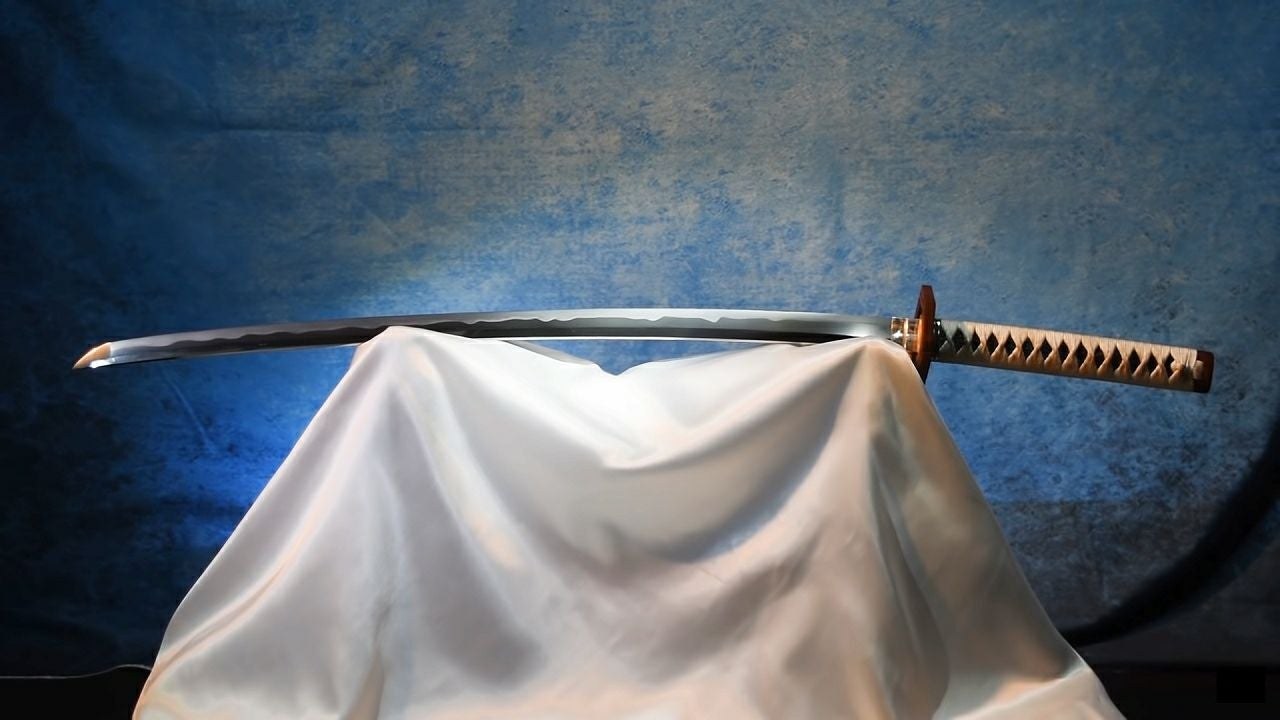
A new katana of his, in a trial mounting. Photo: dealer in Japan