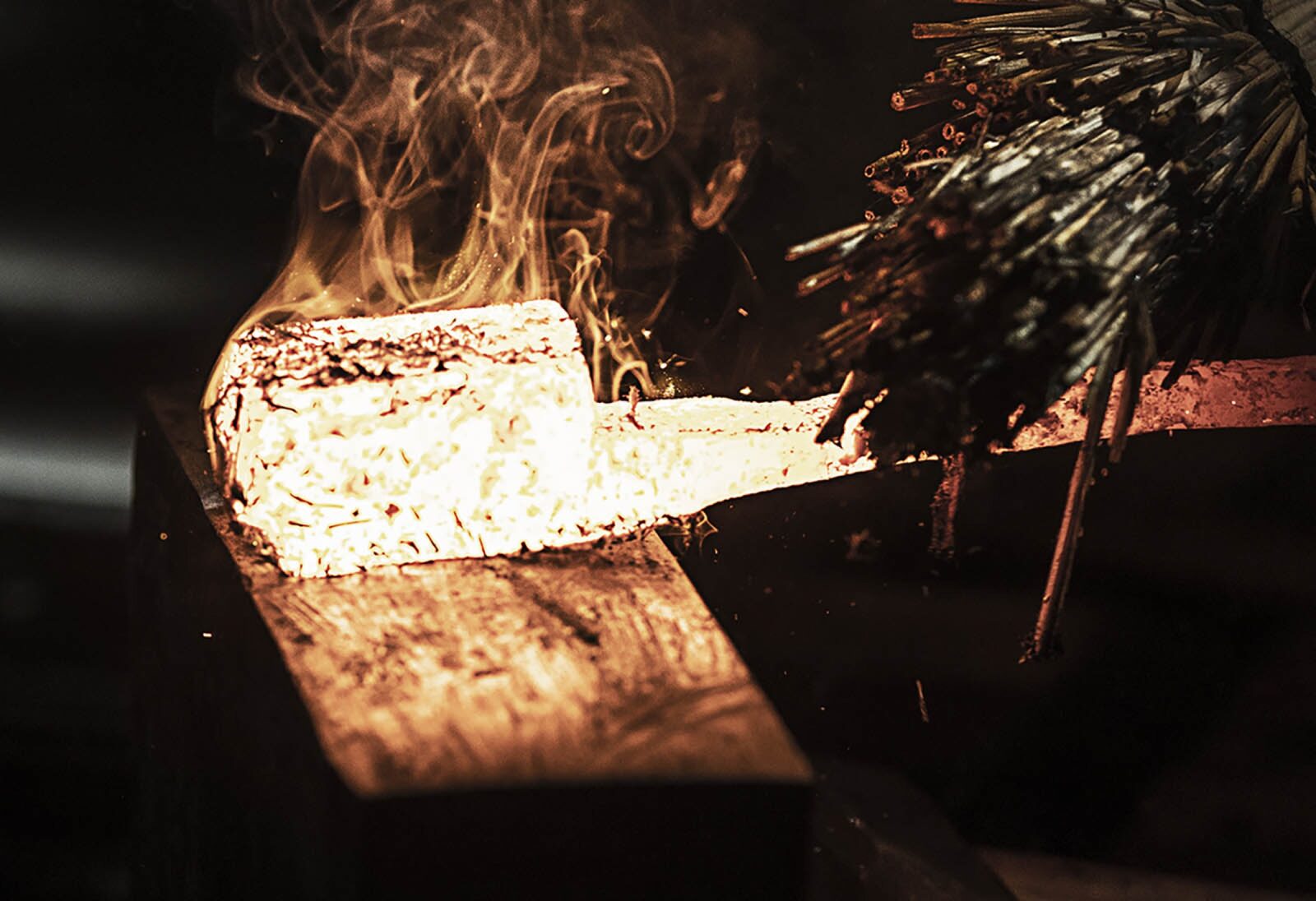
The legacy of the school
The family’s hallmark is the 綾杉肌 (ayasugi-hada), a grain of regular waves, and the Gassan carving (月山彫, Gassan-bori), with dragons, Fudō and other religious motifs. Sadanobu masters several traditions and, like his grandfather and his father, the Sōshū-den (相州伝): nie-deki, notare (湾れ) and itame-hada; he also carves some blades himself.
Signatures and works
He signs 大和住月山貞伸造 (Yamato-jū Gassan Sadanobu zō) or 大和国住月山貞伸造 (Yamato no kuni-jū Gassan Sadanobu zō), with kaō (花押, his monogram), according to the NBTHK catalogues.
A katana of his from 2015, signed 大和国住月山貞伸謹作 (Yamato no kuni-jū Gassan Sadanobu kinsaku), was in the exhibition 平成の名刀・名工展 (Heisei no Meitō Meikōten) at the NBTHK’s Japanese Sword Museum, in 2019.
According to him, his works include a tantō of 2015 (28.2 cm), a katana of 2015 (73.4 cm) and a wakizashi of 2016 (36.2 cm).
His prize-winning blades at the NBTHK measure from 71.8 to 75.8 cm for the long ones, and 25.8 cm for the 2024 tantō (“Prizes” page).
Gallery of works
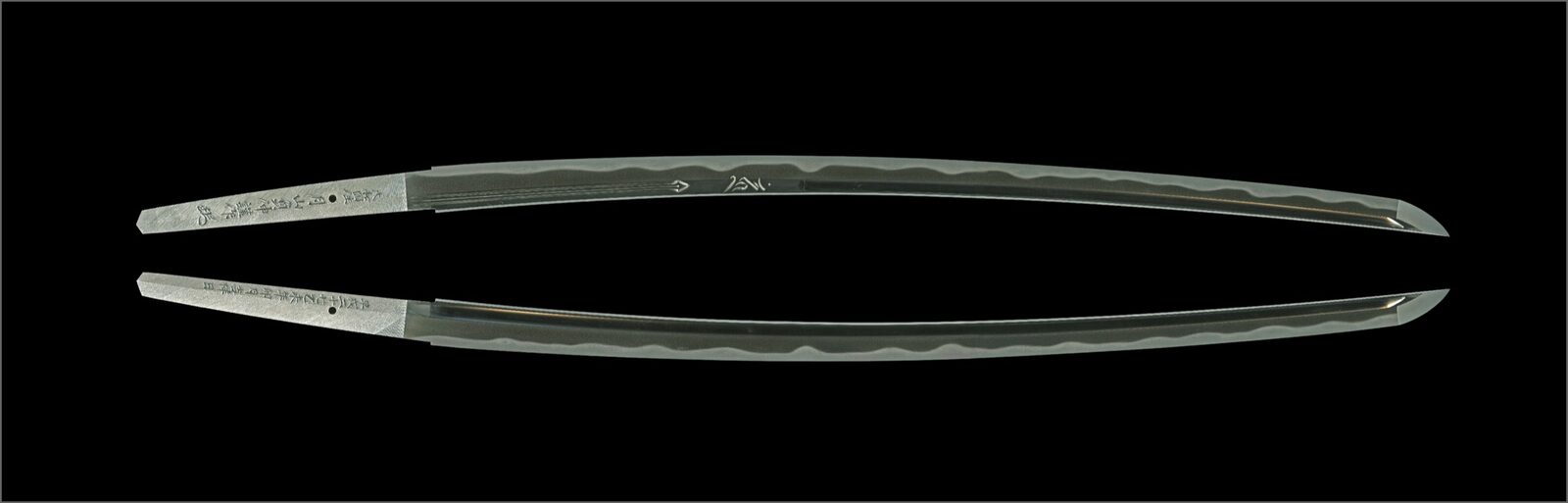
Katana of 2015 (73.4 cm), both sides. Photo: the smith himself 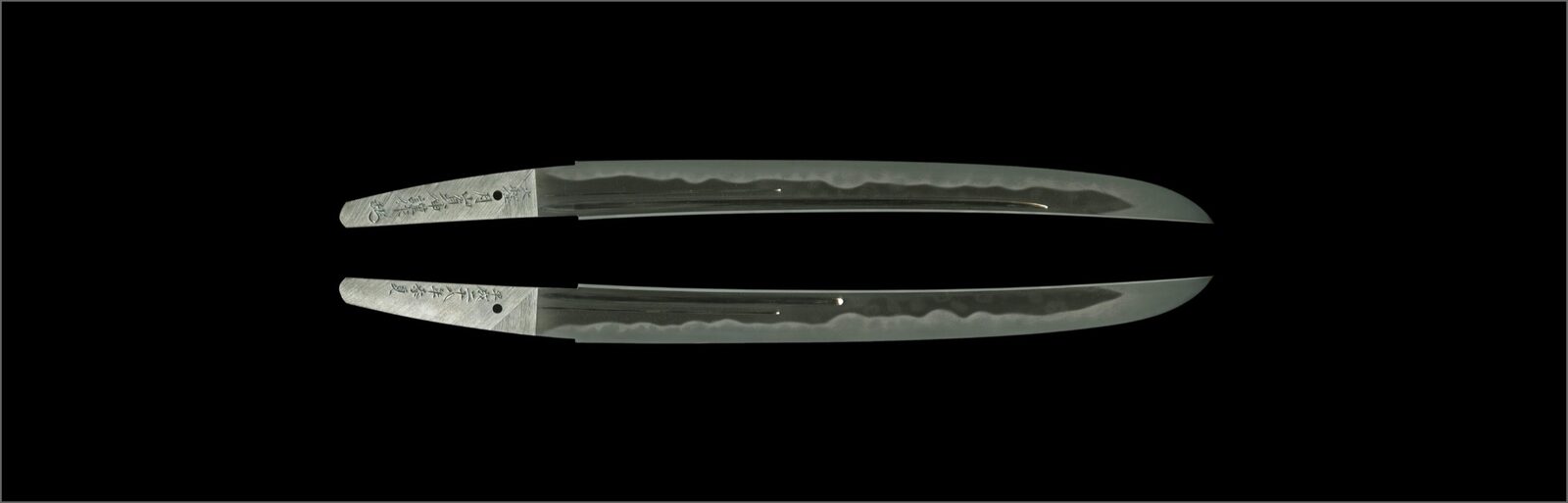
Wakizashi of 2016 (36.2 cm), both sides. Photo: the smith himself 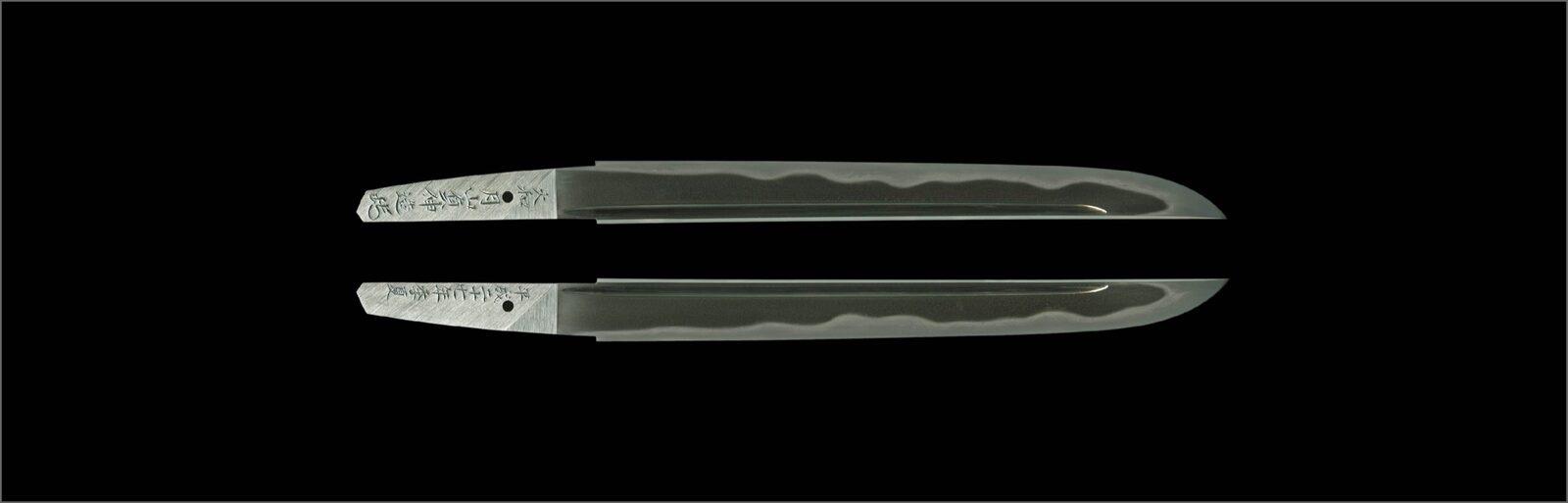
Tantō of 2015 (28.2 cm), both sides. Photo: the smith himself 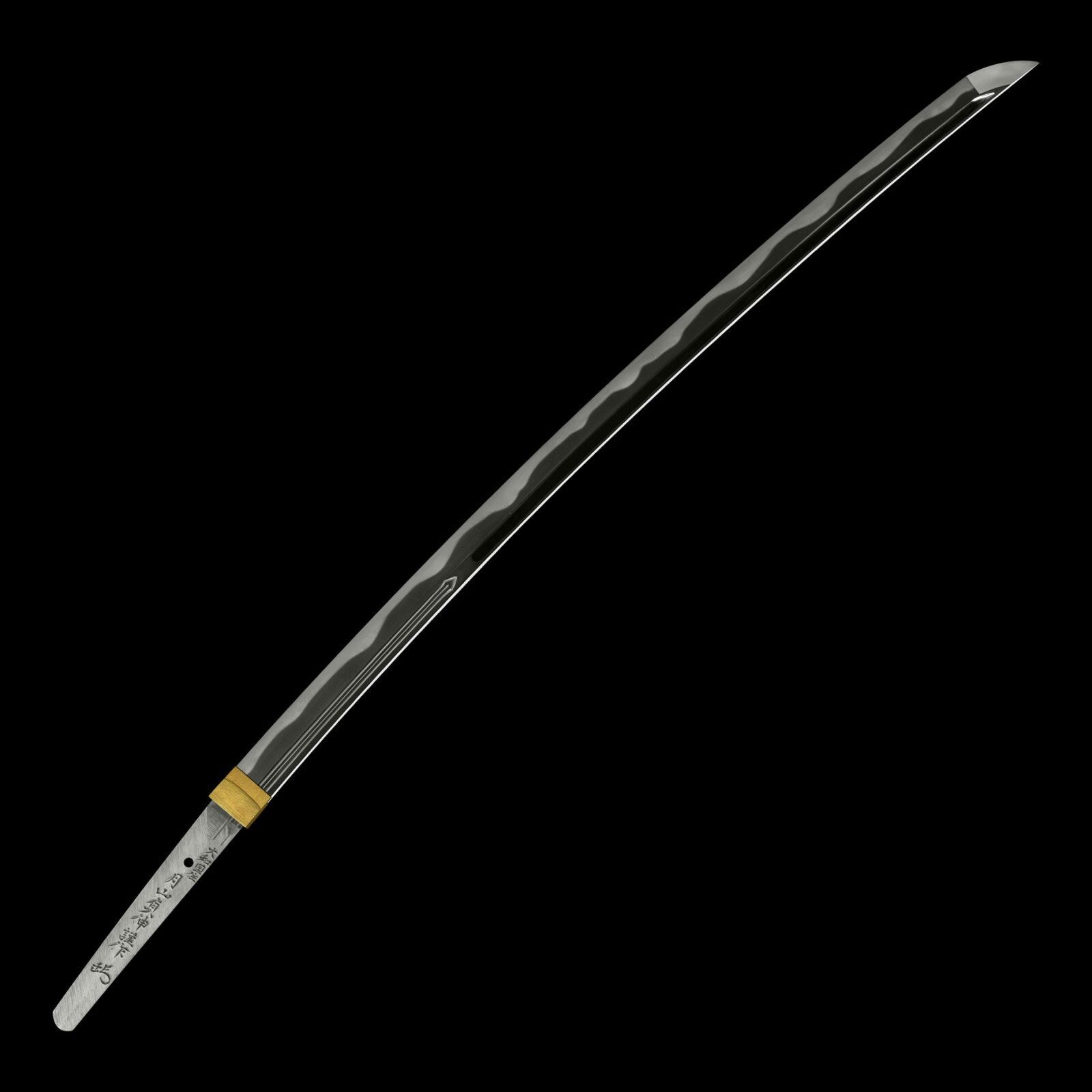
A katana by Sadanobu, in full. Photo: dealer in Japan 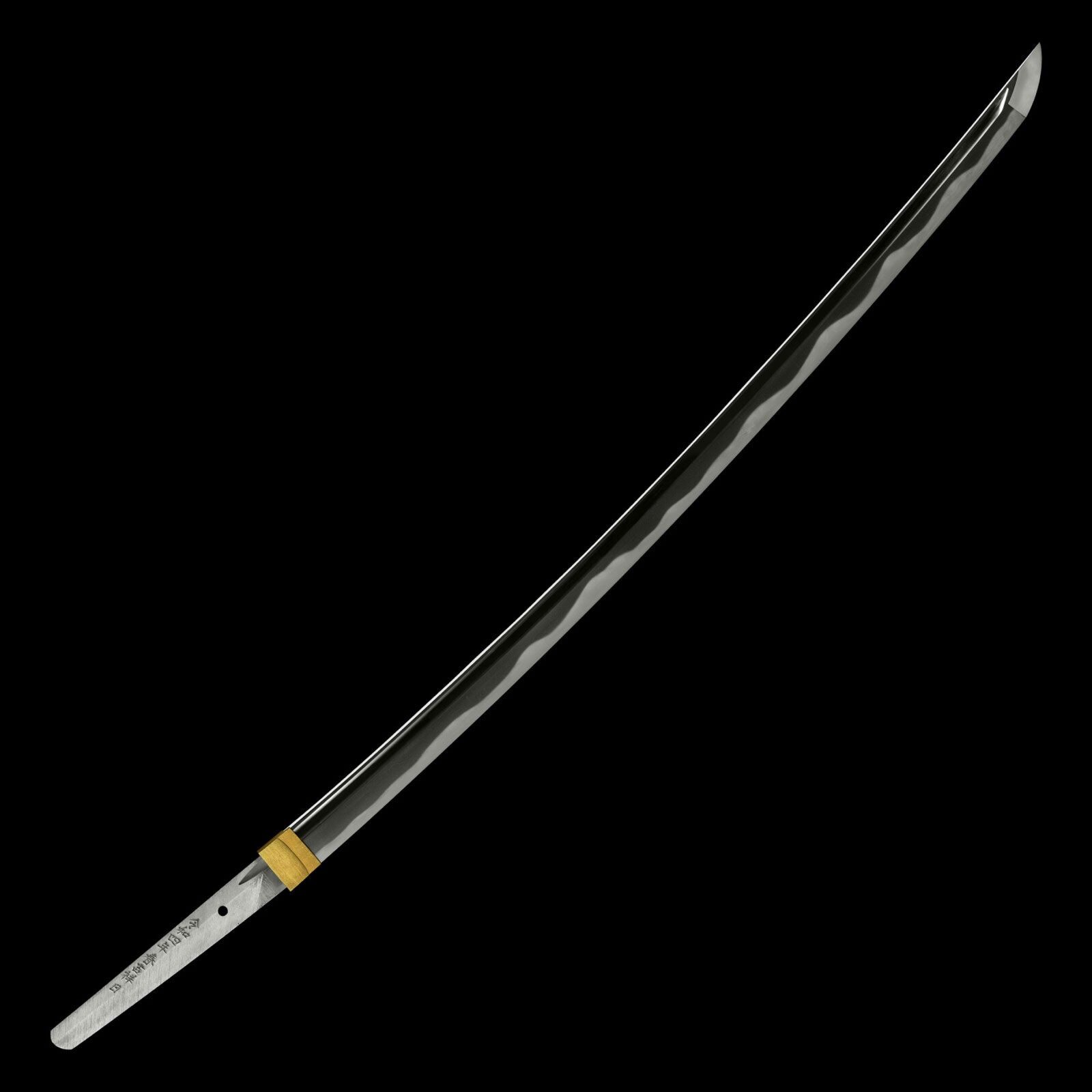
The same katana, from the other side. Photo: dealer in Japan 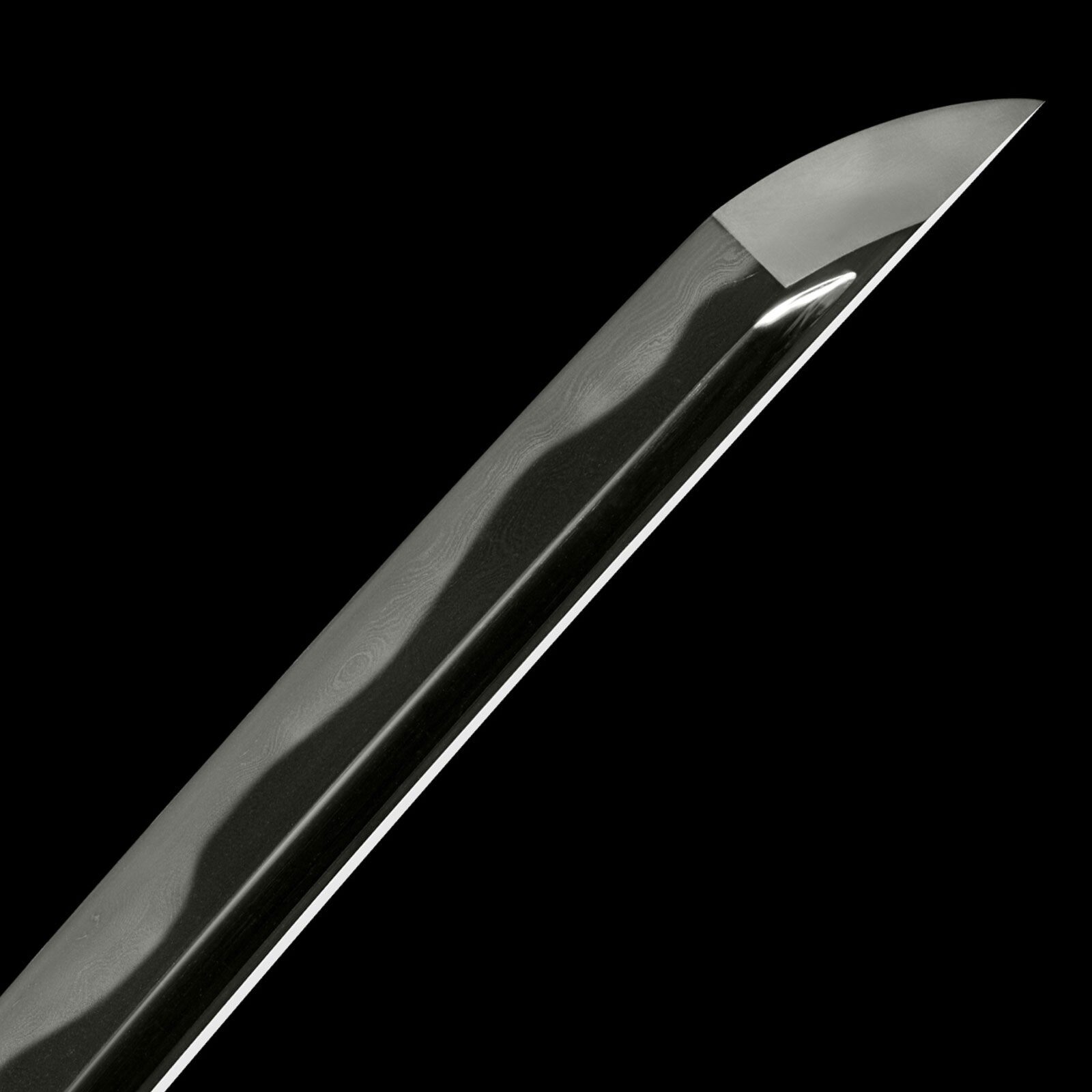
The point of the katana. Photo: dealer in Japan 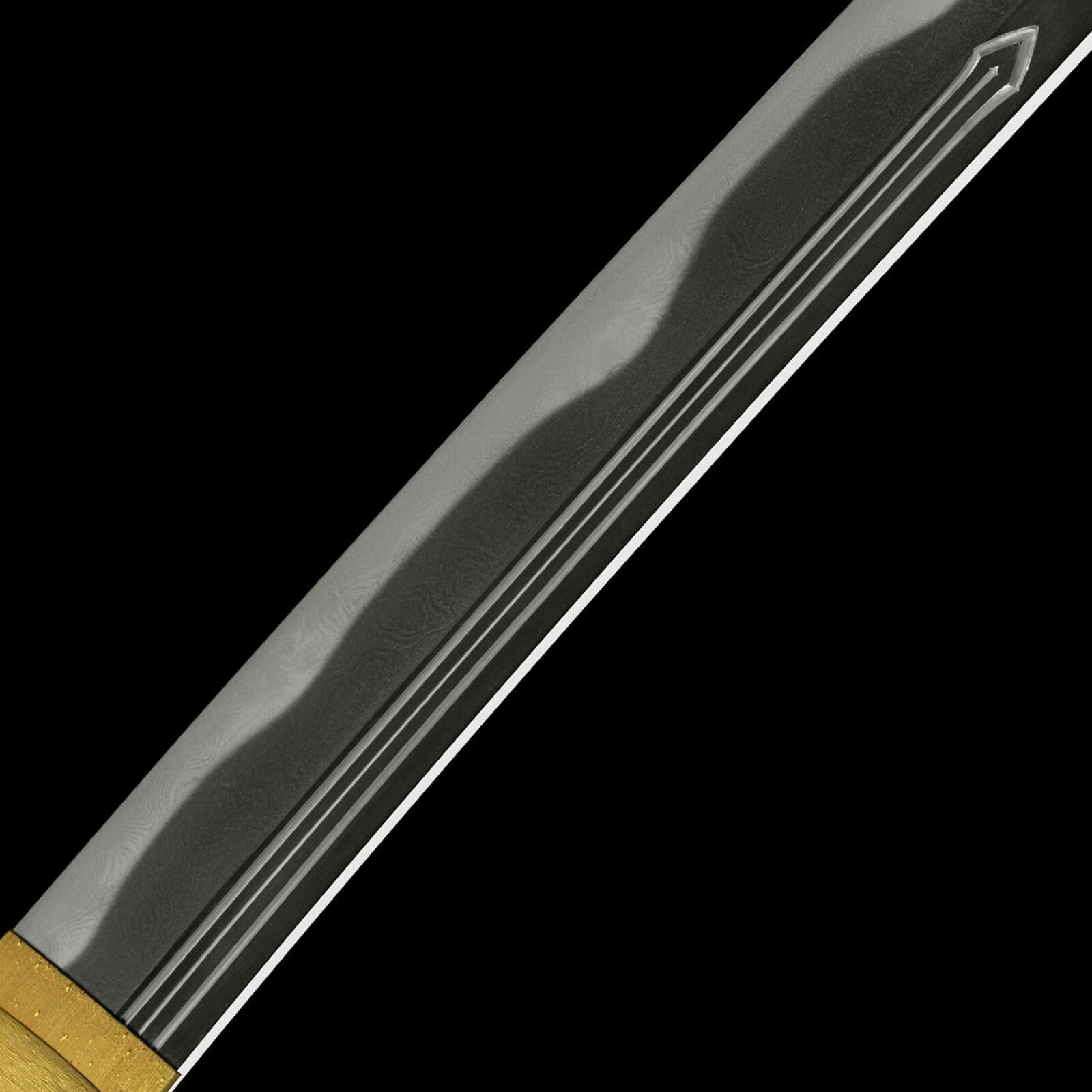
The base of the blade, with its hi and its notare. Photo: dealer in Japan