On this page
The Gassan family
Wikipedia presents him as heir to a lineage that goes back to the Kamakura period and as the fifth of the Osaka branch, the one that keeps the ayasugi temper and the Gassan engravings. In a 2011 interview he said that the school was born on Mount Gassan, in Dewa, that it moved to Osaka at the end of the Edo period and that, after the Meiji ban on wearing swords and the post-war confiscations, it went through decades of hardship.
He was born in 1946 in Osaka, the third son of Gassan Sadakazu, the second of that name (1907–1995), Living National Treasure.
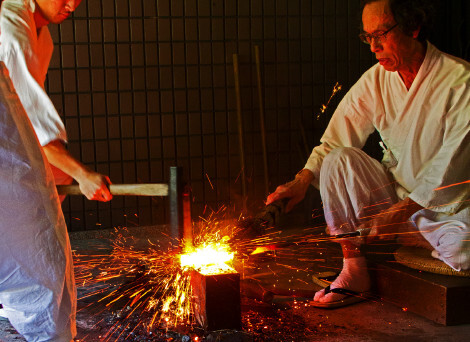
His career
He graduated in Architecture from the Osaka Institute of Technology in 1969 and, after turning down a post at a practice, became his father’s apprentice. In 1982 he was named mukansa, and that year he went with his father to the exhibition of the Living National Treasures at the Museum of Fine Arts in Boston, where they forged in public for a month.
In 1984 he forged seven tachi, one of them with his father, and three spears for the 61st ritual rebuilding of the Ise shrine (式年遷宮, Shikinen Sengū); in 2013 he forged again for the 62nd. In 1995 he opened the family’s memorial hall in Sakurai; he presided over the 全日本刀匠会 (Zen Nihon Tōshōkai), the national swordsmiths’ association, of which he is now an adviser, and he has been a councillor and judge of the NBTHK new-sword exhibition and a teacher on the courses of the Agency for Cultural Affairs.
In 2003 Nara prefecture recognised him as holder of an intangible cultural property, and he received the culture prize of the Nara Shinbun newspaper. The Order of the Rising Sun, Gold and Silver Rays, is dated 2015 by Wikipedia and autumn 2016 by him; 2015 is, according to him, the year of Nara’s recognition for the protection of heritage.
His eldest son, 月山貞伸 (Gassan Sadanobu), born in 1979, is the sixth of the Osaka branch.
The Sakurai memorial hall
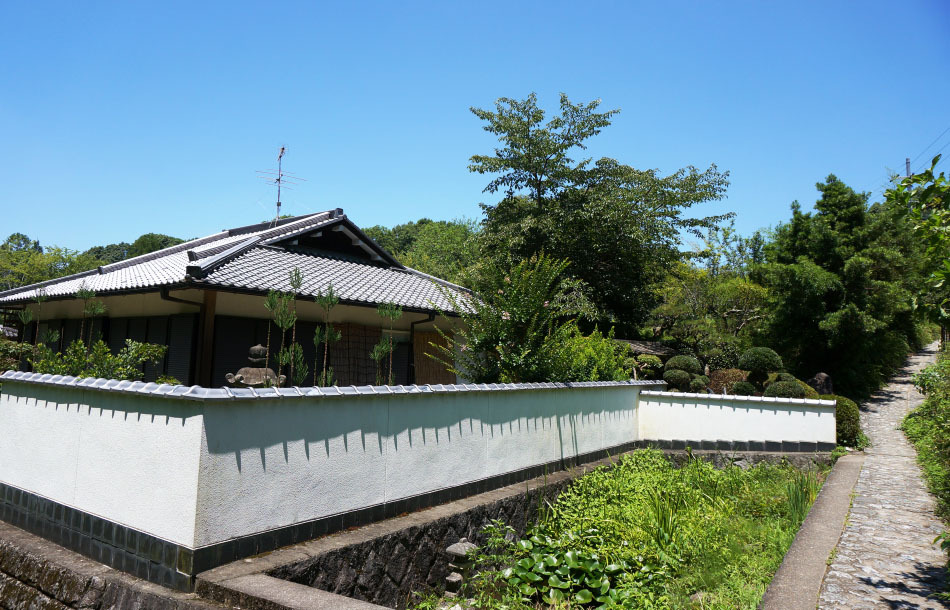
The memorial hall of the Gassan family, in Sakurai. Photo: the smith himself 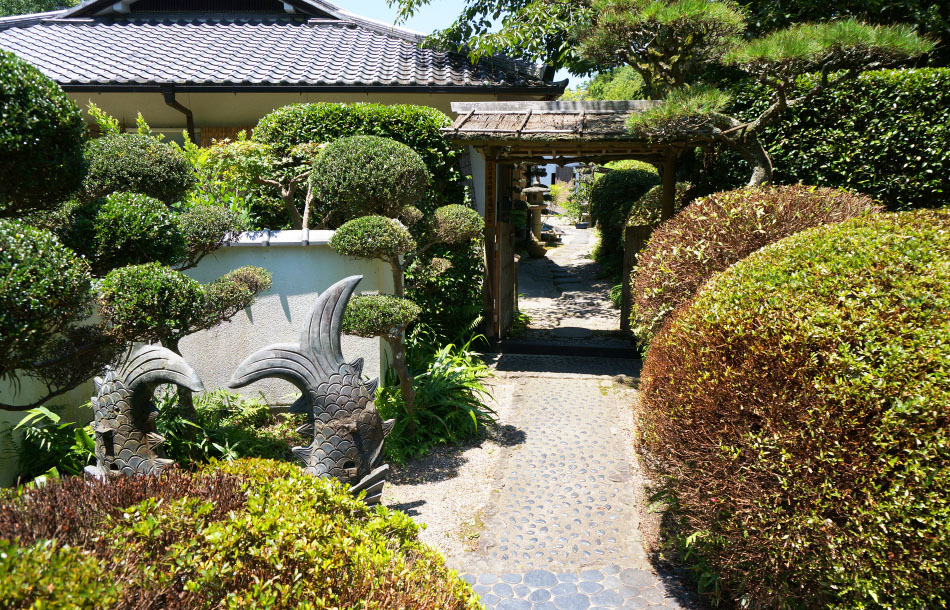
The garden and the entrance. Photo: the smith himself 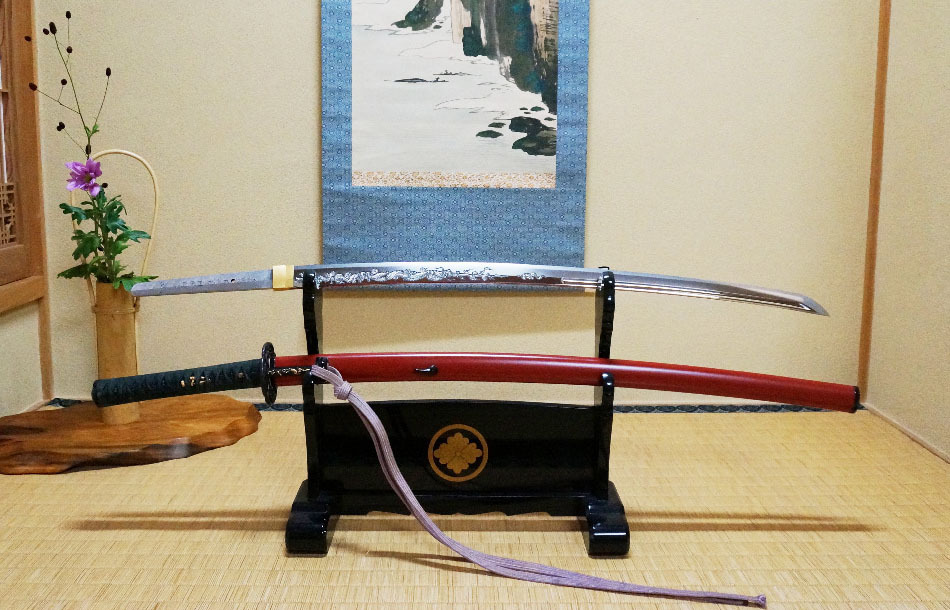
A katana and its mounting in the hall. Photo: the smith himself