On this page
The 大倶利伽羅広光 (Ōkurikara Hiromitsu)
- Important Art Object (重要美術品, jūyō bijutsuhin) since 20 December 1934, in the name of Count Date Okimune; it is in the Kyōhō meibutsuchō (享保名物帳). Today it belongs to a private collection and is not exhibited.
- It bears a carved Kurikara dragon on the omote side and koshi-hi and soe-hi on the ura. The steel is ō-itame and the hamon a ko-midare with a suguha feel and a very frayed edge.
- It was a tachi of about 90 cm, greatly shortened (ō-suriage) to 67.6 cm towards the end of the Sengoku, according to the analysis of the rust.
- The shogun Hidetada gave it to Date Tadamune in 1621, on completion of the works on the wall of Edo castle.
The 火車切広光 (Kashagiri Hiromitsu)
- Wakizashi in hira-zukuri of 38.4 cm, signed 相模国住人広光 康安二年十月日 (Sagami no kuni jūnin Hiromitsu Kōan ninen jūgatsu hi), of 1362, with a black-lacquered short-sword mounting of the late Muromachi.
- Important Art Object in 1933, with its mounting, in the name of Baron Uesugi Noriaki. It was one of the thirty-five favourite blades of Uesugi Kagekatsu. Ōtani Isao donated it in 2015 to the Sano Art Museum, in Mishima (Shizuoka).
- Carvings of bonji, sankozuka-ken and gomabashi; itame with mokume, coarse ji-nie with chikei, tobiyaki and muneyaki; hamon of chōji and gunome with ashi, strong nie, kinsuji and sunagashi.
- It is not recorded where its name, “the one that cut a kasha”, comes from. Sesko distinguishes it from the Kashakiri Tomoshige and suggests a possible link with Tada Mitsuyori, a vassal of the Takeda.
With NBTHK papers
| Work | Rank | Details |
|---|---|---|
| Wakizashi 相模国住人広光 康安二年十月日 (Sagami no kuni jūnin Hiromitsu Kōan ninen jūgatsu hi) | Tokubetsu Jūyō Tōken | 30.3 cm, sori 0.3, 2.75 cm wide at the base; hira-zukuri and mitsu-mune. It belonged to the American collector Walter Compton and was donated to the NBTHK in June 2025 |
| Tachi signed 相模国住人左 (Sagami no kuni jūnin Sa…), Saemon-jō Hiromitsu, of the 2nd year of Bunna (1353) | Tokubetsu Jūyō Tōken no. 18 | Shortened |
The Japanese Wikipedia says that only one tachi signed by Hiromitsu is known; it may be this one, but no source states it.
Gallery
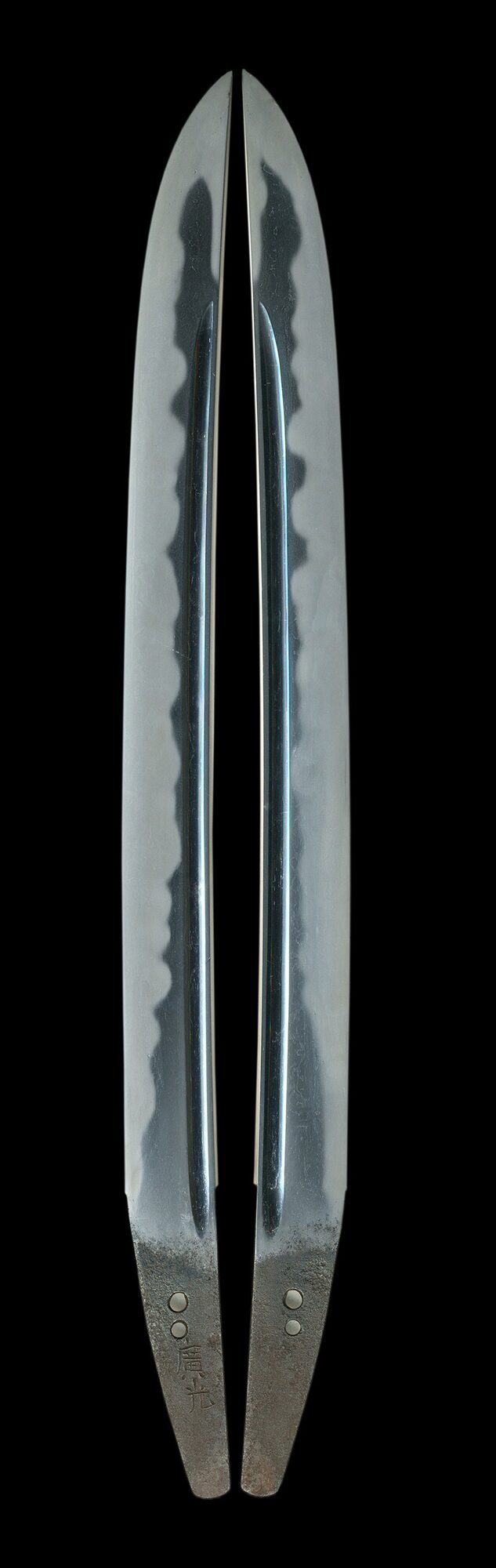
Hira-zukuri wakizashi signed 廣光 (Hiromitsu), with NBTHK Jūyō Tōken papers: the two sides of the blade and the tang. Photo: dealer in Japan