On this page
Quick profile
- Name
- Hiromitsu; signature 廣光 (Hiromitsu) or 相模国住人廣光 (Sagami no kuni jūnin Hiromitsu), and on a tachi of 1353, Saemon-jō Hiromitsu HD
- Kanji and reading
- 広光 (Hiromitsu), also 廣光 (Hiromitsu) HD
- Period
- Nanbokuchō: work dated from around 1350, in the Kan'ō era, until 1364 according to one issue of the NBTHK journal and until 1367 according to another HD
- Province
- Sagami, in Kamakura HD
- School
- Sōshū HD
- Master
- No document: pupil of Masamune, his natural or adopted son, or pupil of Sadamune, depending on the source AT
- Documented fact and tradition
- Documented: his signed and dated blades and his NBTHK papers. Tradition: his master and his kinship with Masamune. AT
In short
What we know. There are blades signed by Hiromitsu in Sagami with dates from around 1350 to the 1360s. The NBTHK considers him somewhat older than Akihiro and the smith who established hitatsura.
How we know it. From the NBTHK journal, which in 2026 published a wakizashi of his with Tokubetsu Jūyō papers, and from the Japanese dictionaries. His two most famous blades are known from the Japanese Wikipedia and from Markus Sesko.
What we do not know. Who his master was, whether he was related to Masamune and the exact year of his last work. The official designation record of his two famous blades has not been located.
Sections
- Kamakura after 1333 Life and times When he worked, his relationship with Akihiro, his lineage according to each source and how he signed.
- Hitatsura · dango-chōji Work and style Hitatsura, the kantei keys of his blades and how not to confuse him with Akihiro or with the Hasebe.
-
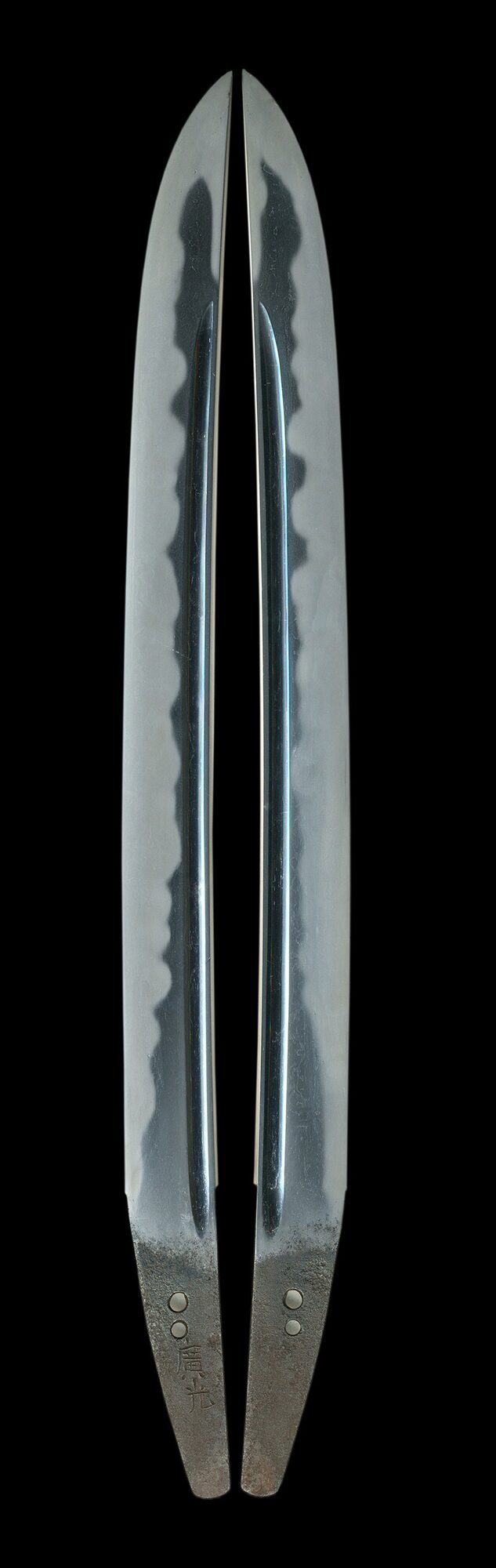 Kyōhō meibutsuchō · Tokubetsu Jūyō
Famous works
The Ōkurikara, the Kashagiri and the blades with special NBTHK papers.
- Bibliography Sources The sources consulted on 4 October 2026, with their link.