Masamune
正宗 (Masamune)
A Kamakura smith in Sagami of the late Kamakura and early Nanbokuchō periods; tradition holds him the greatest master of Sōshū-den.
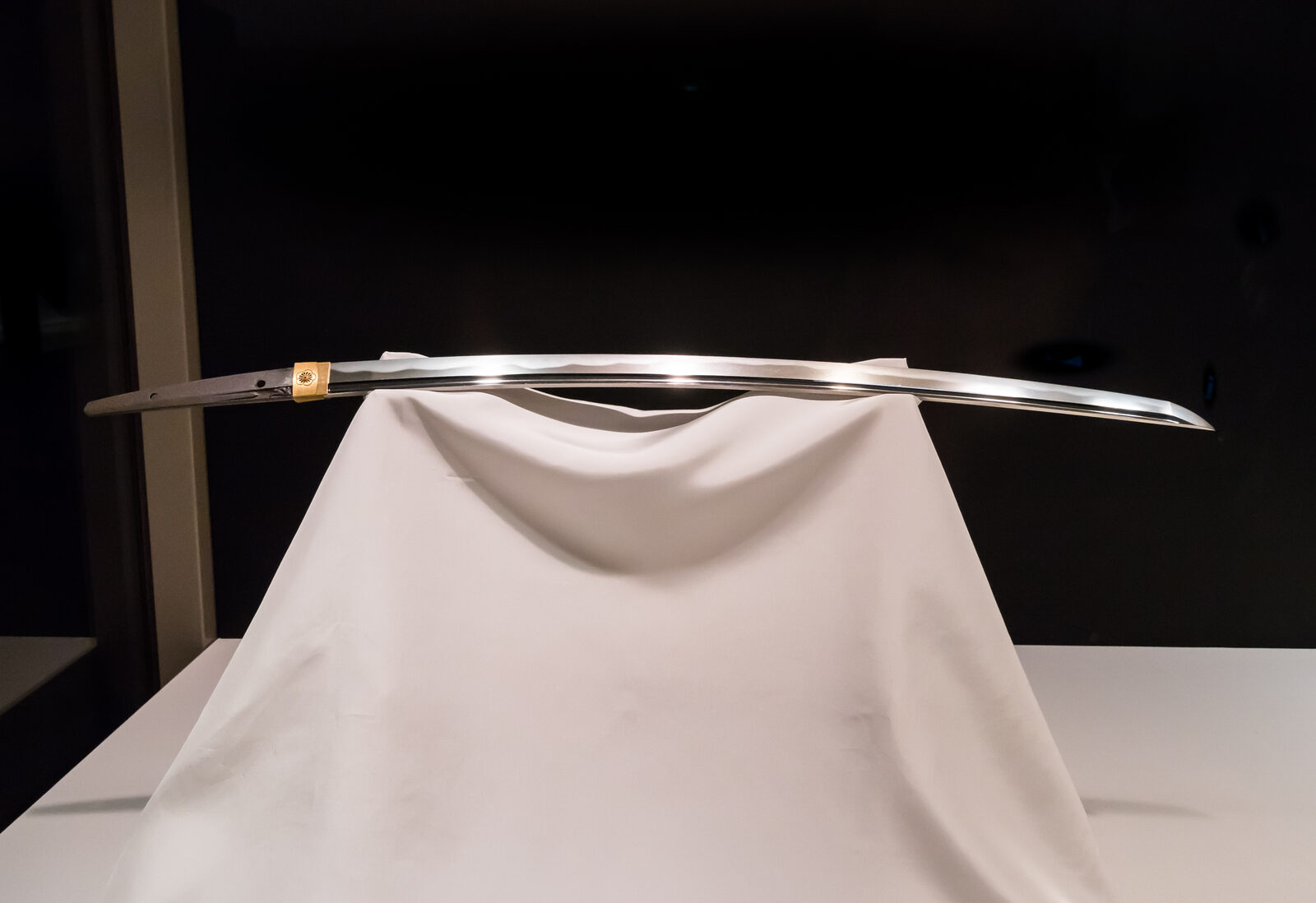
Profile
Masamune worked in Kamakura between the end of the Kamakura period and the first years of the Nanbokuchō. He is also called Gorō Nyūdō and Okazaki Masamune, and tradition makes him a pupil of Shintōgo Kunimitsu. He is credited with bringing Sōshū-den to its height: hard and soft steels combined in an itame with chikei, and a notare hamon with gunome, of intense nie, with kinsuji and sunagashi. Nearly all his tachi were later shortened and lost their signature; only a few signed tantō are known, and in the Meiji era his very existence was questioned. The Kyōhō meibutsuchō places him, with Awataguchi Yoshimitsu and Gō Yoshihiro, among the three great masters, and he has more pieces in that list than any other smith. The list of his «ten pupils» (jittetsu) is late and gathers smiths most of whom could not have studied with him.
Monograph
Masamune (正宗)
A name surrounded by legend, with few signed blades and the highest count in the Kyōhō meibutsuchō, told with the level of evidence of each fact.
Read the monograph
Notable works
- Fudō Masamune: a signed tantō, from the Owari Tokugawa house.
- Hōchō Masamune: three tantō of exceptional width attributed to him.