On this page
Quick profile
- Name
- Matsuba Hongyō or Matsuba Motoyuki; with his title, Kawachi no Kami Motoyuki AT
- Kanji and reading
- 松葉本行 (Matsuba Hongyō or Matsuba Motoyuki); 河内守本行 (Kawachi no Kami Motoyuki); 河内守源本行 (Kawachi no Kami Minamoto Motoyuki), on a tsuba AT
- Period
- The Edo period: the 『懐宝剣尺』 (Kaihō Kenjaku), of 1797, already includes him. The dates of his life are not recorded in the sources consulted. AT
- Province
- The wazamono list of the English Wikipedia gives him as Motoyuki of Osaka (大坂, Ōsaka), in Settsu province. That the Saga Prefectural Library devoted three articles to him points to a period in Hizen. AT
- School
- Not recorded in the sources consulted PC
- Master
- Not recorded in the sources consulted PC
- Title
- Kawachi no Kami (河内守, Kawachi no Kami); the year he received it is not recorded in the sources consulted AT
- Cutting rank
- Wazamono (業物, wazamono), the fourth grade of the 『懐宝剣尺』 (Kaihō Kenjaku), according to the English and Japanese Wikipedia AT
- Documented fact and tradition
- Documented: two tsuba signed with his name and his title, in the Tokyo National Museum and in the Edo-Tokyo Museum, and three articles about him in the journal of the Saga Prefectural Library, from 1964 to 1967. Undocumented in the sources consulted: his dates, his origin, his master and his style. AT
In short
The Yamada cutting list places him among the 業物 (wazamono), the fourth of its grades. The English Wikipedia names him Motoyuki of Osaka and gives Matsuba Motoyuki and Kawachi no Kami Motoyuki as the same swordsmith; the Japanese Wikipedia repeats the equivalence.
The Tokyo National Museum holds an iron tsuba signed 河内守本行 (Kawachi no Kami Motoyuki), and the Edo-Tokyo Museum another signed 刀作人河内守源本行 (tōsakunin Kawachi no Kami Minamoto Motoyuki): the word 刀作人 (tōsakunin) says that its maker forged swords. Most probably both are the work of the swordsmith on the list.
We have not found any photograph of a blade of his that can be published, nor a description of his style in the sources consulted.
Sections
-
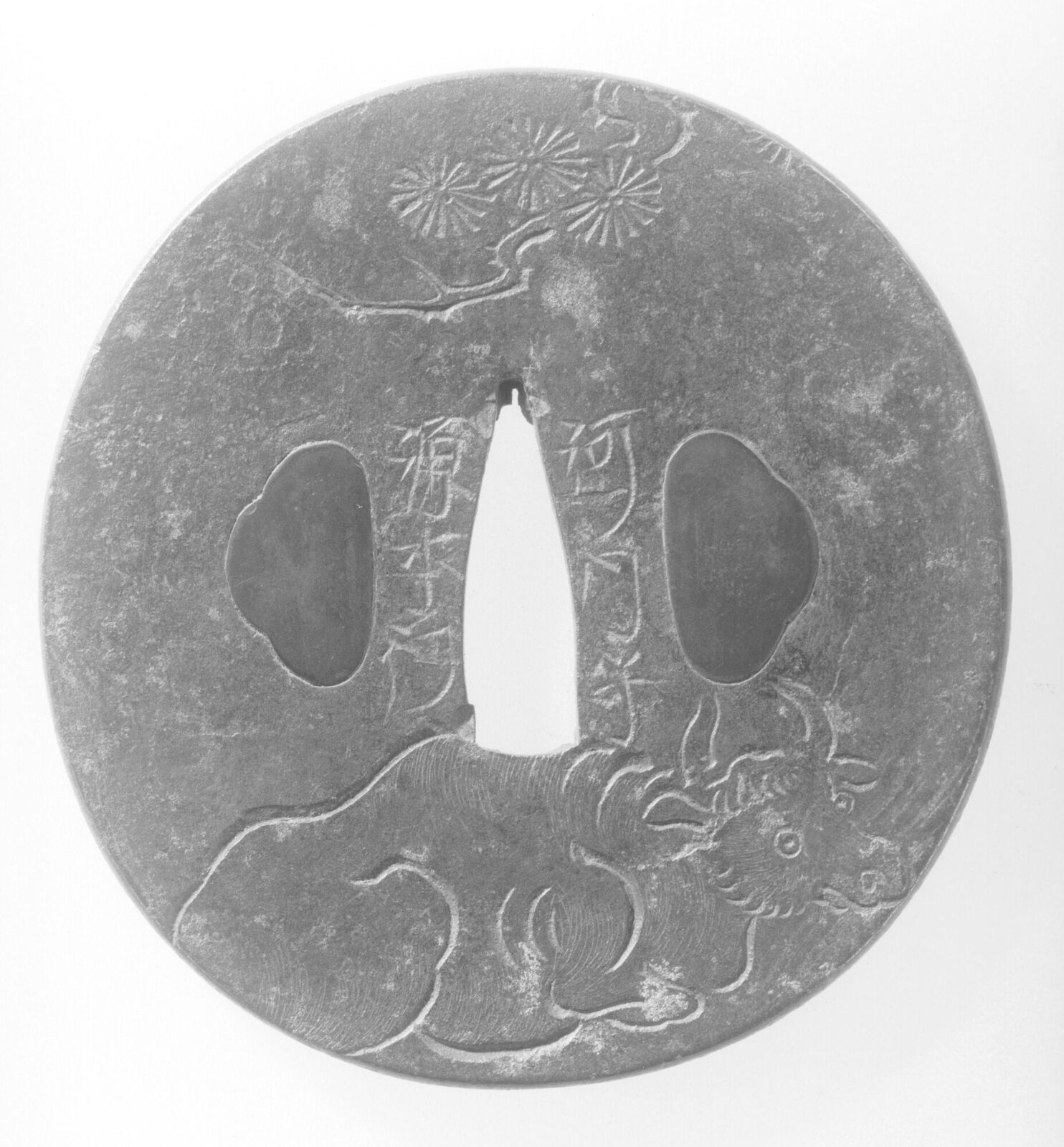 One name, two readings
Life and times
Matsuba, Hongyō and Motoyuki, and the Saga studies.
-
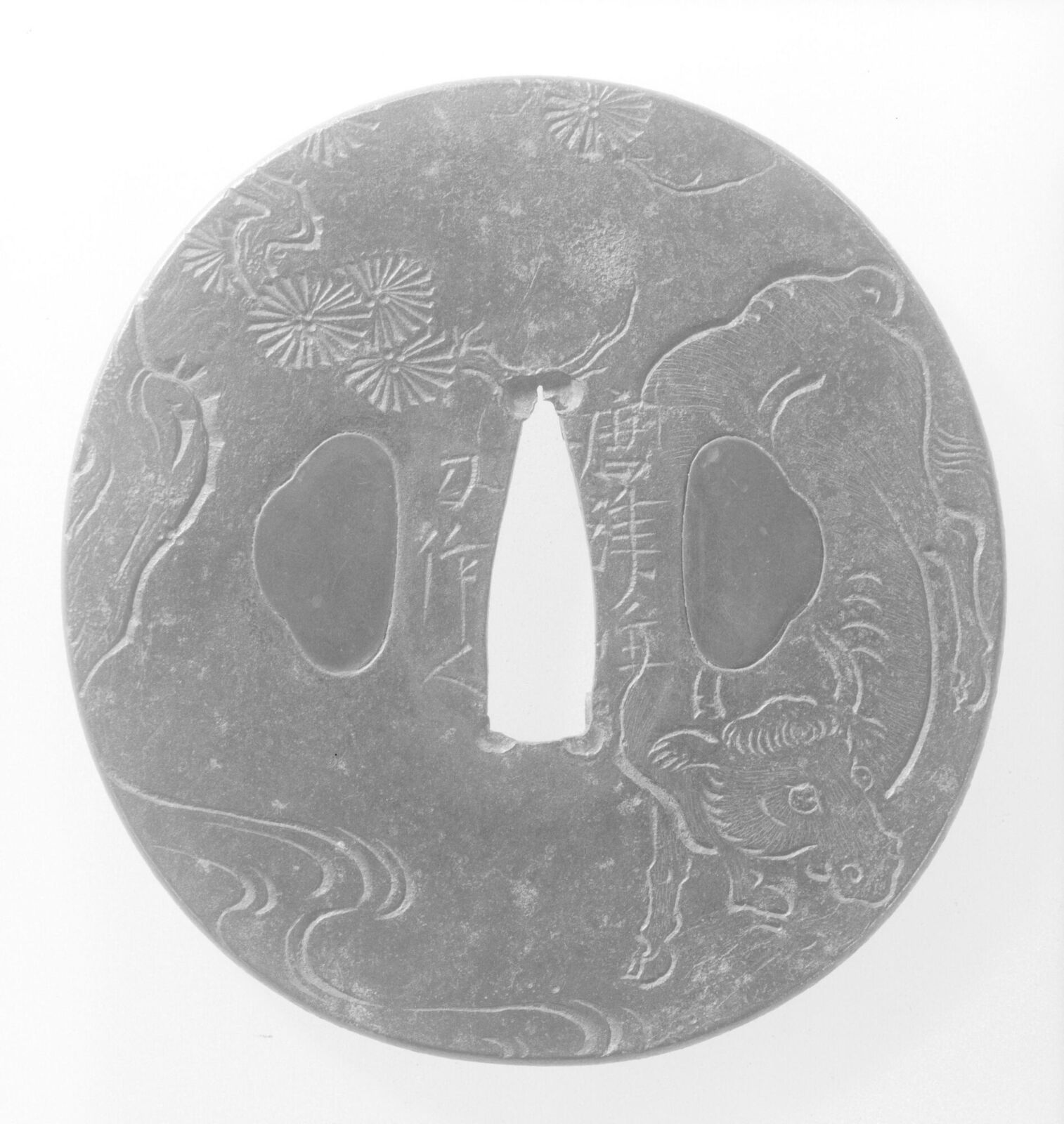 His signature
Work and style
His signatures and the tsuba that bear his name.
-
In museums and lists
Famous works
The two museum tsuba and his place in the cutting list.
-
Bibliography and credits
Sources
The sources consulted and the image credits.