Hōshō Sadamune
保昌貞宗 (Hōshō Sadamune)
A smith of the Hōshō school of Yamato, from the late Kamakura period, whom tradition holds to be the school’s effective founder; no work of his with an official designation has been located.
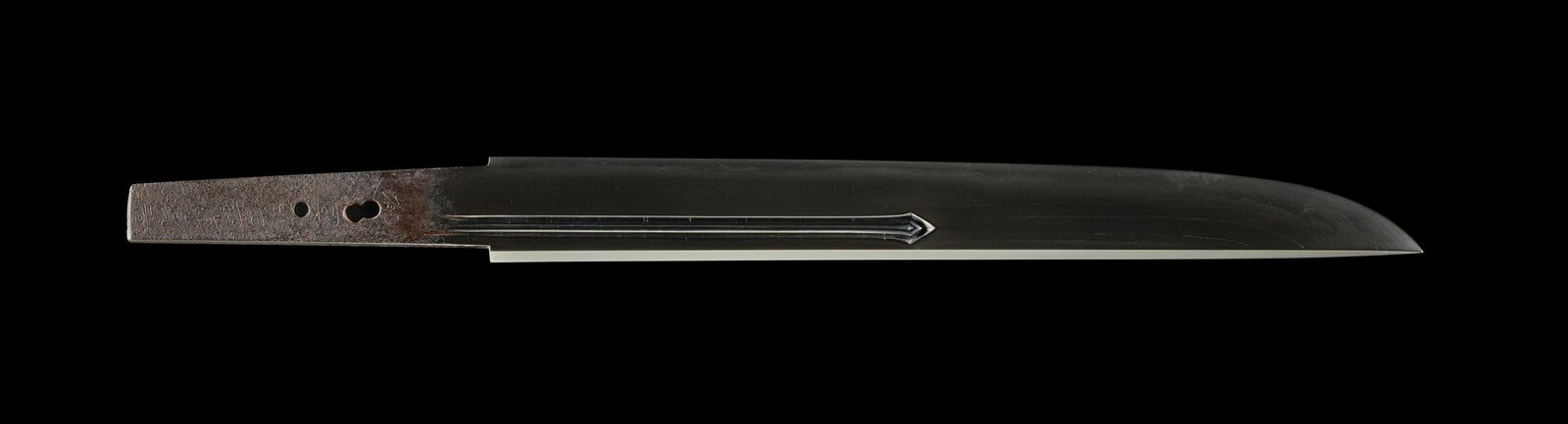
Profile
Hōshō Sadamune worked in the Hōshō school, one of the five of the Yamato tradition, in Takaichi district, south of the Nara basin, in the late Kamakura period. Tradition holds him to be the school’s effective founder, since no work survives by his father Kunimitsu, and places him around the Bunpō era (1317). According to the Meikan cited by the NBTHK, Sadaoki, active around 1329-1331, was his son. He must not be confused with the Sadamune of Sōshū.
The school has the most pronounced masame of the Japanese sword: a hada of straight, regular grain, a narrow suguha temper full of activity, a bōshi almost always yakizume and a tang ending in kiri with higaki file marks. Its works are so uniform that it is hard to tell one smith from another, and the named ones, such as the Ōhōshō and the Kuwayama Hōshō, are by Sadayoshi.
Monograph
Hōshō Sadamune (保昌貞宗)
Who he was, what is known and what is tradition, told with the level of evidence of each fact.
Read the monograph