
On this page
Quick profile
- Name
- Norifusa; he is called Ichimonji Norifusa and Katayama Ichimonji Norifusa HD
- Kanji and reading
- 一文字則房 (Ichimonji Norifusa) · the signature, 則房 (Norifusa) HD
- Period
- Mid-Kamakura period (13th century); no dates of birth or death HD
- Province
- Bizen HD
- School
- Fukuoka Ichimonji; according to tradition, head of the Katayama Ichimonji branch AT
- Master
- Not recorded in the sources consulted PC
- Documented fact and tradition
- Documented: his signature and two National Treasures. Tradition: that he lived in Katayama. AT
In short
What we know. Two blades bearing his name are National Treasures: a signed tachi, in the Fukuyama Museum of Art, and an unsigned katana attributed to him, in the Kyūshū National Museum. The tachi comes from the Tokugawa house. A third, a katana with a folded signature, is an Important Art Object and was exhibited by the NBTHK in 2026. The habaki of the Kyūshū katana, with the three-leaf aoi of the Tokugawa, points to the same provenance.
How we know it. From the official records of the two works, on Bunka Isan Online and ColBase, and from the NBTHK catalogue. The Katayama story and his place in the school are told by the Japanese Wikipedia and by Markus Sesko.
What we do not know. His dates, his master and where Katayama was: next to Fukuoka or in Bitchū; opinions differ.
Sections
-
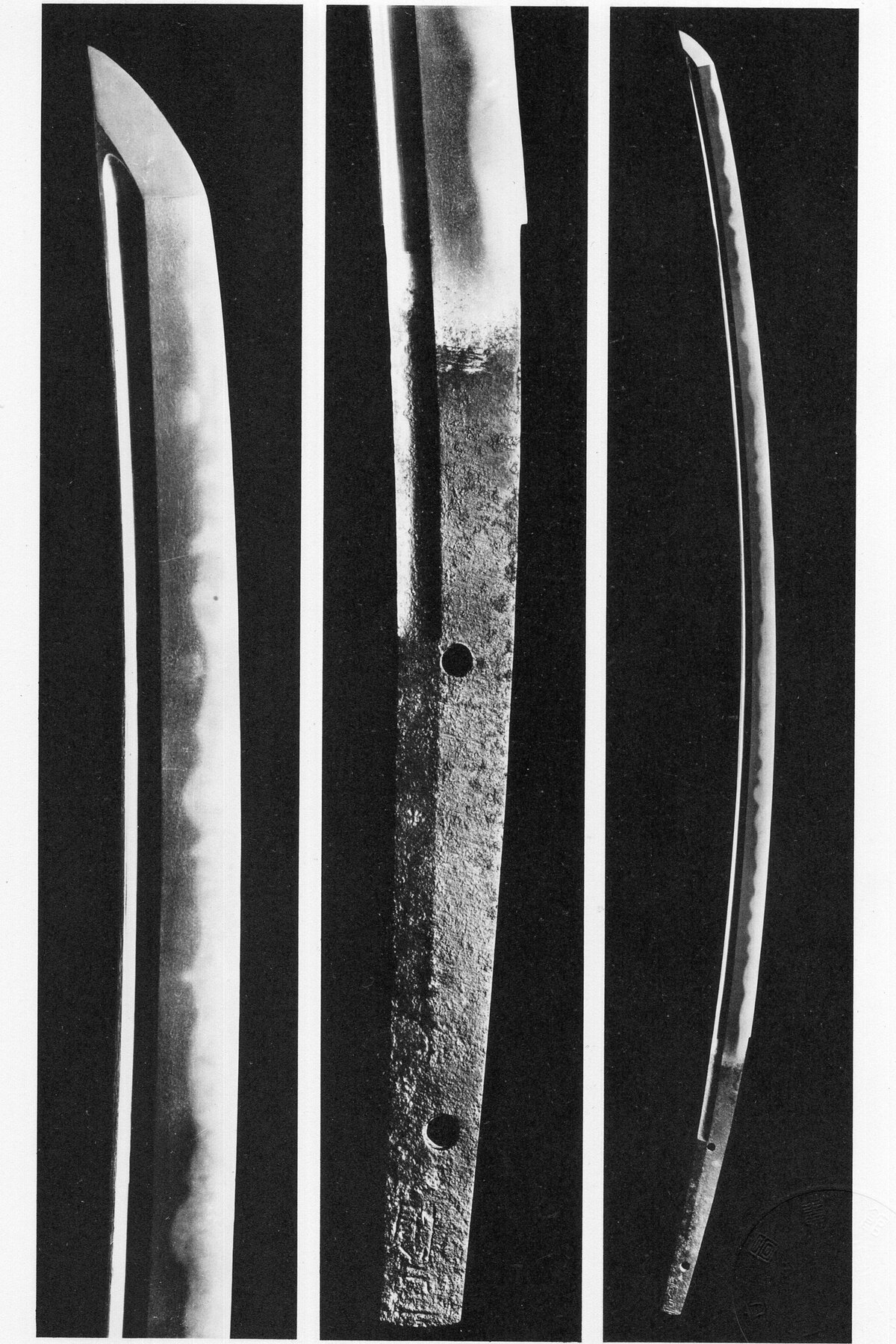 Fukuoka · Katayama · mid-Kamakura
Life and times
The school, the Katayama tradition and what is not known about him.
-
 Chōji · sakagakaru · utsuri
Work and style
Sugata, jihada, hamon, bōshi, nakago and signature: the kantei keys.
-
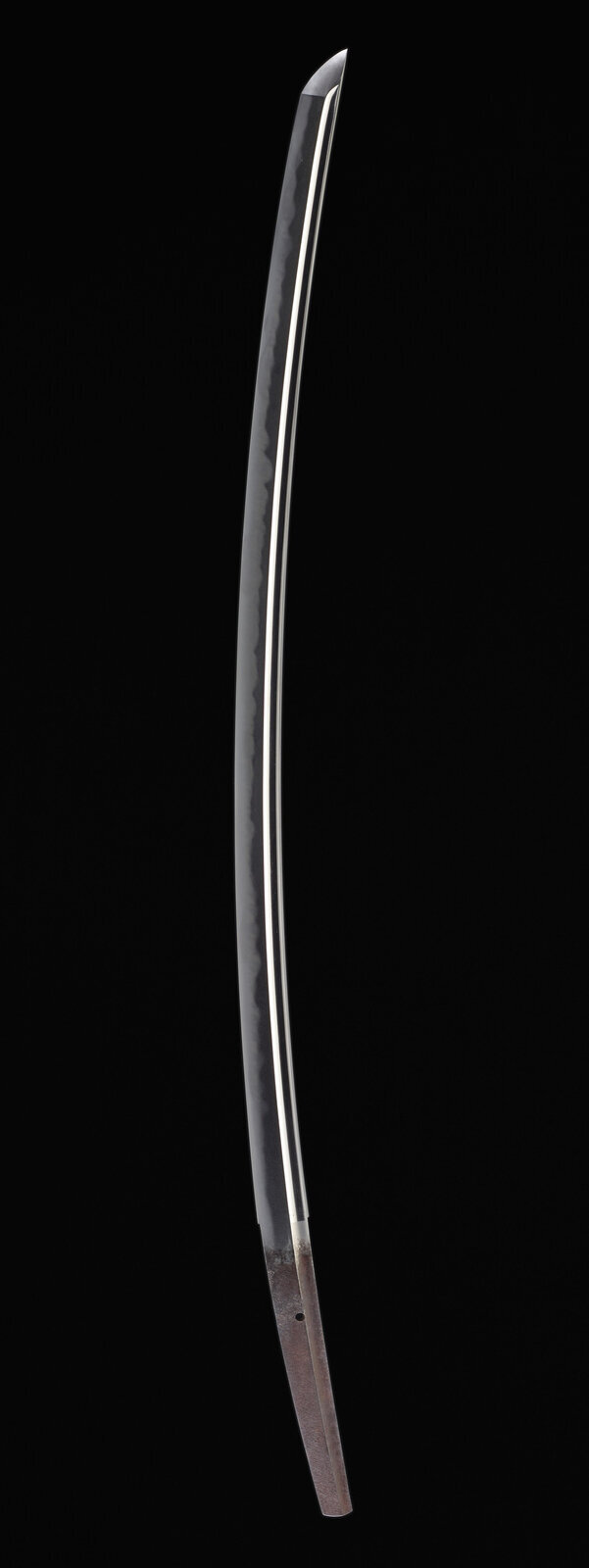 Two National Treasures · one Important Art Object
Famous works
His two National Treasures and one Important Art Object.
- Bibliography and credits Sources The sources consulted on 4 October 2026 and the credit for each image.