Kantei keys
- Sugata
- The Fukuyama tachi keeps a great deal of curvature although it was shortened. The Kyūshū katana is shinogi-zukuri, with iori-mune and chū-kissaki: a 69.5 cm blade and 2.7 cm of sori. HD
- Jihada
- In the Kyūshū katana, mokume mixed with itame, with the hada visible, chikei and very fine ji-nie, and a faint midare-utsuri on the shinogi-ji. HD
- Hamon
- Large chōji or 重花丁子 (jūka chōji), with a high temper, with ashi that slant backwards, 逆足 (sakaashi), and tobiyaki near the monouchi. His own trait: the 逆がかる (sakagakaru) temper, which slants backwards. HD
- Bōshi
- In the Kyūshū katana, midare-komi, somewhat pointed, with a ko-maru turn-back. HD
- Nakago and mei
- The Fukuyama tachi, shortened, bears the two-character signature 則房 (Norifusa), cut with a chisel. The Kyūshū katana is ō-suriage and unsigned; it has a bōhi on one side that runs to the end of the nakago. HD
What is his own
- The official record of the Fukuyama tachi calls it “a masterpiece showing the grand style of the Ichimonji at its peak”: large mixed chōji, deep nioi and a healthy blade.
- The Japanese Wikipedia notes that, unlike ordinary Fukuoka Ichimonji, his temper slants backwards: the sakagakaru.
- The Kyūshū katana is unsigned: it was attributed to him for its sugata, its jihada and that slanting temper.
What belongs to the school
According to the Japanese Wikipedia, the Fukuoka Ichimonji of his time forges grand tachi, with funbari, high koshizori and ikubi-kissaki; a very dense itame with fine ji-nie and midare-utsuri; and high chōji: 蛙子丁子 (kawazuko chōji), 重花丁子 (jūka chōji) and 袋丁子 (fukuro chōji). These are traits of the school, not measured on his blades.
Gallery

The Fukuyama tachi: the half with the point, with the chōji temper. Committee for the Protection of Cultural Properties, “Kokuhō zuroku” (1957), on Wikimedia Commons · Public domain · source 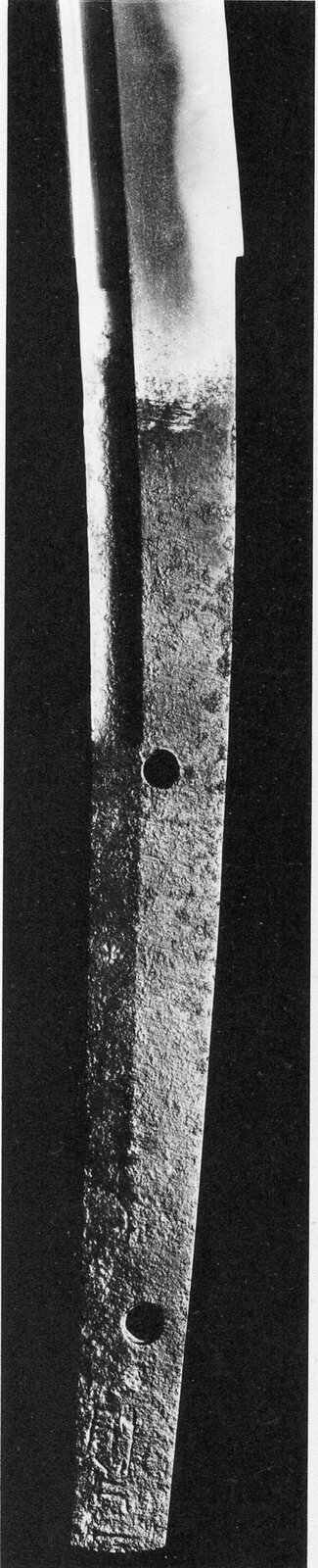
The nakago of the Fukuyama tachi, with the signature 則房 (Norifusa). Committee for the Protection of Cultural Properties, “Kokuhō zuroku” (1957), on Wikimedia Commons · Public domain · source 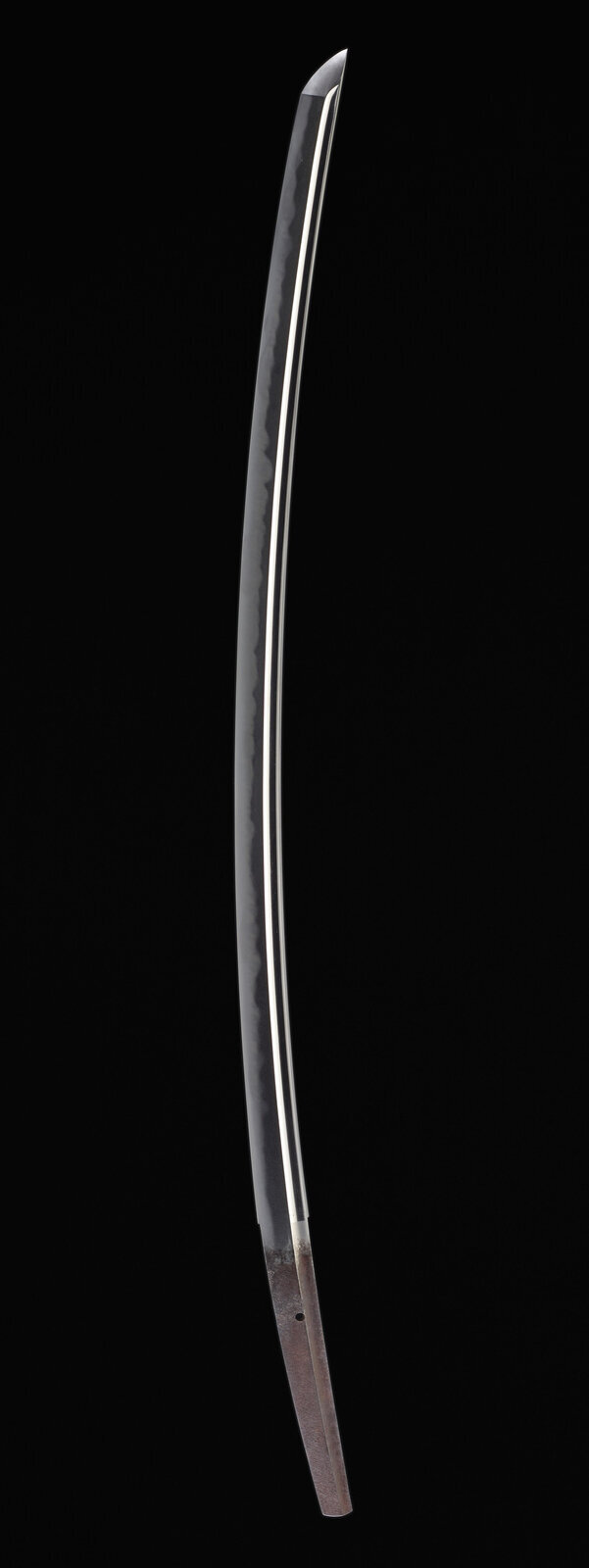
The katana mumei Norifusa of the Kyūshū National Museum, one side. Kyūshū National Museum, via ColBase · ColBase terms of use · source 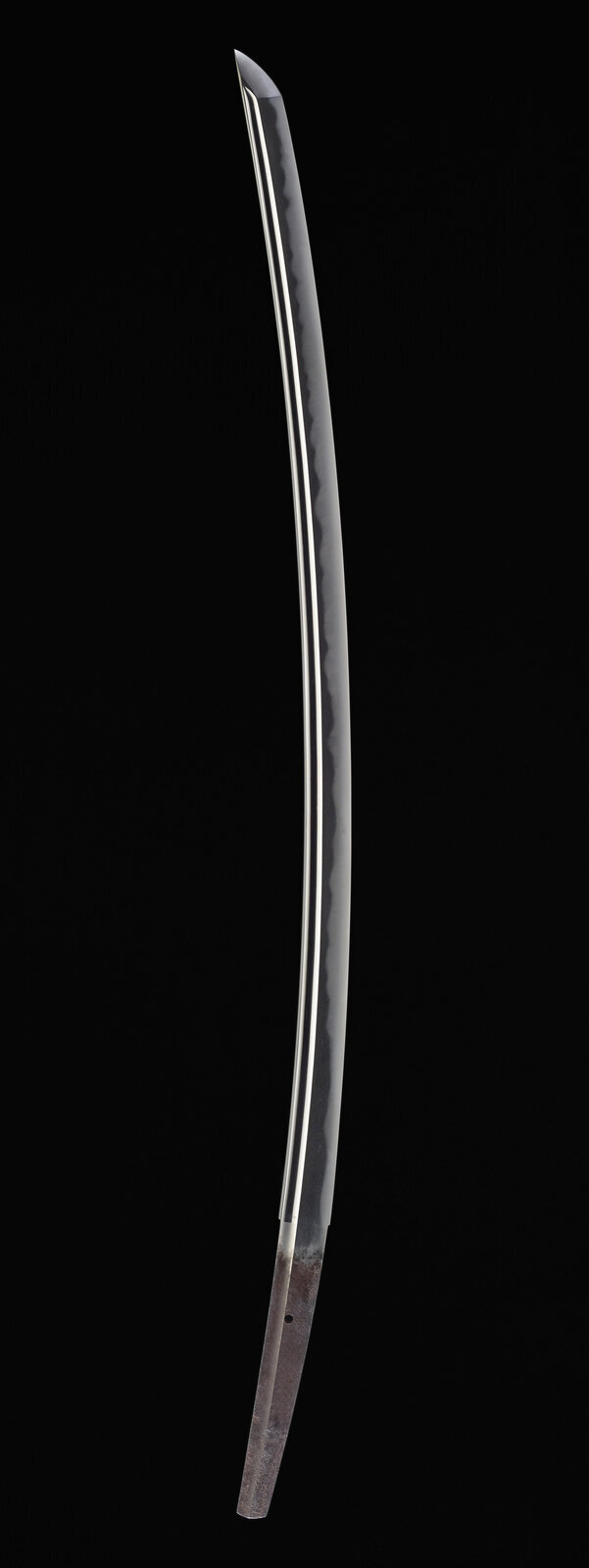
The Kyūshū katana, the other side. Kyūshū National Museum, via ColBase · ColBase terms of use · source
