On this page
Quick profile
- Name
- Norimune; he is called Ichimonji Norimune, Fukuoka Ichimonji Norimune and, by legend, Kiku-ichimonji Norimune HD
- Kanji and reading
- 一文字則宗 (Ichimonji Norimune) · the signature, 則宗 (Norimune) · 菊一文字 (Kiku-ichimonji) HD
- Period
- Late Heian and early Kamakura; no dates of birth or death HD
- Province
- Bizen, Fukuoka district HD
- School
- Founder of Fukuoka Ichimonji; the Japanese Wikipedia records that he is also classed separately, as 古一文字 (Ko-Ichimonji), or within 古備前 (Ko-Bizen) AT
- Master
- Not recorded in the sources consulted PC
- Son and successors
- His son, according to Kotobank, 助宗 (Sukemune); in the school, later, Yoshifusa, Sukezane and 則房 (Norifusa) AT
- Documented fact and tradition
- Documented: his signature and his designated works. Tradition: that he was the first of Go-Toba’s rotating smiths. AT
In short
What we know. He signed with two characters, 則宗 (Norimune), with a fine chisel. Blades with his signature are at the Hie shrine in Tokyo, a National Treasure; at the Atago shrine in Kyoto, the Okayama Prefectural Museum and the Mitsui Memorial Museum, Important Cultural Properties; and among the gyobutsu of the Imperial Household.
How we know it. From the official records on Bunka Isan Online. From the Kotobank dictionary and the Japanese and English Wikipedias. That he was the first of Go-Toba’s rotating smiths is tradition: the Japanese Wikipedia gives it with an “it is said”.
What we do not know. His dates, his master and his place in the wazamono lists, which is not recorded in the sources consulted.
Sections
-
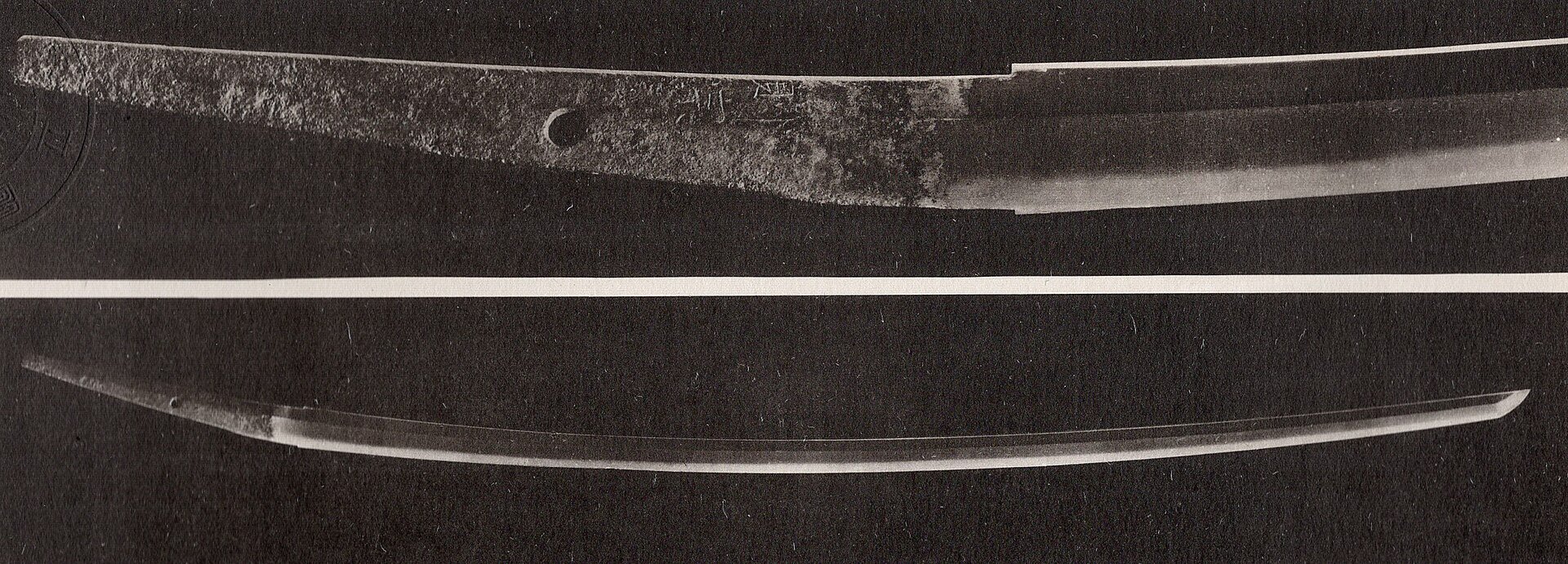 Go-Toba · the rotating smiths · Fukuoka
Life and times
Fukuoka, Go-Toba’s rotating smiths and the legend of the Kiku-ichimonji.
-
 Ko-midare · slender tachi · two-character signature
Work and style
Sugata, jihada, hamon, nakago and signature: the kantei keys.
-
 Hie · Atago · Okayama · Mitsui · gyobutsu
Famous works
A National Treasure, four Important Cultural Properties, the gyobutsu and the “Sasamaru”.
-
 Go-Toba · Fukuoka Ichimonji
Videos
An interview about Go-Toba and two overviews of Norimune and his school.
- Bibliography and credits Sources The sources consulted on 4 October 2026 and the credit for each image.