Kantei keys
- Sugata
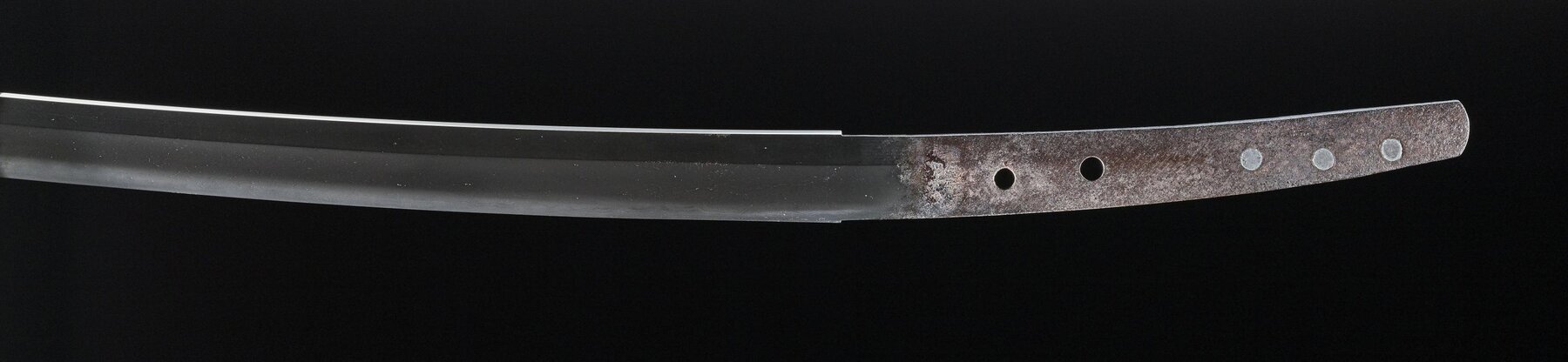
- The tachi in the Tokyo National Museum is shortened, but keeps a slender and elegant sugata. HD
- Jihada
- The sources do not describe it on a work of his; in the school, a dense itame with fine ji-nie and midare-utsuri. AT
- Hamon
- In the Tokyo tachi, a calm suguha with ko-midare. HD
- Bōshi
- Not described in the sources consulted PC
- Nakago and mei
- Two-character signature, 助宗 (Sukemune). The nakago of the Tokyo tachi is shortened, with two open holes and three plugged with silver. HD
The Tokyo National Museum record
“He was a smith of Fukuoka, in Bizen, in the early Kamakura period, and with Norimune he was chosen as one of Go-Toba’s rotating smiths. The blade is shortened, but it has a slender and elegant sugata, and the hamon is a calm suguha with ko-midare. It is one of his few signed works.”
What belongs to the school
According to the Japanese Wikipedia, the school forges tachi with funbari, high koshizori and ikubi-kissaki, a dense itame with fine ji-nie and midare-utsuri, and chōji tempers. These are traits of the school in general, not measured on his blades.