His style
He forges in Bizen-den, in the manner of the Ichimonji and of Osafune of the Kamakura period. The NBTHK says that, always within Bizen, “every year he seems to develop his own style”: a hamon inherited from his master, with natural variations, and a contemporary chōji.
The 2024 tachi, according to the NBTHK HD
The tachi of the Takamatsu-no-miya Kinenshō, 桜雲 (Ōun), measures 83.6 cm, with 3.45 cm of sori, 3.5 cm of width at the base and 2.4 at the tip, a kissaki of 4.7 cm and a nakago of 24.5 cm. It is shinogi-zukuri with iori-mune, wide and with little difference between base and tip, a deep koshizori with funbari, curvature at the tip as well and a long chū-kissaki.
- Jihada: dense ko-itame, ji-nie and a pale utsuri in the lower part.
- Hamon: wide, chōji of various shapes with points and ko-gunome, many ashi and yō, some tobiyaki, nioi-deki and a bright nioiguchi.
- Bōshi: midare-komi, with yakizume.
- Bōhi: ending in a right angle (kaku-dome), as on old swords.
Other work
- 初鍛 (Hatsu kitae), 2015: his first competition work; chōji of an antique air, somewhat fine, and a midare-utsuri learnt from Kunihira.
- 花月 (Kagetsu), 2016: a more powerful shape, a livelier hamon and bōhi; signed in Yoshino.
- 初桜 (Hatsuzakura), 2017: tachi of 72.7 cm, second prize of excellence. He dates it to 2009; the signature and the catalogue say 2017.
- 甕鏡 (Mika kagami): wakizashi in kanmuri-otoshi shape, on the model of the Namazuo Tōshirō (鯰尾藤四郎, Namazuo Tōshirō), with suguha, utsuri and naginata-hi.
- 雪華 (Sekka), 2025: tachi of 75.4 cm, first NBTHK President’s Prize; that year a 22.2 cm tantō, 初凪 (Hatsunagi), won a prize of excellence.
- 2026: tachi of 86.8 cm, titled “Shunran” in the English catalogue, second Takamatsu-no-miya Kinenshō.
Gallery of works
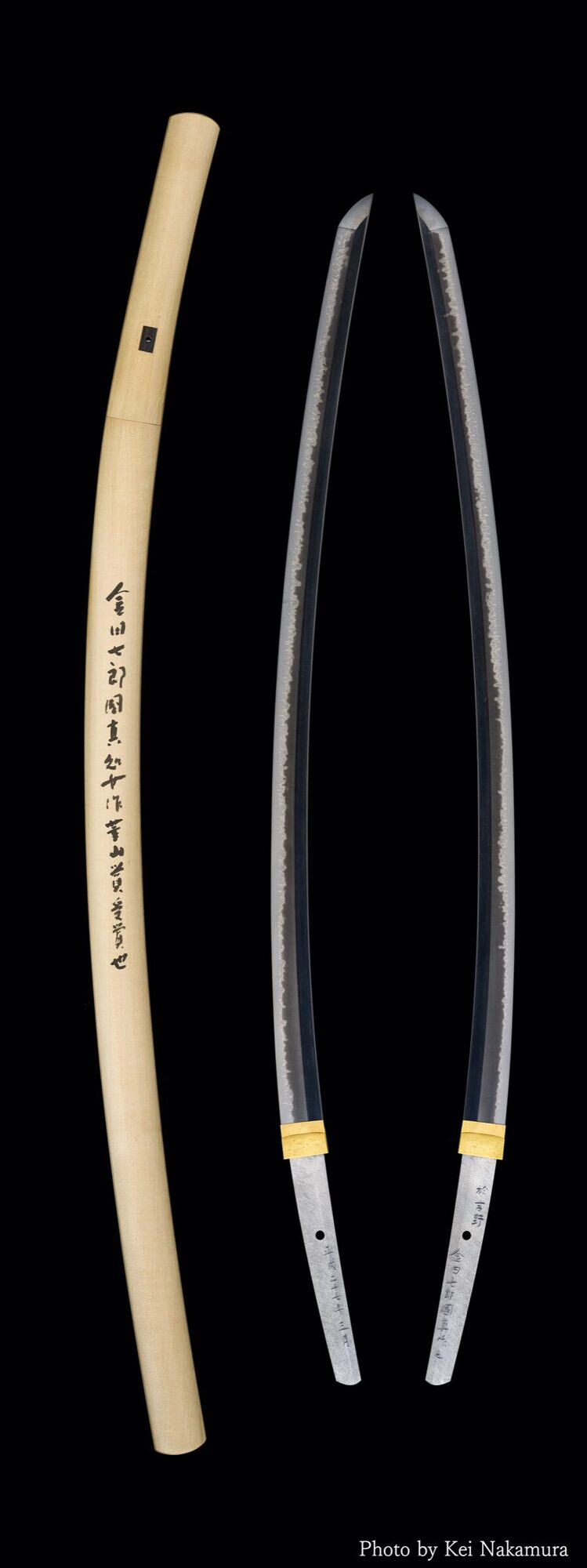
Tachi 初鍛 (Hatsu kitae), his first competition work, 2015 Photo: Kei Nakamura · © Kei Nakamura 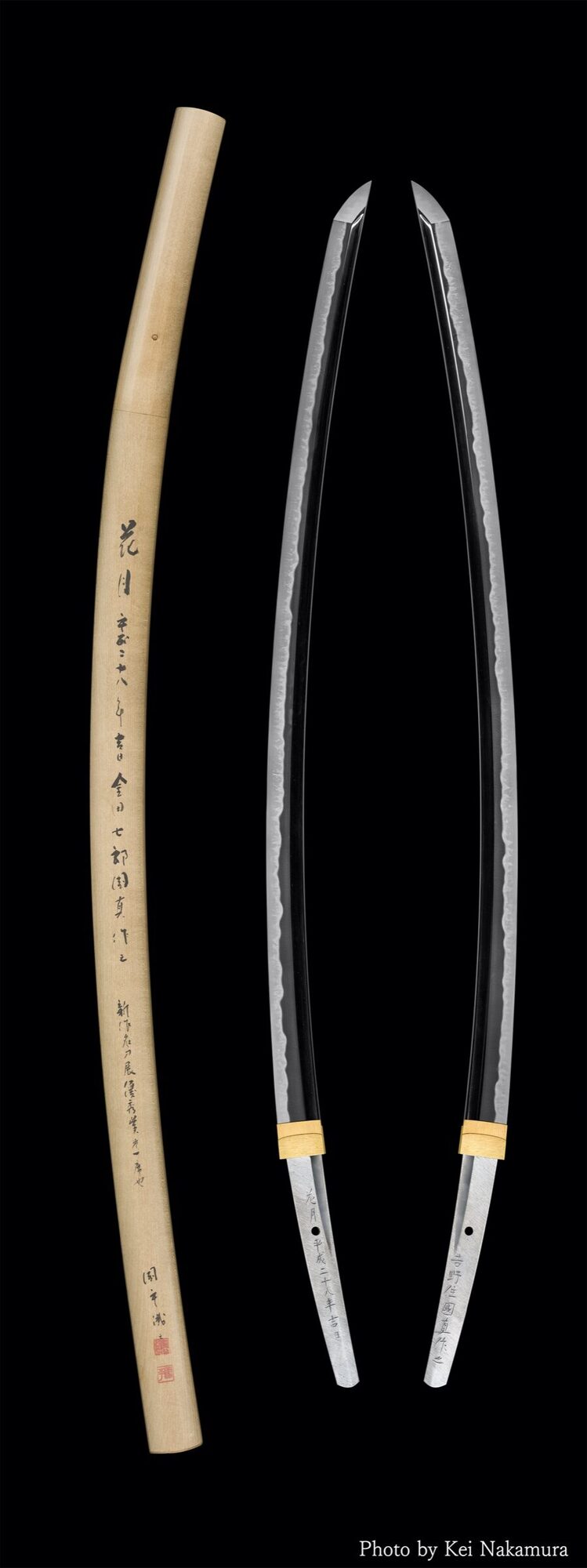
Tachi 花月 (Kagetsu), 2016 Photo: Kei Nakamura · © Kei Nakamura 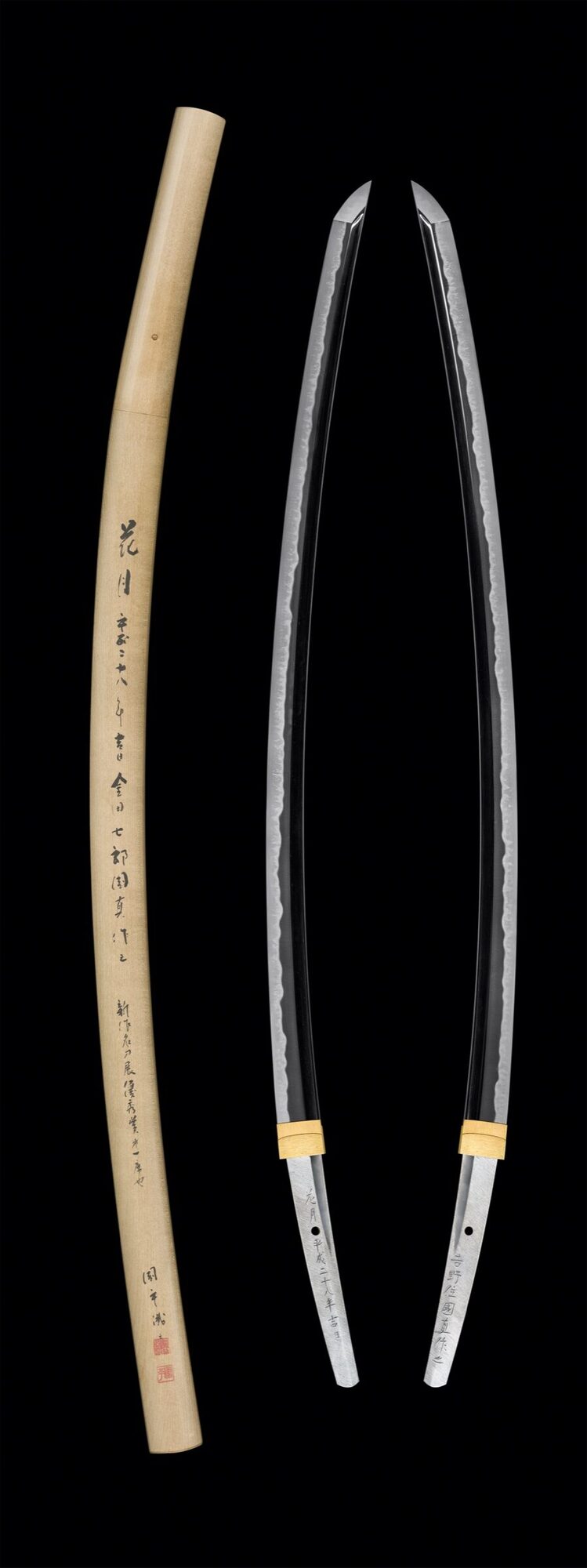
The tachi Kagetsu with its shirasaya Photo: Kei Nakamura · © Kei Nakamura 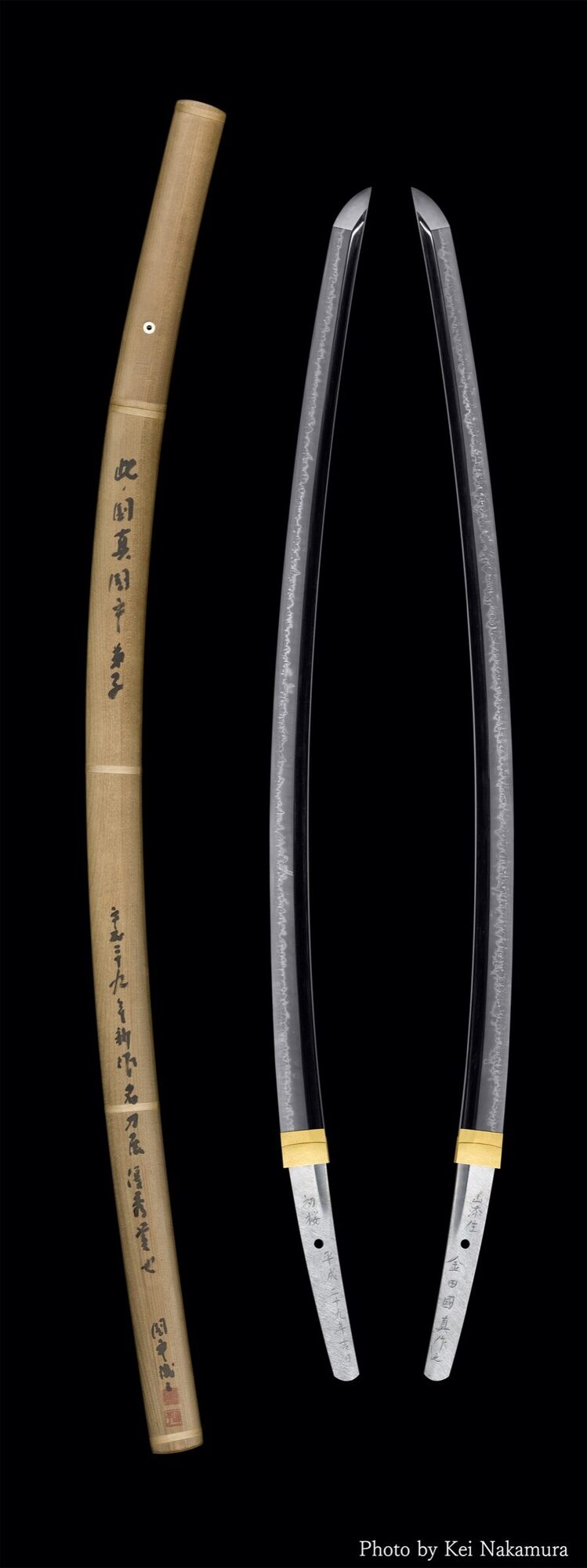
Tachi 初桜 (Hatsuzakura), 2017 Photo: Kei Nakamura · © Kei Nakamura 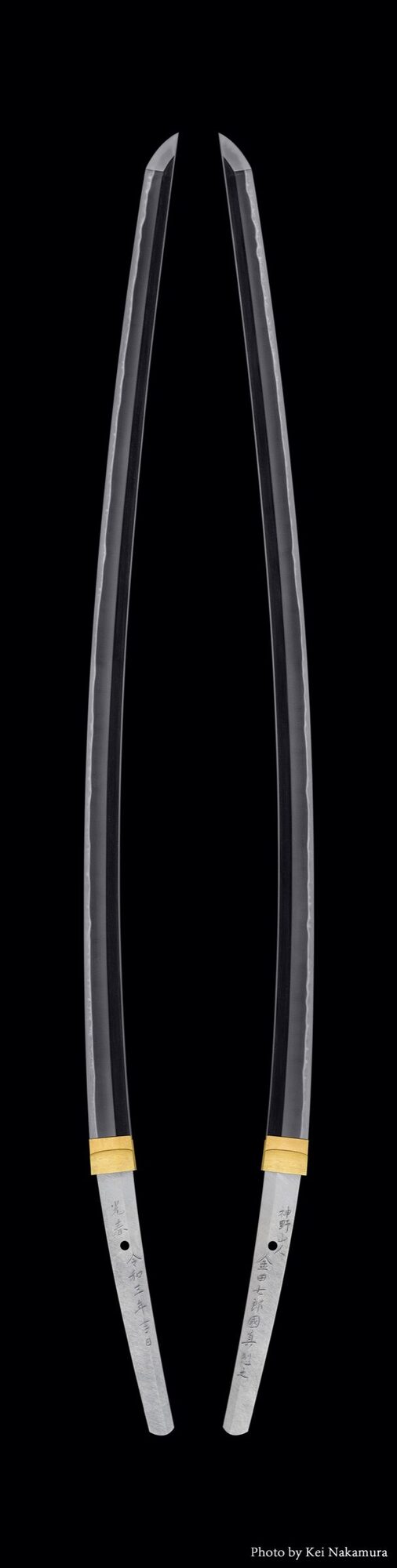
Tachi 光春 (Kōshun), 2021, fifth prize of excellence Photo: Kei Nakamura · © Kei Nakamura 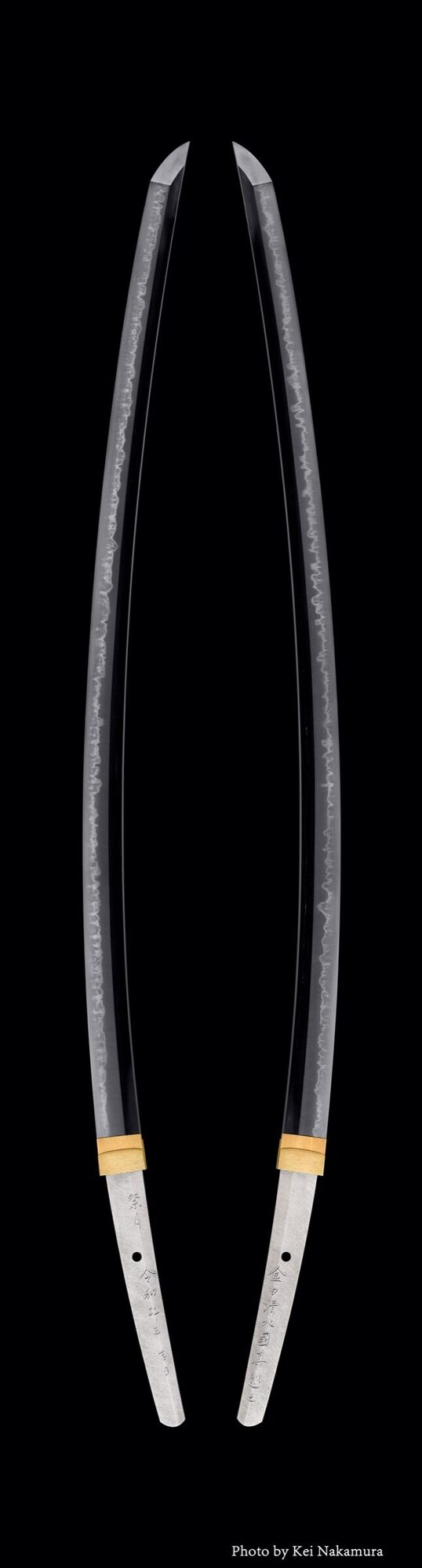
Tachi of 70.8 cm, 2022, first prize of excellence Photo: Kei Nakamura · © Kei Nakamura 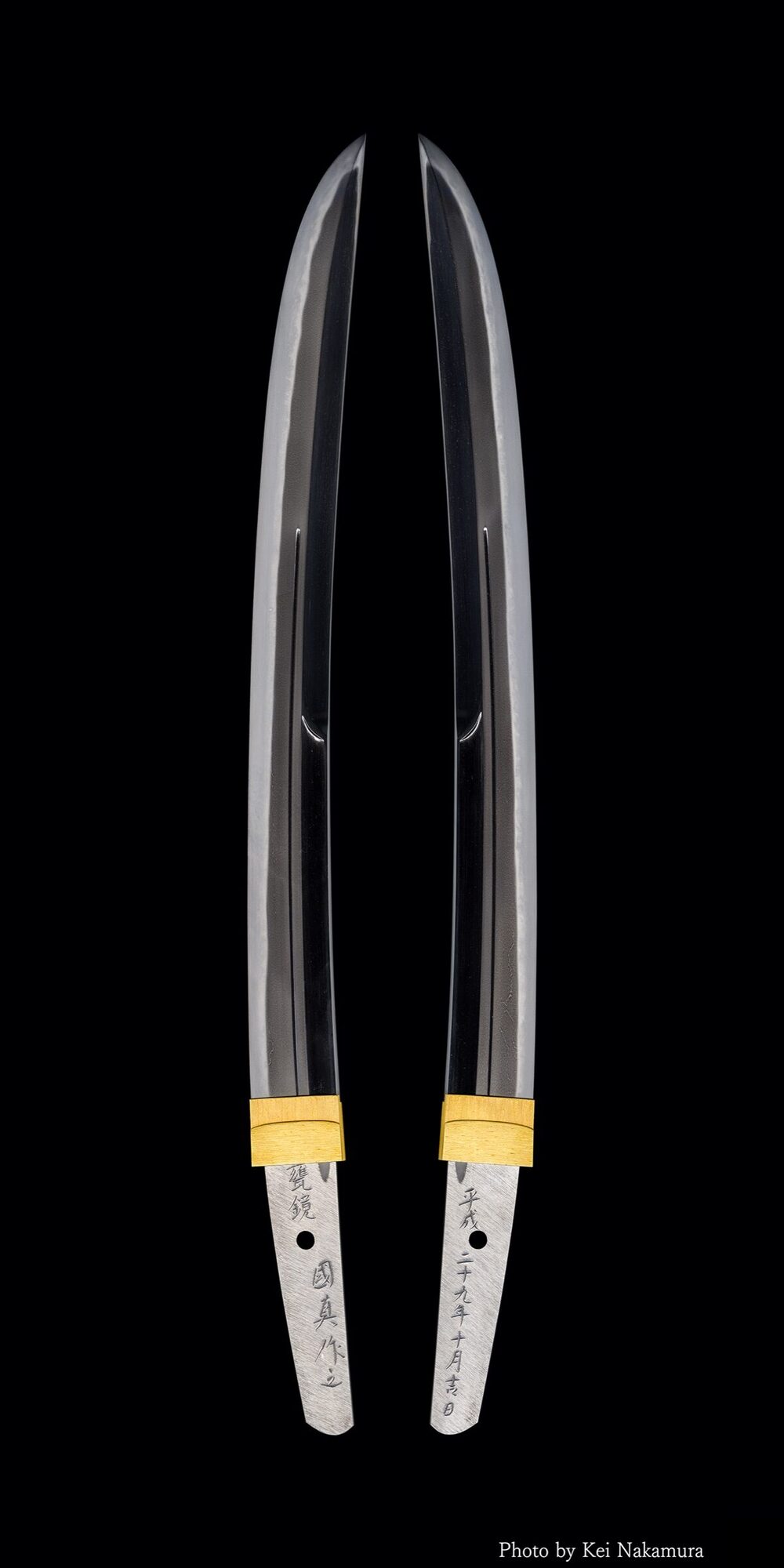
Wakizashi 甕鏡 (Mika kagami) Photo: Kei Nakamura · © Kei Nakamura 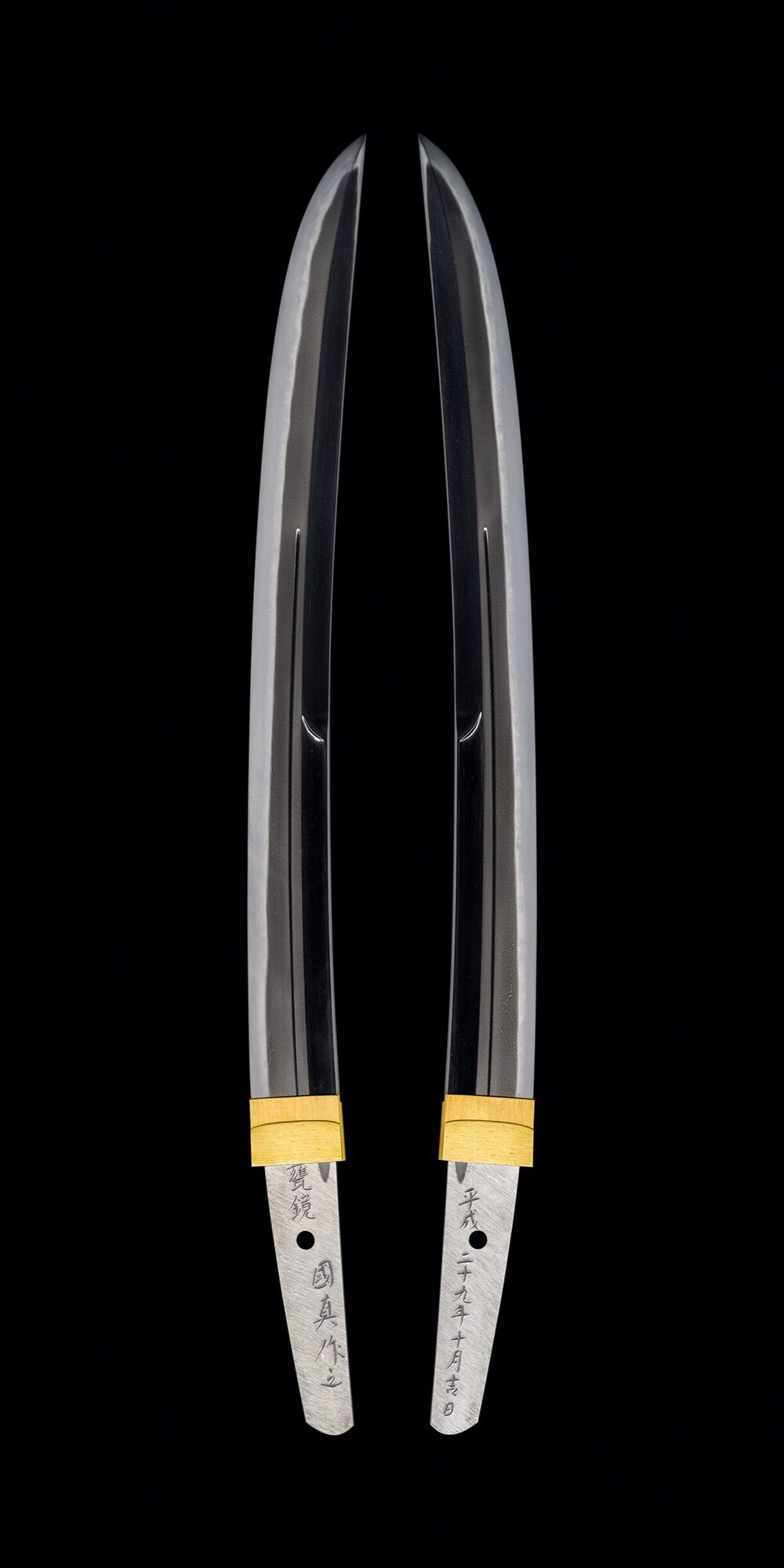
The wakizashi Mika kagami, another shot Photo: Kei Nakamura · © Kei Nakamura 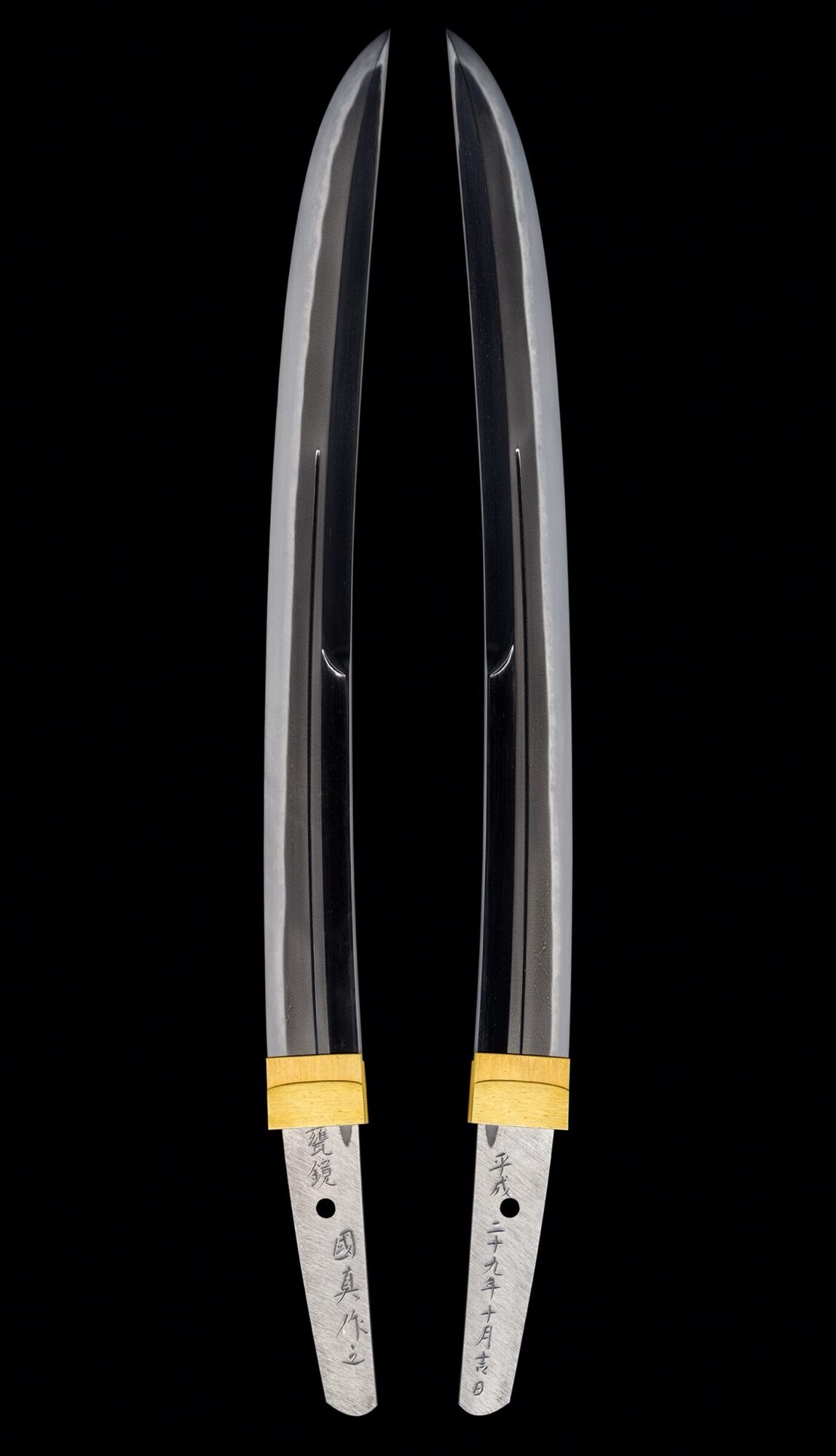
A short blade (wakizashi or tantō) Photo: Kei Nakamura · © Kei Nakamura