On this page
Quick profile
- Name
- Koyama Munetsugu; art names Issensai (一専斎) and Seiryōsai (精良斎) AT
- Kanji and reading
- 固山宗次 (Koyama Munetsugu); with the title he signs 備前介藤原宗次 (Bizen no Suke Fujiwara Munetsugu) AT
- Period
- Shinshintō, late Edo period: dated work from the Tenpō era (1830-1844) into the early Meiji years AT
- Province
- Born in Shirakawa, in Mutsu (陸奥, Mutsu); works in Edo, in Musashi AT
- School
- Bizen-den and Mino-den, in the line of Suishinshi Masahide through Chōunsai Tsunatoshi AT
- Master
- Chōunsai Tsunatoshi (長運斎綱俊), younger brother of Katō Tsunahide, according to the Japanese Wikipedia AT
- Title
- Bizen no Suke (備前介), in 1845 (Kōka 2), as smith of the Kuwana domain AT
- Generations
- Two: Munetsugu and his son Sōichirō (宗一郎), about whom there is hardly any information AT
- In the lists
- He does not appear in Tomita Kiyama’s list of shintō smiths (1933) PC
- Documented fact and tradition
- Dates and signatures of his blades, his service in Kuwana and the Vienna sword, from the Japanese Wikipedia and the studies. Tradition: the challenge he is said to have sent to Kiyomaro. The year of his death is not recorded. AT
In short
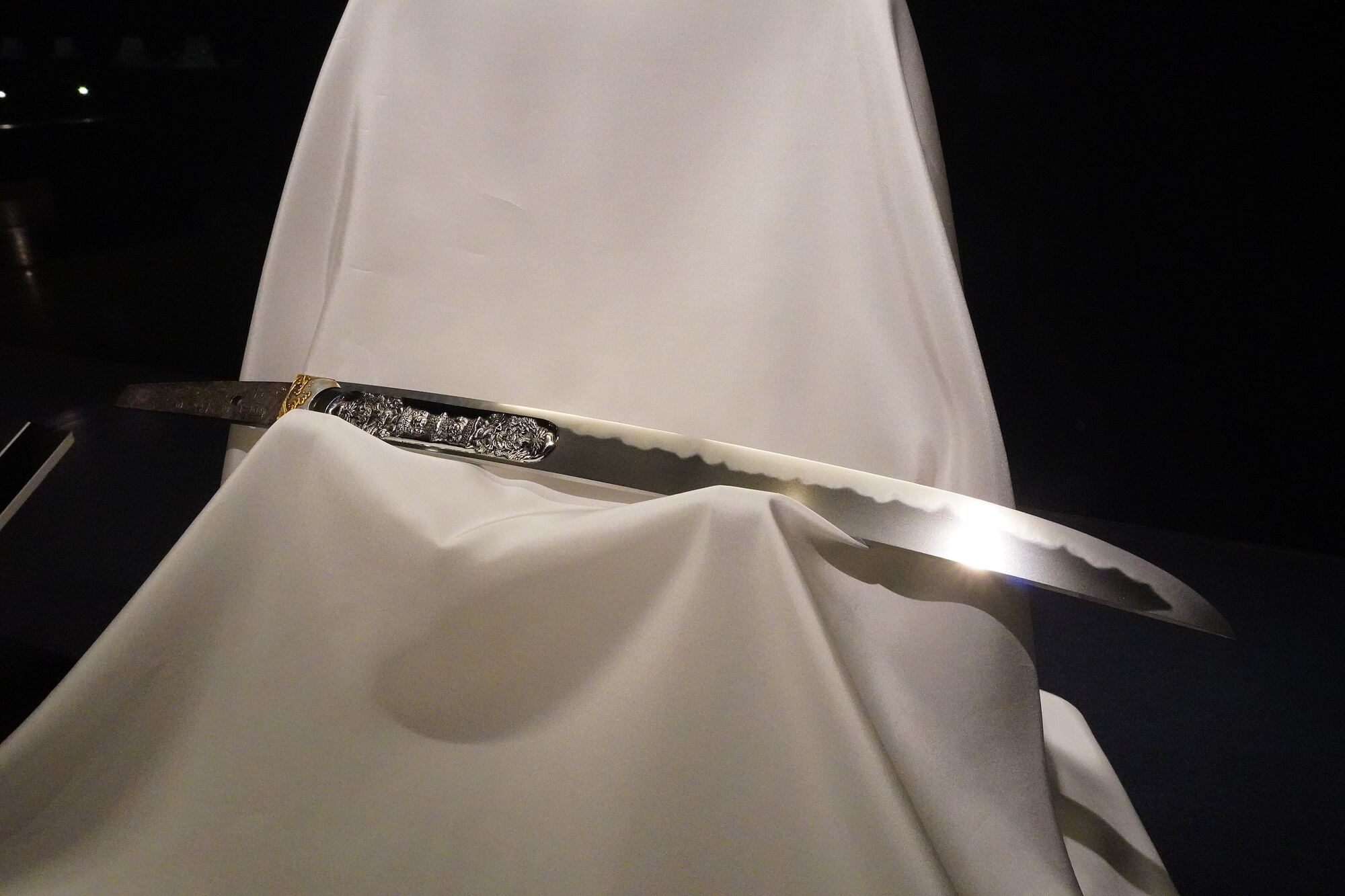
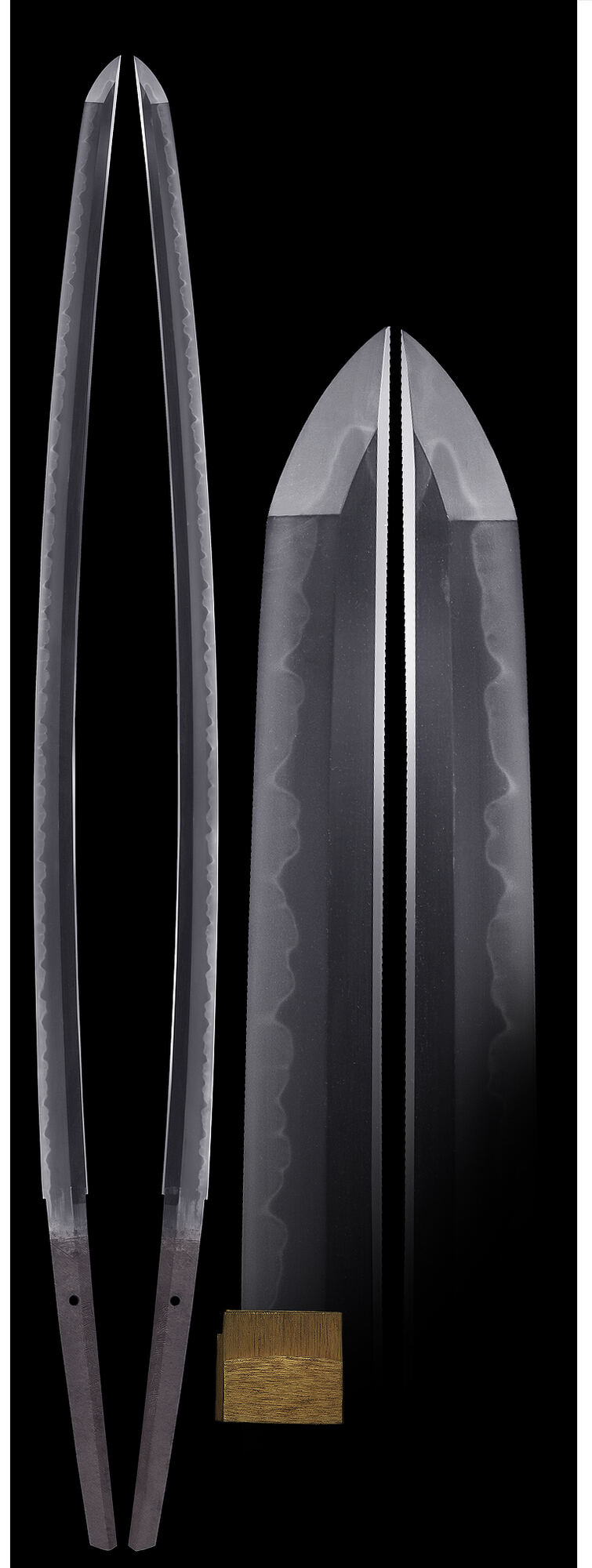
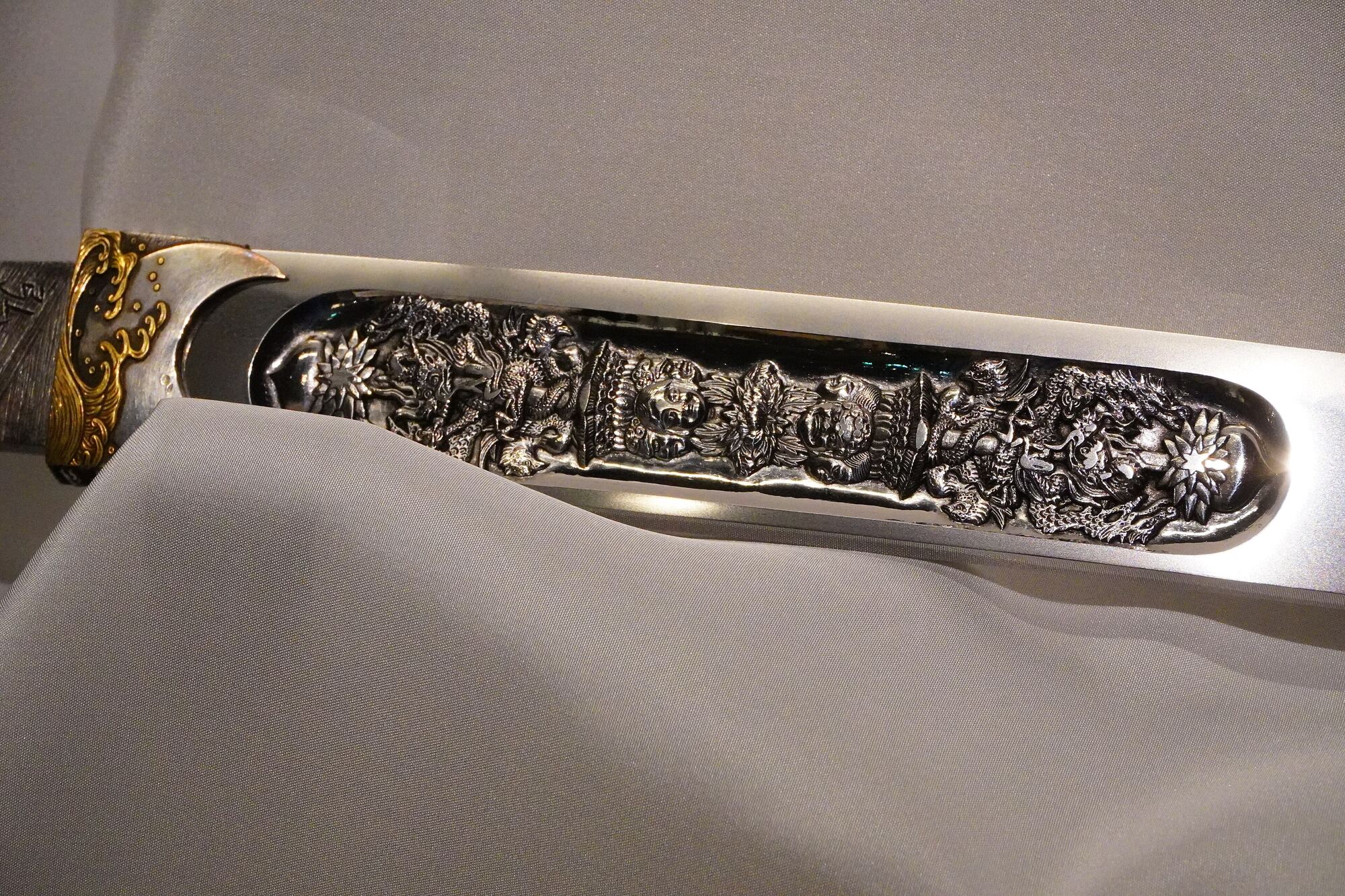
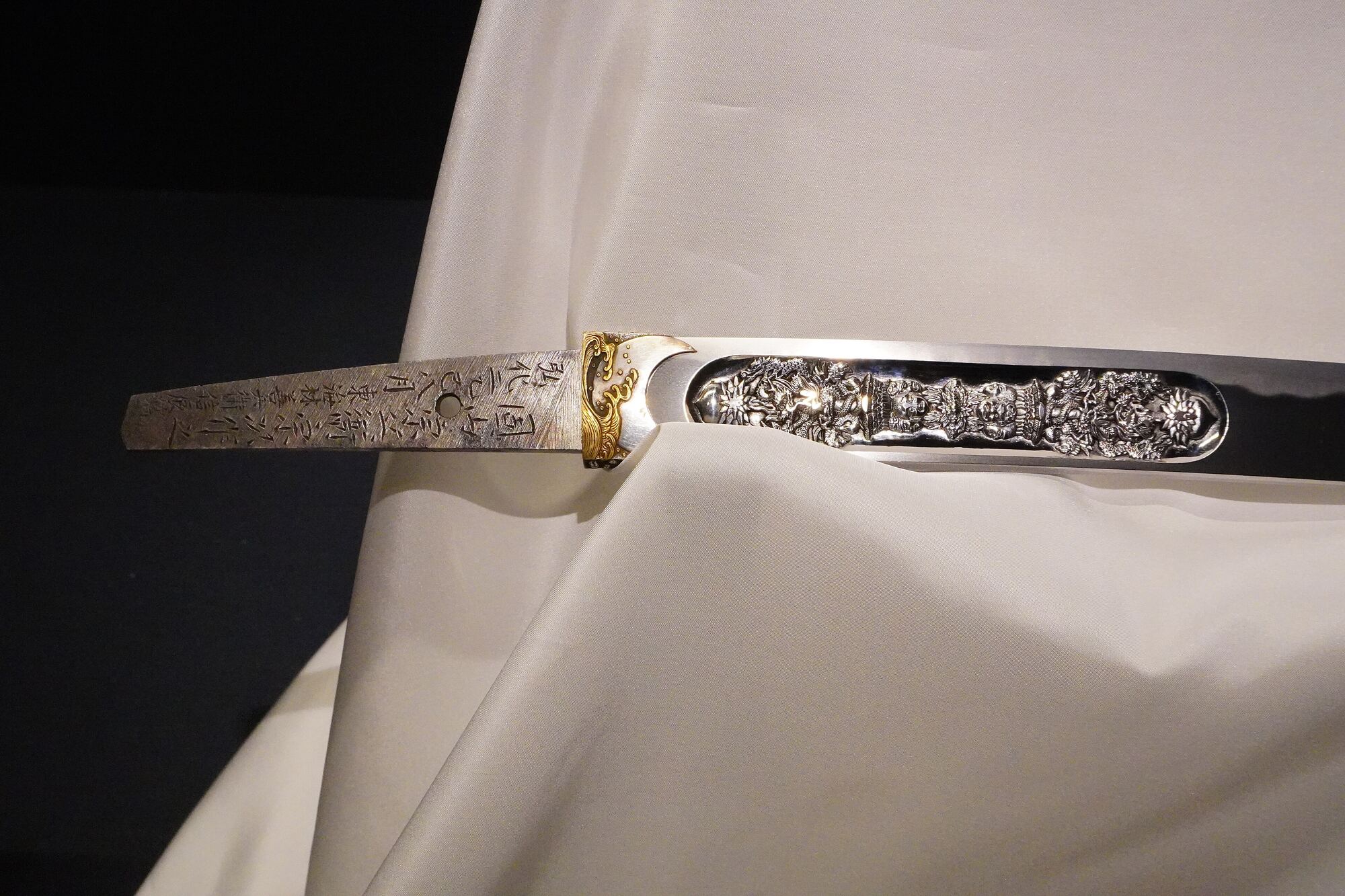
Munetsugu trained in Edo under Chōunsai Tsunatoshi, of the school of Suishinshi Masahide, and by 1837 he was already working for the Kuwana domain, which in 1845 obtained for him the title of Bizen no Suke. He is associated with the sword testers, among them Yamada Asaemon: hence the many cutting inscriptions on his tangs. For the NBTHK, his chōji repeats a very regular pattern every three or four sun, one of the keys to recognising him. In 1872 he forged a sword for the 1873 Vienna World’s Fair.
Sections
-
 From Shirakawa to Edo
Life and times
Shirakawa, Kuwana, Edo, Meiji and the second generation.
-
Kantei keys
Work and style
Sugata, jihada, hamon, nakago and horimono.
-
 Dated works and lists
Famous works
The documented works and their place in the lists.
-
 Bibliography and credits
Sources
The sources consulted and the image credits.