Sugata
Markus Sesko counts him among the late Edo smiths who made shapes inspired by the Nanbokuchō, but moderated: massive blades that at first sight recall the shintō of Keichō. His example is a katana signed 固山宗兵衛宗次 (Koyama Sōbei Munetsugu) in 1837, with a nagasa of 70.8 cm and a sori of 2.1 cm.
Jihada
Sesko includes him among the shinshintō smiths who, working in Bizen-den, brought out midare-utsuri in the steel. The sources consulted do not describe his jihada further.
Hamon
He mastered Bizen-den and Mino-den. His early works have a very lively chōji-midare, and the late ones a calmer gunome-midare. The Japanese Wikipedia singles out as his greatest virtue something other smiths lack: the border of the temper has no coarse nie at all (荒沸, ara-nie).
The NBTHK describes it thus in its journal: on a blade of his, the hamon is mainly chōji, with a very regular pattern that repeats every three or four sun (about 9 to 12 cm). By this it separates him from Hosokawa Masayoshi, Taikei Naotane and Unju Korekazu, who also tempered chōji in Bizen-den. Sesko cites him among the shinshintō smiths with elements that open at the base (腰の開いた, koshi no hiraita) and with slanting chōji (逆丁子, saka-chōji).
Bōshi
The sources consulted give no general rule for his bōshi.
Nakago and mei
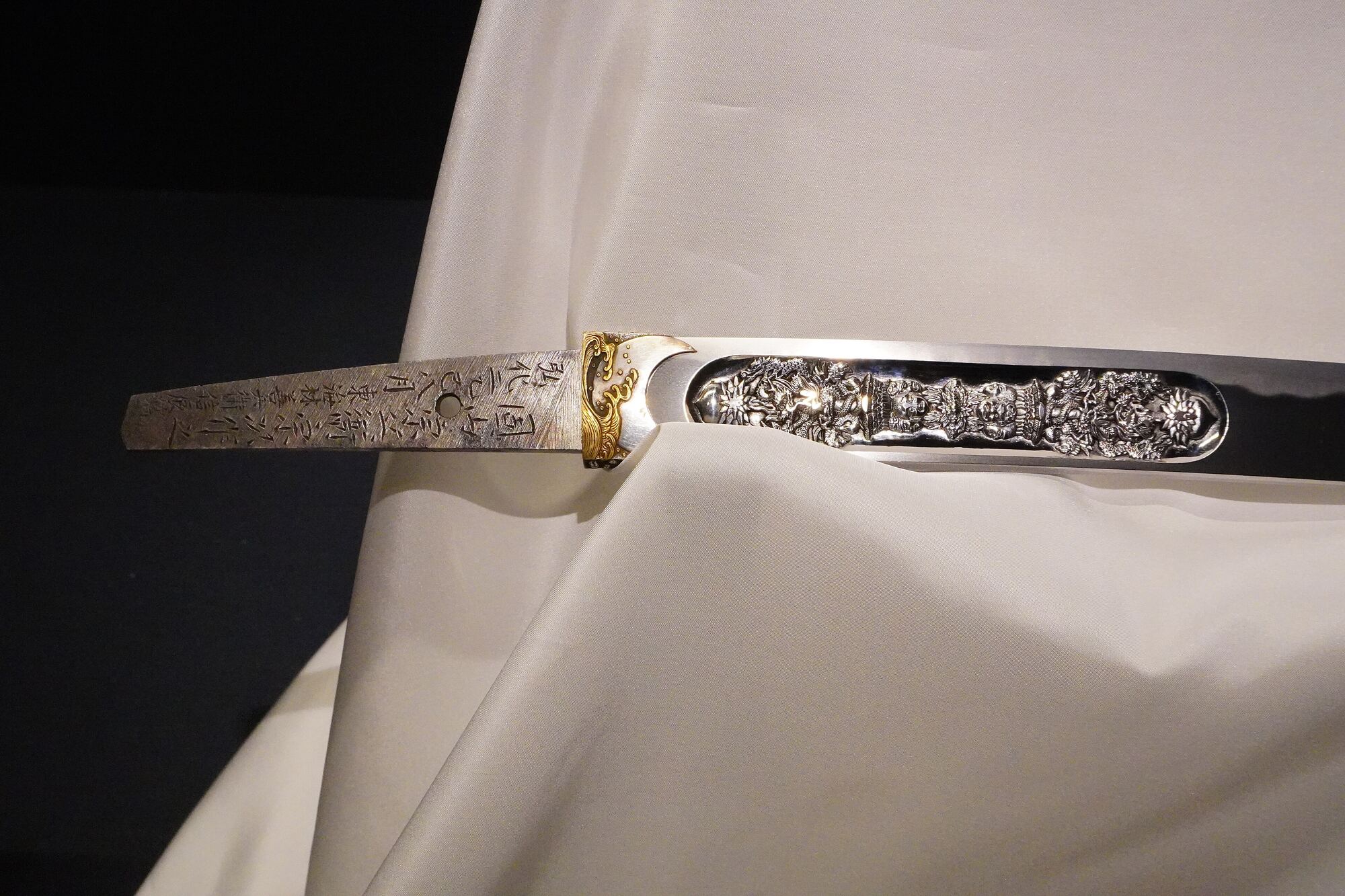
He signed 固山宗兵衛宗次 (Koyama Sōbei Munetsugu), and from 1845 with the title: 備前介藤原宗次 (Bizen no Suke Fujiwara Munetsugu). Many tangs also carry a cutting-test inscription (截断銘, saidan-mei): the Japanese Wikipedia singles him out in its list of smiths for his dealings with Yamada Asaemon and for the many he left. Sesko relates that on a copy of 1862 he also copied the signature of the original and signed himself on the back of the tang.
Horimono
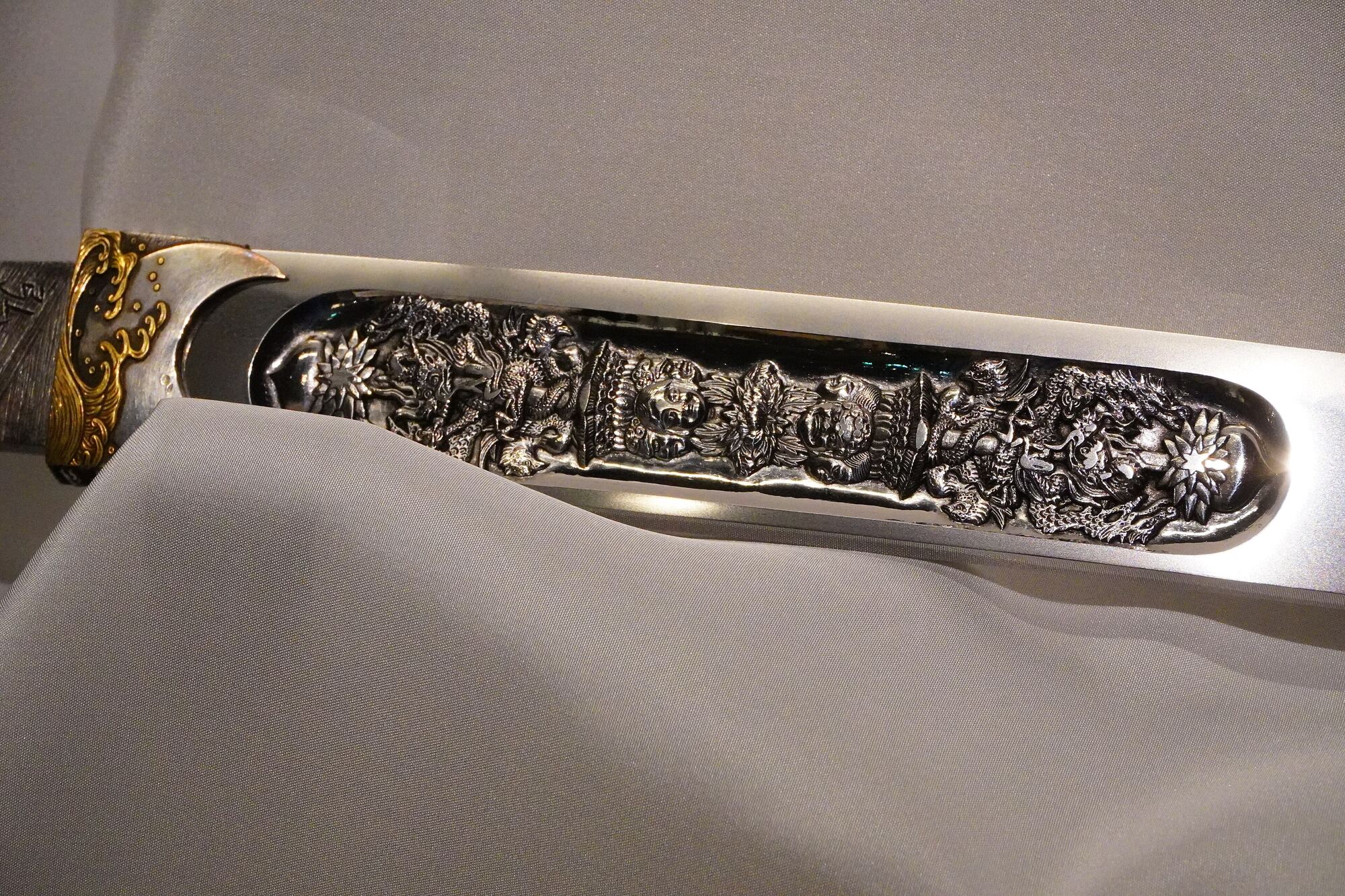
Some blades carry engravings by another hand: the 1845 wakizashi in the photos bears the engraver’s signature, Shōji Zenbei Nobutatsu.
One name, several generations
The sources consulted give no criteria for telling Sōichirō’s work from his father’s.