Masanori
正則 (Masanori)
A smith of Fukui, in Echizen, in the early Edo period, who signed with the title Yamato Daijō; according to tradition, he came from Kyoto.
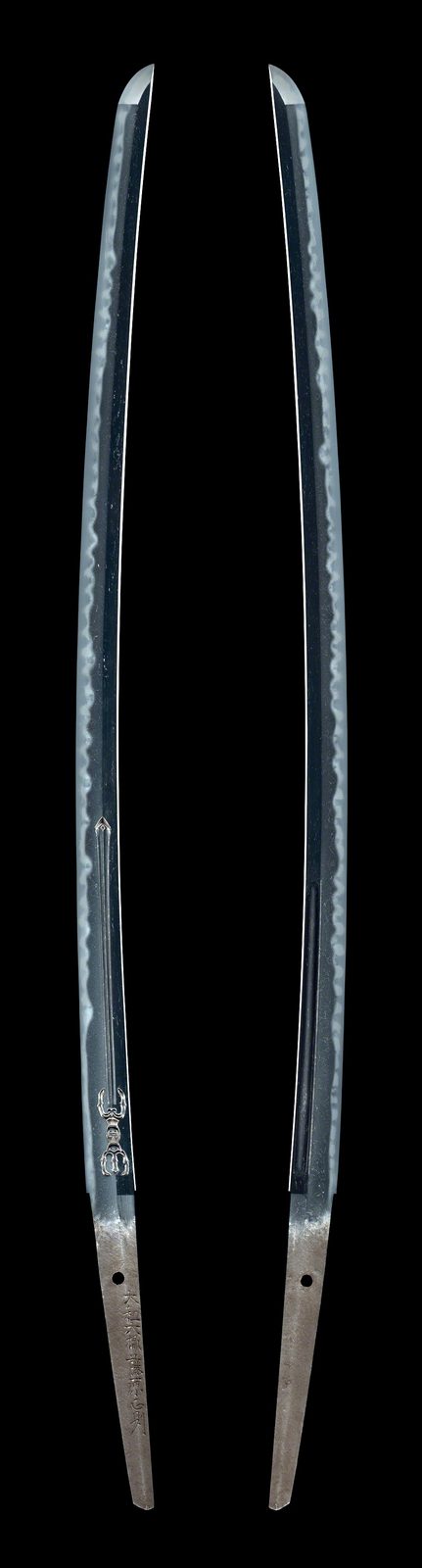
Profile
Masanori signed 大和大掾藤原正則 (Yamato Daijō Fujiwara Masanori) and worked in Fukui, in Echizen province, among the smiths who settled there with the castle of Yūki Hideyasu. He received the title Yamato Daijō around 1608, and blades of his dated between 1608 and 1651 are known. According to the tradition recorded by the Tokyo Fuji Art Museum, he descended from Sanjō Yoshinori of Yamashiro and lived in Miyazu, in Tango, and in Kyoto before moving to Fukui. The museum’s katana shows itame with ji-nie and a gunome-midare temper with pointed peaks. The Yamada cutting list ranks him, as the first generation, among the yoki-wazamono.
Monograph
Yamato Daijō Masanori (大和大掾正則)
Who Masanori was, what is documented and what tradition says, with the level of evidence of each fact.
Read the monograph
Notable works
- Katana signed Yamato Daijō Fujiwara Masanori, with a 70.3 cm blade, in the Tokyo Fuji Art Museum.
- Katana with the same signature, a cultural property of Akita prefecture since 1971, in private hands.