What he is after
Chiba City Hall sums up his work as recreating the Kamakura sword, with a forging, a temper and a shape full of dignity and boldness, after more than thirty years of studying Japanese iron and hardening. His goal is the 古備前 (Kobizen), from the late Heian to the early Kamakura period, and the nie (沸, nie) of the blades that are National Treasures. He signs 次泰作 (Tsuguyasu saku) or 下総国次泰作 (Shimōsa no kuni Tsuguyasu saku).
His blades vary a great deal from one to another: it has been said that, if five of his went to a kantei session, nobody would recognise them all as by the same swordsmith. He works mainly with tamahagane from the NBTHK tatara.
In the NBTHK catalogues
- Tachi 松田次泰作 (Matsuda Tsuguyasu saku) of spring 2007: 81.1 cm, sori 3.2 cm, with a habaki by 浅井信雄 (Asai Nobuo) and a saya by 浅井義雄 (Asai Yoshio). It is no. 27 in the catalogue of the Heisei no Meitō Meikōten exhibition (2019), which chose it among its masters (名工選, meikō sen).
- In the mukansa section: a tachi of 79.4 cm at the 2017 新作名刀展 (Shinsaku Meitōten); and at the 現代刀職展 (Gendai Tōshokuten), a tachi of 76.0 cm (2019), a katana of 73.2 cm (2021), a tachi of 77.0 cm (2022), a tachi of 80.2 cm (2024), a katana of 70.2 cm (2025) and a tachi of 74.7 cm (2026).
Other work
- Tachi of 1997 with a mounting of 1999, a replica of a blade of the late Heian period, photographed at an exhibition in Geneva.
- Tachi 次泰作 (Tsuguyasu saku) of 2015, 77.8 cm long, in a private foundation in Japan.
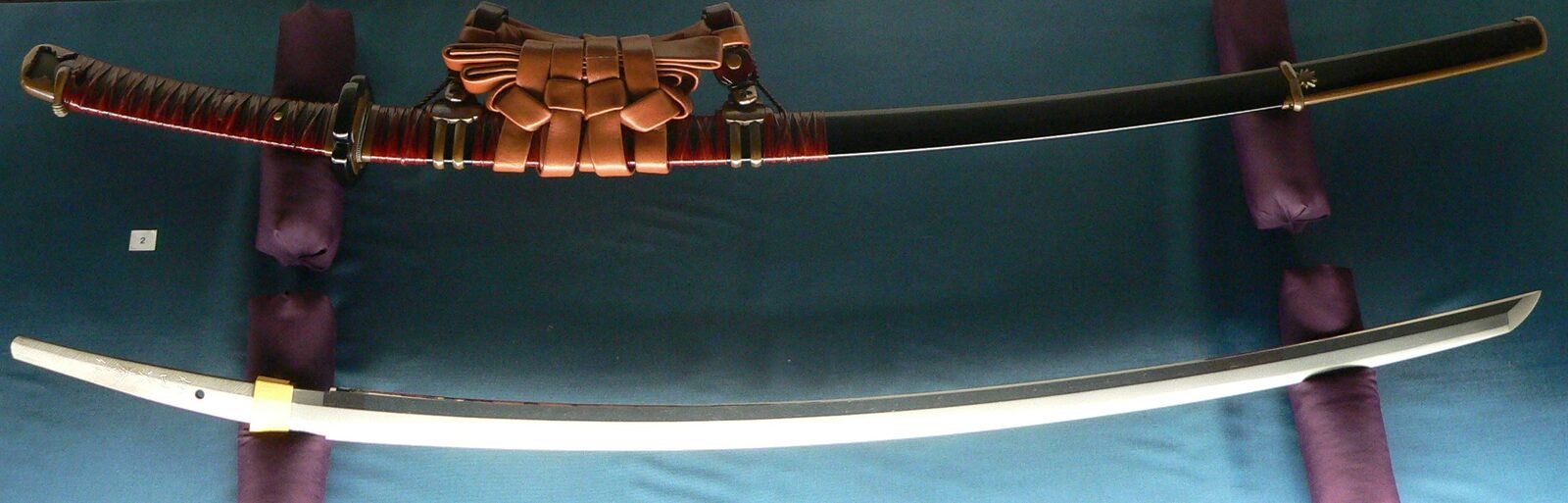

A tachi, in detail
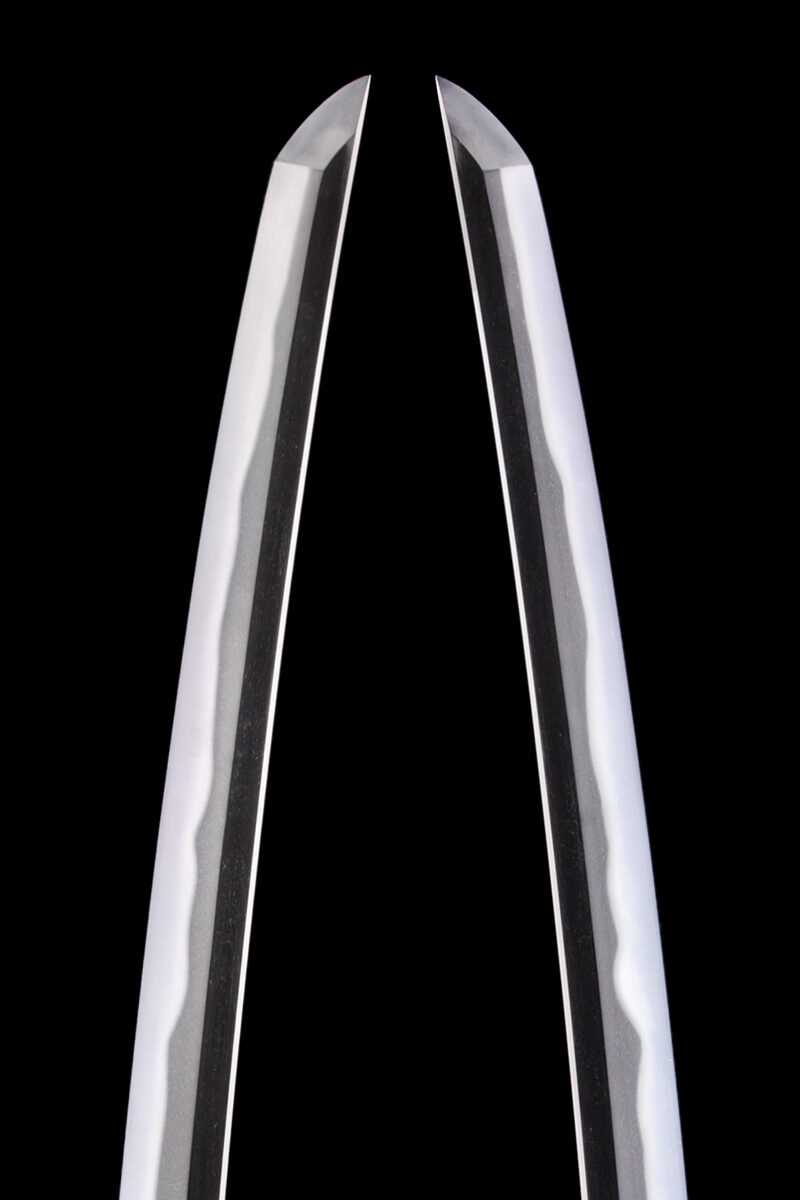
A tachi of his: the point, from both sides. Photo: dealer in Japan 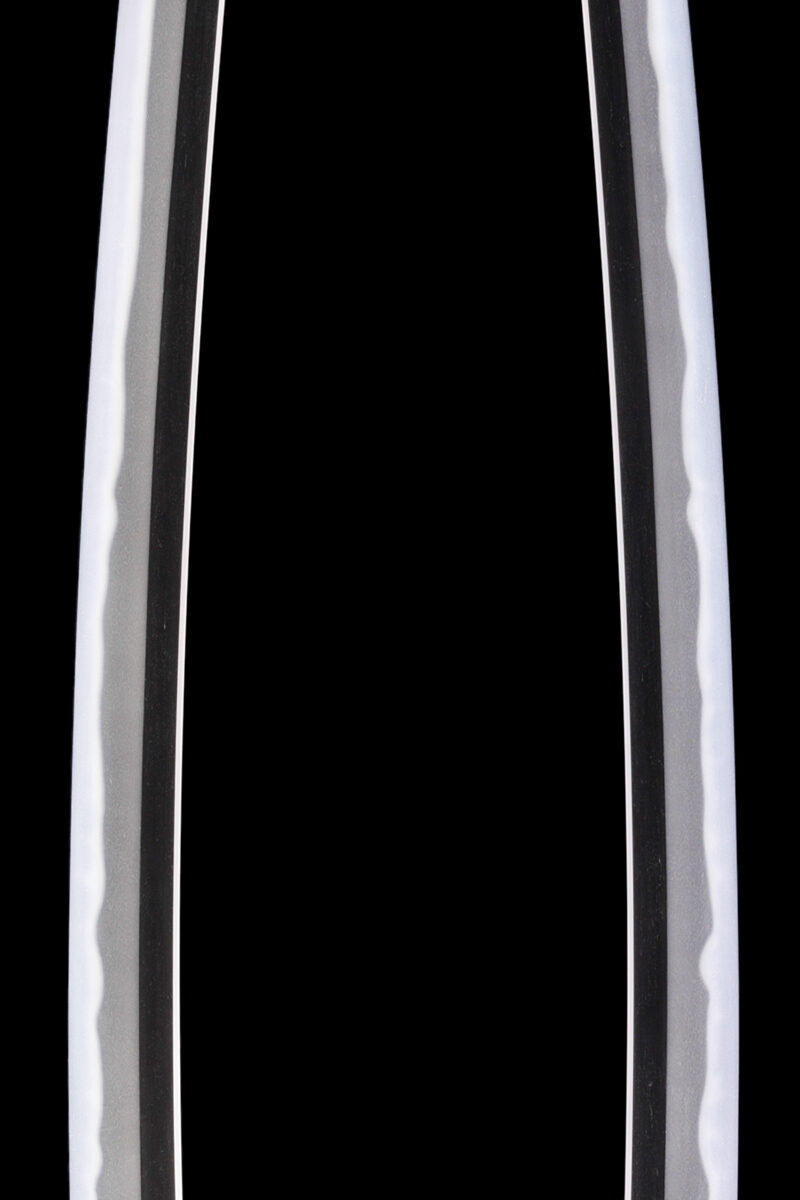
The same tachi: the temper line. Photo: dealer in Japan 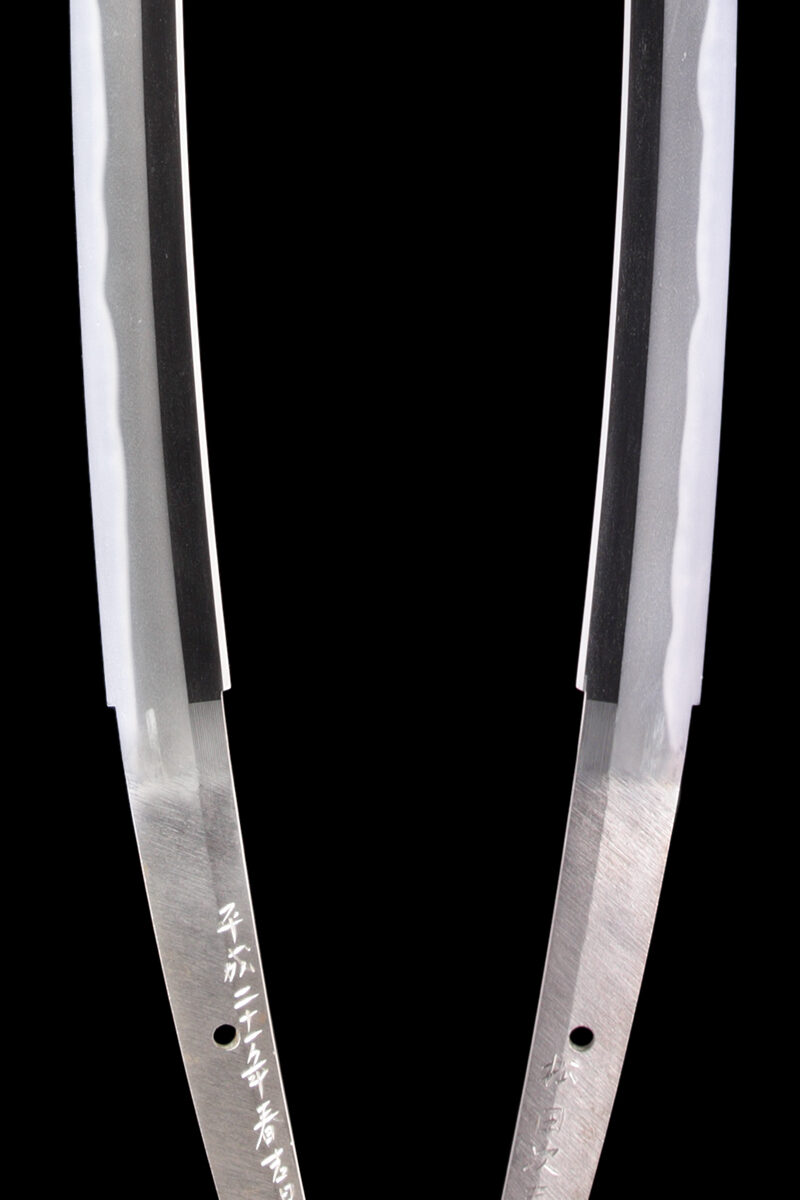
The same tachi: the tang, with the engraved date. Photo: dealer in Japan