On this page
Sugata
Sesko includes him, with the Kiyomaro school, among the late Edo smiths who made imposing shapes inspired by the Nanbokuchō. The 1859 katana in the Hakodate City Museum has a 70.3 cm blade.
Jihada and hamon
The sources consulted describe neither his jihada nor his hamon.
Nakago and mei
On the museum’s katana, one side of the tang carries the signature 源正雄 (Minamoto Masao) and the other the date and the place: 安政六年八月日 於箱館以沙鉄造之 (Ansei rokunen hachigatsu hi, Hakodate ni oite satetsu o motte kore o tsukuru), “eighth month of 1859, made in Hakodate with iron sand”.
Details
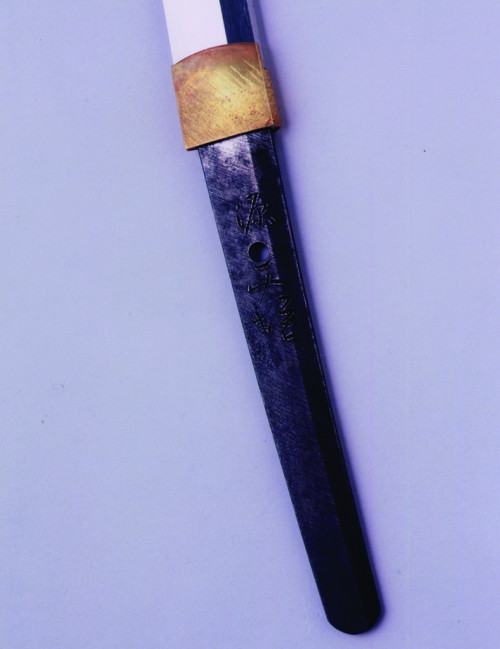
The tang of the 1859 katana in the Hakodate City Museum, with the signature 源正雄 (Minamoto Masao). Hakodate City Museum, via Hokkaido Digital Museum · © Hakodate City Museum 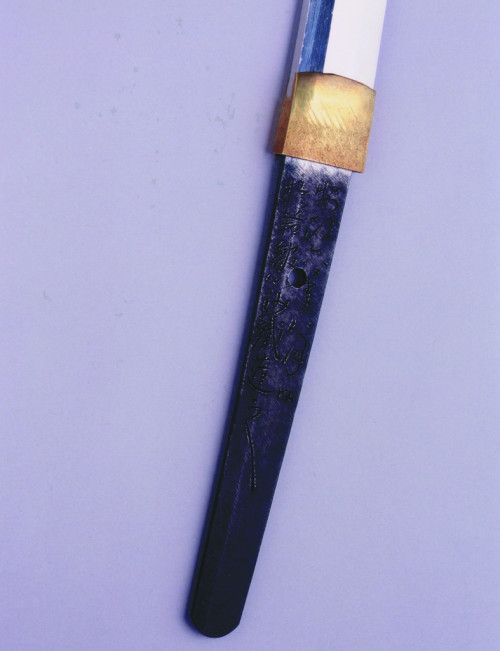
The other side of the same tang: 安政六年八月日 於箱館以沙鉄造之 (Ansei rokunen hachigatsu hi, Hakodate ni oite satetsu o motte kore o tsukuru), “eighth month of 1859, made in Hakodate with iron sand”. Hakodate City Museum, via Hokkaido Digital Museum · © Hakodate City Museum