Mitsutada
光忠 (Mitsutada)
An Osafune smith in Bizen of the mid-Kamakura period, the practical founder of the Osafune school; known for showy chōji and robust blades.
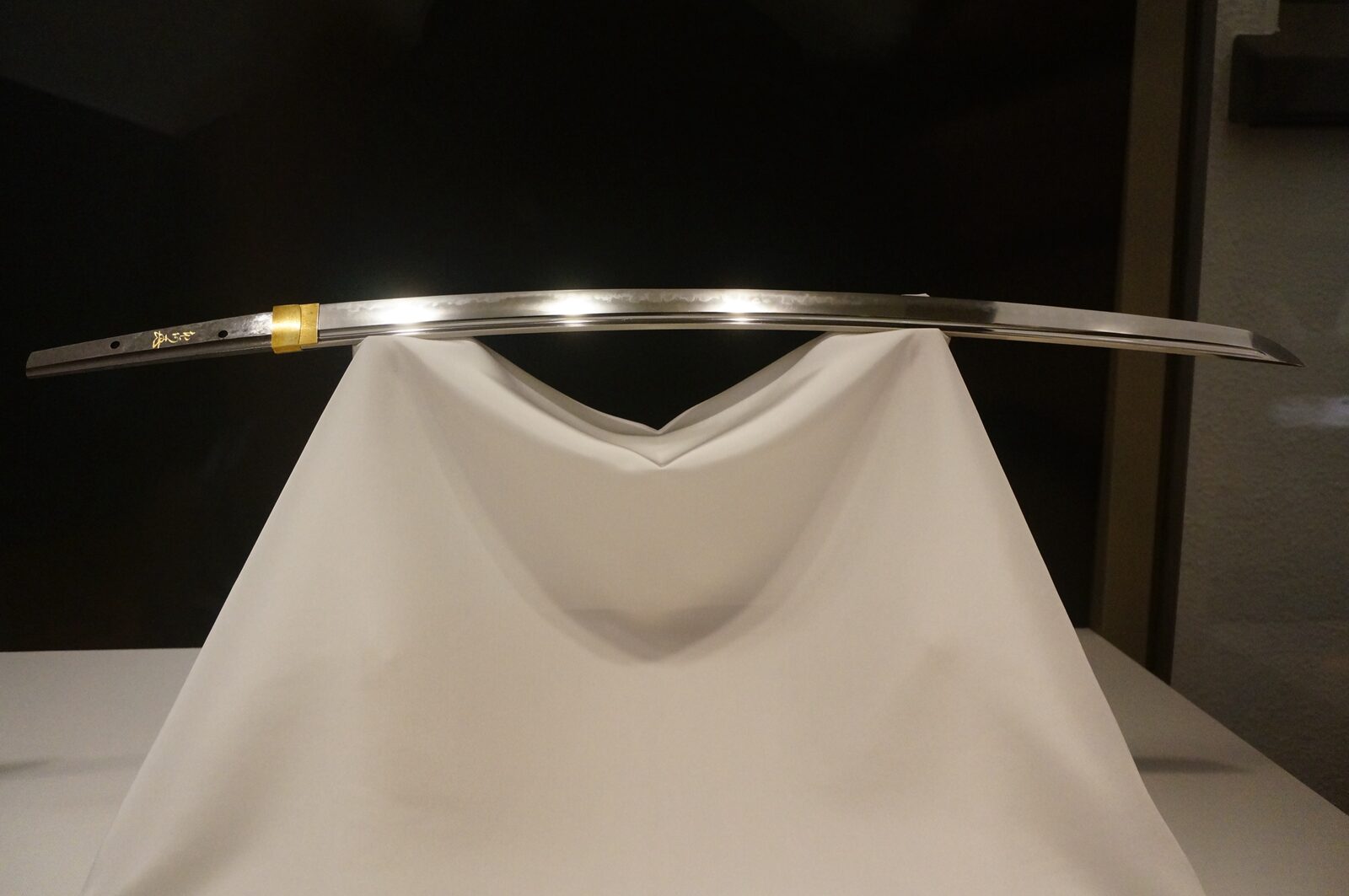
Profile
Mitsutada worked at Osafune on the Yoshii river in the mid-Kamakura period; old texts place him around the Hōji and Kenchō eras (1247-1255). He is the practical founder of the Osafune school, which produced smiths throughout the Middle Ages. His work ranges from the ko-midare with ko-nie of Ko-Bizen to robust tachi with high koshizori and ikubi kissaki, with a showy chōji, sometimes kawazuko chōji or jūka chōji, and a clear midare-utsuri. About thirty blades survive, many shortened. Oda Nobunaga gathered more than twenty; the one he prized most, the Jikkyū Mitsutada, was lost in the fire at Honnō-ji.
Monograph
Mitsutada (光忠)
The first great name of Osafune, told with the level of evidence of each fact: what the museums say and what is tradition.
Read the monograph
Notable works
- Tachi signed Mitsutada: national treasure, Tokugawa Art Museum.
- Ikoma Mitsutada: katana attributed with a gold inlay, national treasure, Eisei Bunko collection; the showiest of his works.