Ozaki Suketaka
尾崎助隆 (Ozaki Suketaka)
Lineage: the signature does not state the generation
Osaka swordsmith (1753–1805), one of the figures of shinshintō in Settsu in the late 18th century.
Profile
Ozaki Suketaka (1753–1805) worked in Osaka in the closing decades of the 18th century. By tradition he came from Harima and received the honorary title Nagato no Kami late in his career. He signed Ozaki Gengoemon Suketaka (尾崎源五右衛門助隆) and, with the title, Ozaki Nagato no Kami Fujiwara Suketaka (尾崎長門守藤原助隆). His work follows the manner of Tsuda Sukehiro: a tōran-midare (濤瀾乱れ) of large gunome waves over steel forged so finely that it is sometimes described as nashiji. He was well enough regarded in his day that the Hachisuka lords of the Awa domain sent some of their smiths to train with him and with Suishinshi Masahide (水心子正秀).
Swords available
-
Ozaki Gengoemon Suketaka
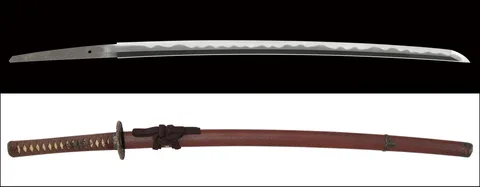
Shinshintō katana by Ozaki Suketaka, signed and dated Kansei 6 (1794), with a tōran-style hamon, ubu nakago, complete late-Edo koshirae per the seller and a Tokubetsu Hozon Tōken certificate. Katana by Ozaki Gengoemon Suketaka, a Settsu smith of the shinshintō period. According to the original seller, Suketaka (1753–1805) was a pupil of Kuroda Takanobu, received the title Nagato no Kami in 1798 and ranked among the great tōran-ba specialists of his day. The blade, in shinogi-zukuri with iori-mune and chū-kissaki, has a nagasa of 72.8 cm and a sori of 1.5 cm. The hada is a tight ko-itame with abundant ji-nie and chikei; the hamon is a gunome-midare in tōran style with ko-gunome and kataochi-gunome, a bright nioiguchi, ashi, nie-suji and tobiyaki; the bōshi is notare with a broad turn-back. The nakago is ubu, with one mekugi-ana, ō-sujikai yasurime with keshō and an iriyamagata tip; it bears the signature "Ozaki Gengoemon Suketaka" and the date of the 2nd month of Kansei 6 (1794), both legible in the photographs. Silver double habaki; the seller describes an older polish and a very healthy blade, and the photographs do not contradict this. It comes with a complete uchigatana-koshirae (102.5 cm) that the seller places in the late Edo period: matte red-and-black ishime lacquered saya, shibuichi and shakudō fittings, same-covered tsuka with dark brown wrap, iron fuchi-kashira with a dragon, copper menuki and a Shingen-style iron tsuba with brass wire wrap. NBTHK Tokubetsu Hozon Tōken certificate, photographed.
71.6/100
€18,600