On this page
Quick profile
- Name
- Sa Hiroyuki AT
- Kanji and reading
- 左弘行 (Sa Hiroyuki) HD
- Period
- Mid-Nanbokuchō; tradition places him in the Shōhei era (正平, Shōhei, 1346–1370) AT
- Province
- Chikuzen (筑前, Chikuzen), in Kyūshū AT
- School
- Sa or Samonji (左文字, Samonji), of Chikuzen; of the second generation, the one called Sue-Sa (末左, Sue-Sa) AT
- Lineage
- Son of Yukihiro (行弘, Yukihiro), according to the tradition recorded by the NBTHK AT
- What is documented
- Two unsigned katana attributed to him: one a Jūyō Bijutsuhin in the Tsuchiura Museum and the other an NBTHK Jūyō Tōken since 2016 HD
- The tradition
- His father, his era and his place in the school: there is no signed or dated work of his AT
In short
The Sa school was born at the beginning of the Nanbokuchō with Sa, the “Ō-Sa” (大左, Ō-Sa), one of the ten students of Masamune according to tradition, and moved away from the classical Kyūshū style towards the Sagami manner. Hiroyuki belongs to the following generation: the NBTHK records that, according to tradition, he was the son of Yukihiro and worked in the Shōhei era. No signed work of his is known.
The katana of the Tsuchiura City Museum, of 70.0 cm, is a Jūyō Bijutsuhin and has a documented history: a Hon'ami origami of 1688 and a gift from the shōgun in 1696. Another, of 73.6 cm, passed the NBTHK’s 62nd Jūyō Tōken session in 2016, which judged it the blade that most resembles Hiroyuki.
Sections
-
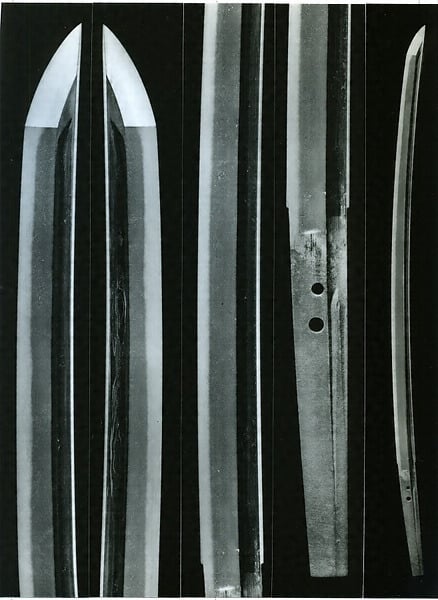 Chikuzen, Shōhei era
Life and times
The Sa school of Chikuzen and the little that is known of him.
-
Ō-kissaki and Nanbokuchō nie
Work and style
Jihada, hamon, bōshi, sugata, nakago and mei: what the two described blades say.
-
Two unsigned katana
His blades
The katana of the Tsuchiura Museum and that of the 62nd Jūyō session.
-
Bibliography and credits
Sources
The sources consulted and the image credits.