On this page
The katana of the Tsuchiura Museum
Unsigned katana attributed to Sa Hiroyuki, Jūyō Bijutsuhin (重要美術品, Jūyō Bijutsuhin), in the Tsuchiura City Museum (土浦市立博物館, Tsuchiura Shiritsu Hakubutsukan), in Ibaraki: a 70.0 cm blade (2 shaku 3 sun 1 bu) and 1.7 cm of curvature. It is accompanied by an origami by Hon'ami Kōchū (本阿弥光忠, Hon'ami Kōchū) of 1688. The shōgun Tokugawa Tsunayoshi gave it on 5 May 1696 to Tsuchiya Masanao (土屋政直, Tsuchiya Masanao) for having directed the seventeenth anniversary of the death of the fourth shōgun, Ietsuna. It is on display in room 1 of the museum.
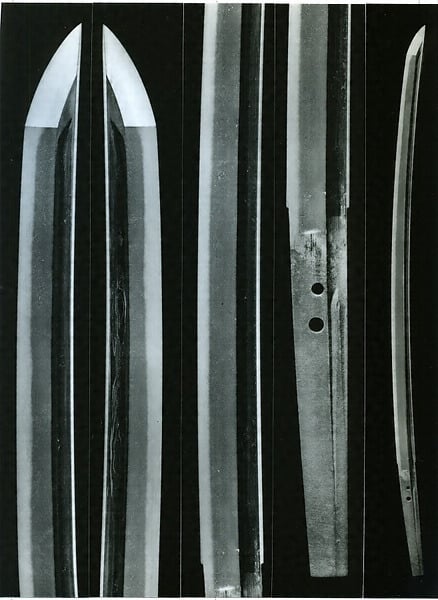
The katana of the 62nd Jūyō session
Unsigned katana, NBTHK Jūyō Tōken since 18 October 2016 (62nd session), in a private collection: a 73.6 cm blade, 1.9 cm of curvature, 3.1 cm wide at the base and 2.5 cm at the point, a 9.9 cm kissaki and a 20.8 cm nakago. It bears the sayagaki of Tanobe Michihiro.
His school in Tsuchiura
The Tsuchiura Museum also holds the tantō signed 筑州住行弘 (Chikushū jū Yukihiro), of 1350, a National Treasure since 1957 and designated in 1941 under the old law, the work of Yukihiro, and a katana called “Kagebōshi” (影法師, Kagebōshi), of 68.2 cm, attributed by its style to the Samonji school of the Nanbokuchō. According to the tradition recorded by the NBTHK, Yukihiro was Hiroyuki’s father.
In the old lists
In what was consulted, he is not recorded in the 『享保名物帳』 (Kyōhō meibutsuchō), nor in the wazamono lists, nor as a meibutsu.