On this page
Kantei keys
Sugata. Almost the same shape as that of Ō-Sa, that of the Nanbokuchō: wide, with little difference in width between the base and the point and a somewhat elongated kissaki. His tantō and wakizashi are long, with sakizori, wide, with a thick kasane and mitsu-mune.
Jihada. Itame with some nagare, often of a rough, “zanguri” look, with ji-nie and chikei in places.
Hamon. Almost always in nie: a large ō-gunome-notare that, in the middle part of the blade, almost reaches the shinogi, the most important point for recognising him; with ashi and yō, deep nioi and nie, sunagashi and kinsuji. His Jūyō paper of the 47th session gives him two kinds of hamon: a large midare on a notare base, or a suguha with gunome.
Bōshi. It follows the irregular temper and ends in a point with a long, abrupt kaeri, similar to the bōshi of Sa.
Nakago and mei. A tang somewhat in the shape of a boat (funagata), with the tip in ha-agari kurijiri and sujikai file marks, sometimes kiri. The signature is usually long: 國弘作 (Kunihiro saku) and sometimes 筑前住國弘作 (Chikuzen-jū Kunihiro saku), with the character 國 (kuni) noticeably larger than the others.
A Jūyō blade, described
The unsigned katana of the 47th Jūyō session (2001) measures 68.7 cm, with 1.7 cm of sori, 2.85 cm of width at the base and 1.95 cm at the point: shinogi-zukuri, iori-mune, wide, with a shallow sori and ō-kissaki; itame with a prominent, flowing hada, fine ji-nie and chikei; ō-gunome with gunome, ko-notare and some togariba, thick nioi, abundant nie, kinsuji and sunagashi; a pointed bōshi with a long kaeri. Its paper says that it is the one closest to his style.
The signed tachi in the photos measures 64.3 cm, with 1.7 cm of sori: itame with abundant ji-nie and ō-gunome combined with togariba.
Gallery
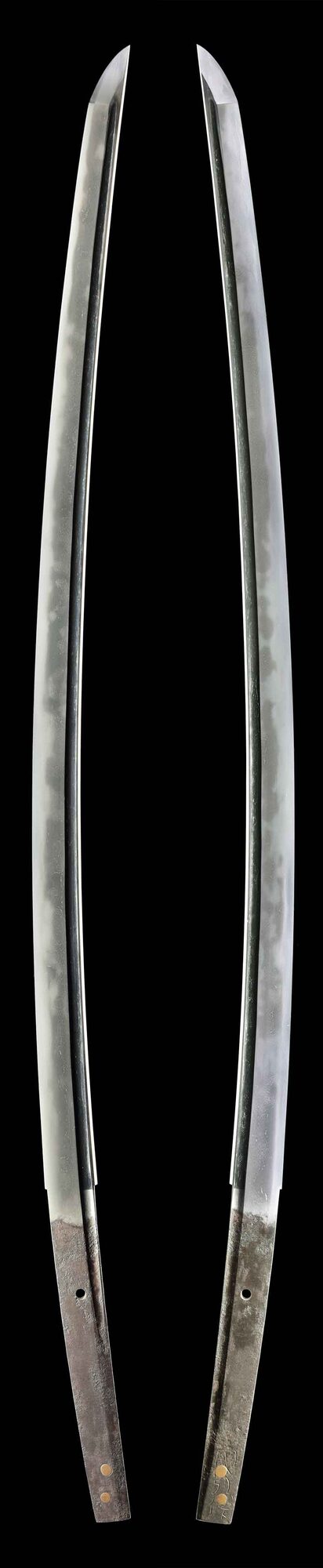
A tachi signed 國弘作 (Kunihiro saku): the two sides of the blade. Photo: dealer in Japan 
The tang of the same tachi, with the signature 國弘作 (Kunihiro saku) and the character 國 (kuni) larger. Photo: dealer in Japan 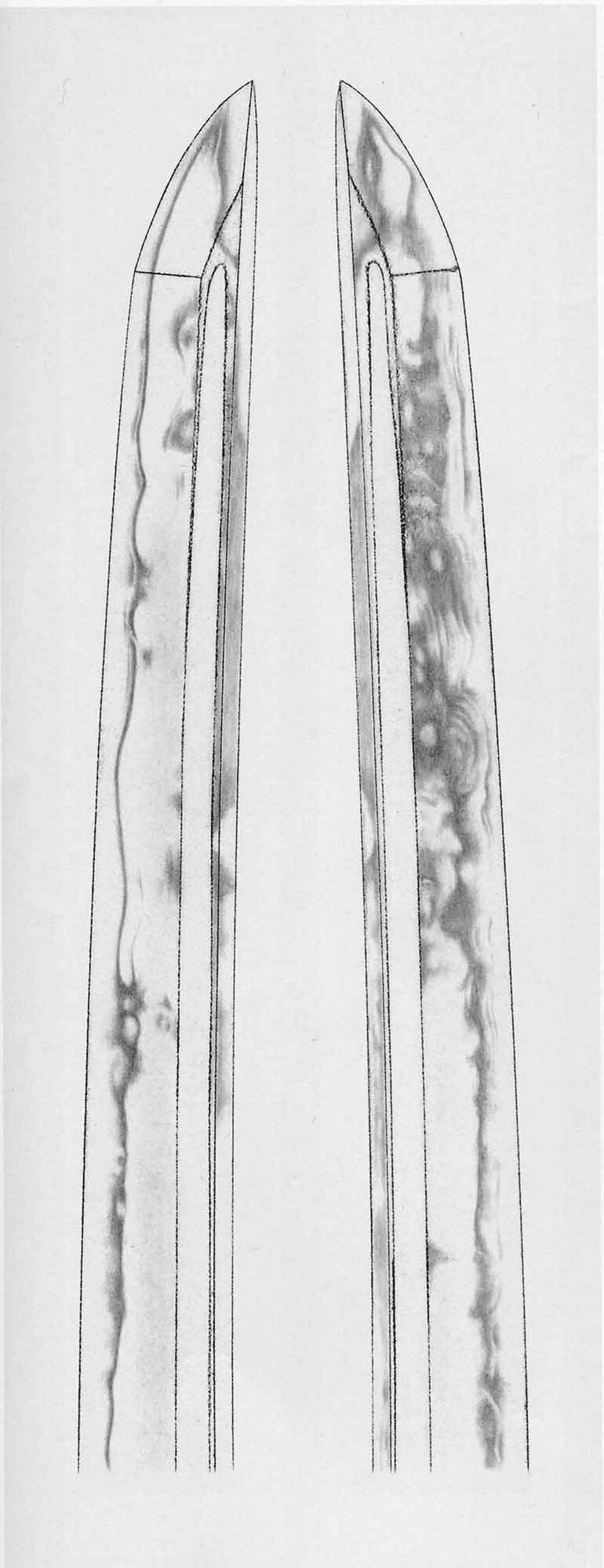
The oshigata (押形) of the upper part of the same tachi: the temper in ō-gunome. Photo: dealer in Japan