His style
He started from the Bizen tradition and arrived at that of Sagami. He made long, robust blades with little curvature, and few tantō; the hamon and the nioiguchi are soft, the steel bright with ji-nie, and the suguha wide, with kinsuji and sunagashi. The NBTHK writes that almost all of his blades follow Inoue Shinkai or Gō, in suguha with a shallow notare; gunome-midare is rare, but appears from time to time.
Sugata
The katana of 1851 is shinogi-zukuri with an iori-mune, wide, with a somewhat thin kasane and an ō-kissaki. Sesko places him among the swordsmiths of the kinnōtō (勤王刀) blades, those of the supporters of the emperor, of 65 to 75 cm and almost without curvature, and among those who revived the long blades of the middle Nanbokuchō; he gives as an example a katana of 1866 of 73.4 cm with 1.2 cm of sori.
Jihada
Tight ko-itame with nagare on the katana of 1851; on that of 1870, tight ko-itame and nagare with dense, abundant ji-nie.
Hamon
On the katana of 1851, a wide yakiba of shallow notare with ō-gunome, long ashi, kinsuji, sunagashi and a bright nioiguchi. On that of 1870, a gunome-midare with chōji, square gunome and togari, long ashi, a dense nioiguchi, large nie, fine sunagashi and some kinsuji.
Bōshi
On the katana of 1851, a shallow notare with a round turn-back and hakikake; on that of 1870, midare-komi with the tip in komaru, hakikake and a turn-back.
Nakago and mei
The tang of the katana of 1851 is unshortened (ubu), with the end in kurijiri and katte-sagari file marks with keshō; the signature is on one side and the date and the client, in two lines, on the other. He signed 豊永行秀 (Toyonaga Yukihide) until around 1848, 左行秀 (Sa Yukihide) from then on and 東虎 (Tōko) from 1867; also 筑州住左行秀 (Chikushū jū Sa Yukihide), with the place of forging: 於東武 (Tōbu ni oite), “in Edo”, or 於土佐 (Tosa ni oite), “in Tosa”; and 於大島山麓左行秀造之 (Ōshimayama-roku ni oite Sa Yukihide kore o tsukuru).
Who he is confused with
In the kantei of the katana of 1870, the NBTHK relates that almost everyone voted for other Sagami-style swordsmiths, above all the Kiyomaro school and Unju Korekazu. Kiyomaro makes more itame and stronger ji-nie, uneven ha-nie and thick kinsuji, with a poor fukura; Korekazu almost never uses such a large kissaki, and his hamon is mostly chōji.
Details
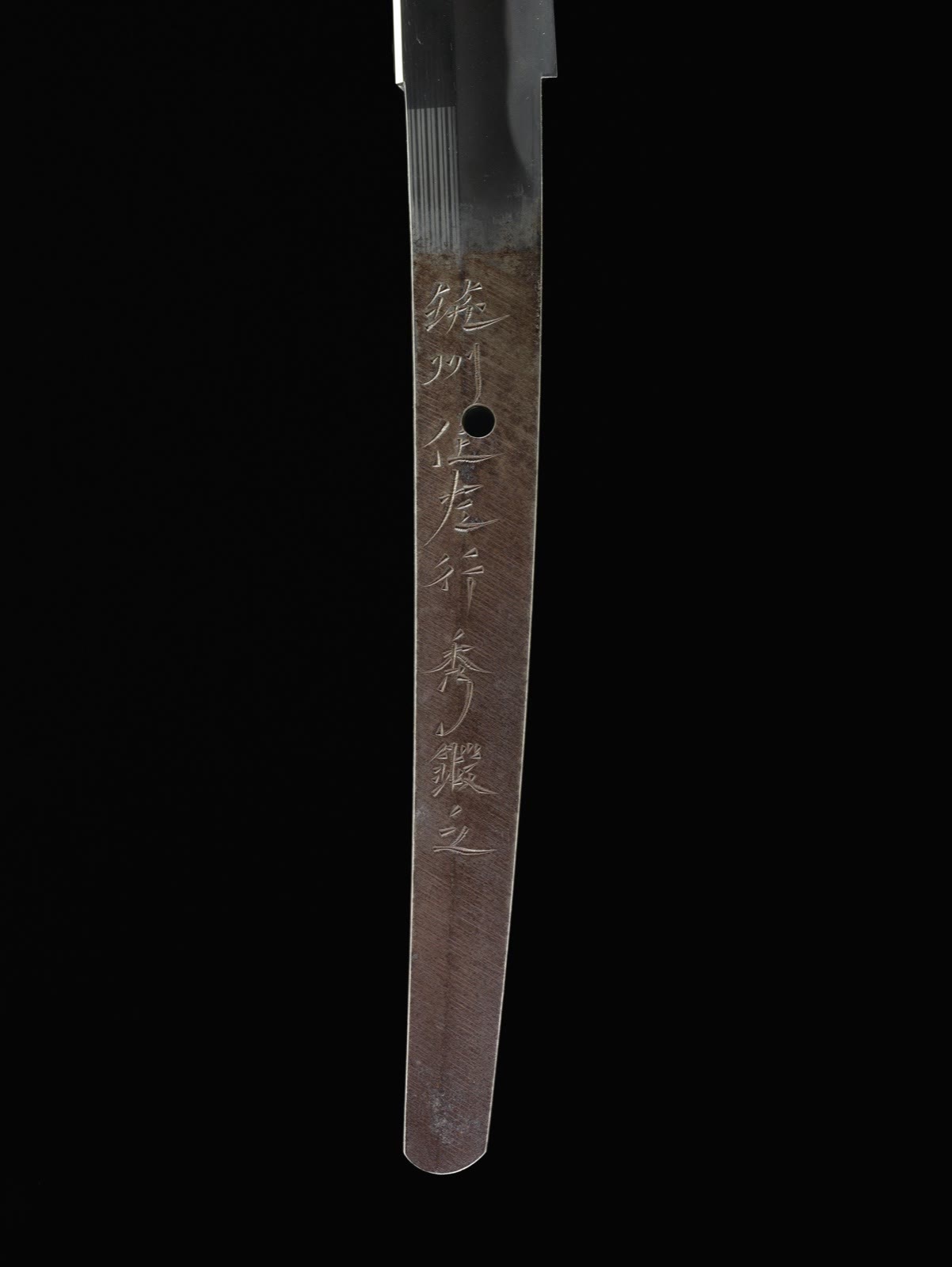
The tang on the signature side, 筑州住左行秀鍛之 (Chikushū jū Sa Yukihide kore o kitau). Kyūshū National Museum, via ColBase · ColBase terms of use · source 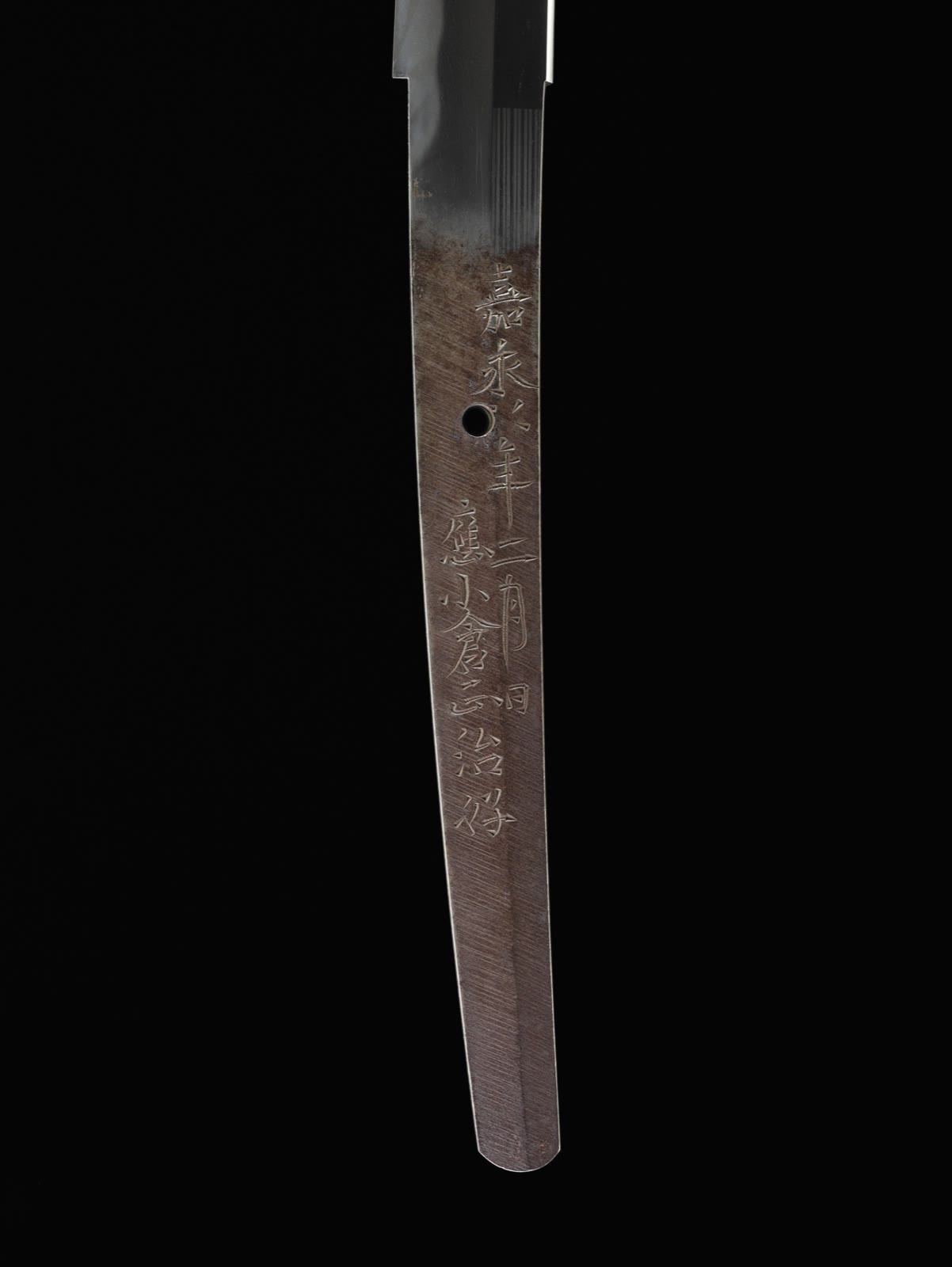
The tang on the side of the date and the client: 應小倉正治好 (Ogura Masaharu no konomi ni ōzu), “to the taste of Ogura Masaharu”. Kyūshū National Museum, via ColBase · ColBase terms of use · source