Seki Kanefusa
関兼房 (Seki Kanefusa)
Name borne by several swordsmiths of Seki in Mino, active from the mid-Muromachi period and above all in the 16th century.
Profile
Kanefusa is a name used by several swordsmiths of Seki, in Mino province, from the mid-Muromachi period onward; most of the surviving work dates from the 16th century and falls within what is called Sue-Seki. School tradition holds that the family came from the Zenjō (善定) line and held the headship of the Seki smiths. The name is attached to a hamon, the Kanefusa-midare (兼房乱れ), also called kenbō-midare: a broad gunome-midare with rounded, fairly regular heads and a tight nioiguchi, later taken up by other Seki smiths. Besides katana, he made many tantō and ko-wakizashi in hira-zukuri. He nearly always signed with the two characters of the name, 兼房 (Kanefusa), without date or personal name, which makes the generations hard to tell apart. Wakasa no Kami Ujifusa (若狭守氏房), who settled in Owari, is regarded as the son of one of the Kanefusa; the name remained in use into the shintō period.
Rankings
- Yoki-wazamono (very good) (Kaihō Kenjaku, 1797)
Swords available
-
Kanefusa
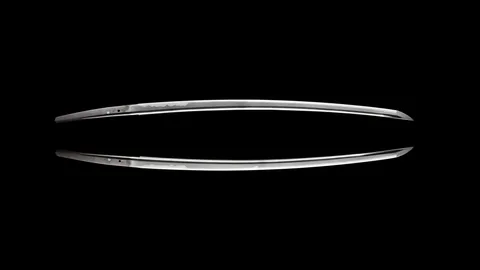
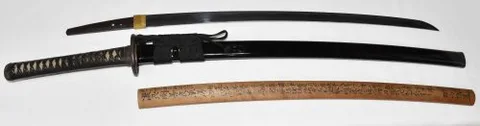
Late fifteenth-century kotō katana of the Sue-Seki group, 76.2 cm long, with NBTHK Tokubetsu Hozon for the blade and an NBTHK Hozon tōsōgu paper for its han-tachi koshirae. Kanefusa is a name that recurs in Sue-Seki from the middle of the Muromachi period into shintō times. According to the indexes, the smith who signs “Kanefusa saku” was a grandson of the first Kaneyoshi and the eldest son of the Kanefusa (Seizaemon) of the Eikyō era; his given name was Shirō and he worked in the late fifteenth century, around the Bunmei era, with works dated Bunmei 10 and 16. The blade is shinogi-zukuri with iori-mune, a broad mihaba, sakizori and an extended chū-kissaki: 76.2 cm nagasa, 1.6 cm sori, 3.22 cm motohaba and 923 g in weight. The hada is a varied itame with ji-nie and shirake-utsuri; the hamon a gunome with togari and chōji, plentiful ko-ashi and yō, nie and tobiyaki; the bōshi differs on each face. The tang is suriage, with a lightly cut kuri-jiri end, katte-sagari yasurime except on the shinogi-ji of the reverse, which is suji-kai, and three holes. What sets the ensemble apart is its double certification: NBTHK Tokubetsu Hozon for the blade (27 August 2021) and NBTHK Hozon tōsōgu for the 108 cm han-tachi koshirae (2 April 2021), with a saya in black ishime-ji lacquer, mantis-on-autumn-grasses menuki and a tsuka covered in aya cloth with flat nandō-coloured tsukamaki. A shirasaya with cover and a one-piece silver habaki are included.
60.6/100
€11,980
-
Kanefusa
Kotō katana from Mino signed Kanefusa and dated Eishō 9 (1512), with NBTHK Tokubetsu Hozon Tōken and a koshirae whose matching fittings bear the gosan-no-kiri crest. Kotō katana signed 'Kanefusa saku', a name carried by several generations of smiths in Seki, Mino province, and dated to the eighth month of Eishō 9 (1512), which places it in the late Muromachi period. The first Kanefusa, active in the Eikyō era, was the son of Kaneshige of the Yoshisada school and gave his name to the 'Kanefusa-midare'. The blade has a nagasa of 68.4 cm; the photographs show a suguha-based hamon with undulations, an intact bōshi and a presentable polish. The tang, with two mekugi-ana (one plugged) and a rounded end, appears unshortened; the signature and date cannot be read in the tang photographs, but they are recorded in the certificate's oshigata and on the photographed registration card. NBTHK Tokubetsu Hozon Tōken certificate (no. 147828, 16 January 2003), legible in the photograph. According to the original seller, the mounting has fuchi-kashira, menuki and tsuba with the gosan-no-kiri crest and karakusa, a kōgai with the same crest, and a dark red lacquered saya which the seller believes to be aka tsuishu-nuri (Wakasa-nuri); the mounting is not dated. A shirasaya is also included, according to the original seller.
57.2/100
€27,820
-
Kanefusa
Kotō katana by Kanefusa, of the generation settled in Seki (Mino), designated Jūyō Tōken by the NBTHK, with full koshirae and a shirasaya bearing a sayagaki. Katana signed Kanefusa, a name borne by a line of Mino smiths active from the mid-Muromachi period into the shintō era and known for "Kanefusa-midare", a gunome with broad, rounded heads. According to the original seller, the mention of Seki in the signature points to a later generation, settled in Seki after leaving Akasaka, and the blade is placed around the Tenshō era. Shinogi-zukuri blade with iori-mune, saki-zori and an extended chū-kissaki; nagasa 69.9 cm, sori 2.0 cm. The seller describes a tight itame with fine ji-nie and a hamon of large notare with gunome, ko-ashi and ko-nie; the bōshi is midare-komi with a pointed tip. The tang, ubu according to the seller, with kurijiri, taka-no-ha yasurime and two mekugi-ana, carries on the omote a signature ending in 関善良兼房作 (probable reading: Seki Zenryō Kanefusa saku) and on the ura the character 藤 (probable reading: Fuji). It comes with a koshirae: tsuka wrapped in black silk ito, black lacquered saya, iron tsuba with peonies and lion, iron fuchi with dragon and iron menuki with centipedes in gold iroe, together with a shirasaya with sayagaki. Designated Jūyō Tōken by the NBTHK at its 19th session, according to the original seller.
54.4/100
€46,890