On this page
Quick profile
- Name
- Sumitani Masamine; he signed 傘笠正峯 (Sanryū Masamine) and 両山子正峯 (Ryōzanshi Masamine) AT
- Kanji and reading
- 隅谷正峯 (Sumitani Masamine) HD
- Birth
- 24 January 1921 (the 14th, according to the English and French Wikipedias), in Tatsumi-machi, Mattō (today Hakusan, Ishikawa) PC
- Death
- 12 December 1998, in Mattō, aged 77 AT
- Where he forged
- Mattō (松任, Mattō), today Hakusan (白山, Hakusan), in Ishikawa: his forge 傘笠亭 (Sanryūtei) from 1956 and 両山亭 (Ryōzantei) from 1965 AT
- Master
- 桜井正幸 (Sakurai Masayuki), at the forging institute of Ritsumeikan University AT
- School or tradition
- Bizen of the Kamakura period; his own hamon, the 隅谷丁子 (Sumitani chōji) AT
- Licence
- 1954, from the Committee for the Protection of Cultural Properties AT
- Rank
- Mukansa (無鑑査, mukansa) from 1966 or 1967, depending on the source; Living National Treasure (重要無形文化財保持者, jūyō mukei bunkazai hojisha) from 1981 AT
In short
The eldest son of a family of soy sauce makers, he took an interest in the sword at secondary school and graduated in mechanical engineering from Ritsumeikan University in 1941; there he entered the forging institute and became a pupil of Sakurai Masayuki. After the war he returned to forging and in 1956 opened his forge in Mattō. At the first edition of the NBTHK competition for new swords, in 1965, he won the Masamune Prize, and he won it again in 1966 and 1974. He was a Living National Treasure from 1981, forged for the Ise shrine and the protective swords of three princesses, and researched iron and the ancient knives of the Shōsōin. He died in 1998.
Sections
-
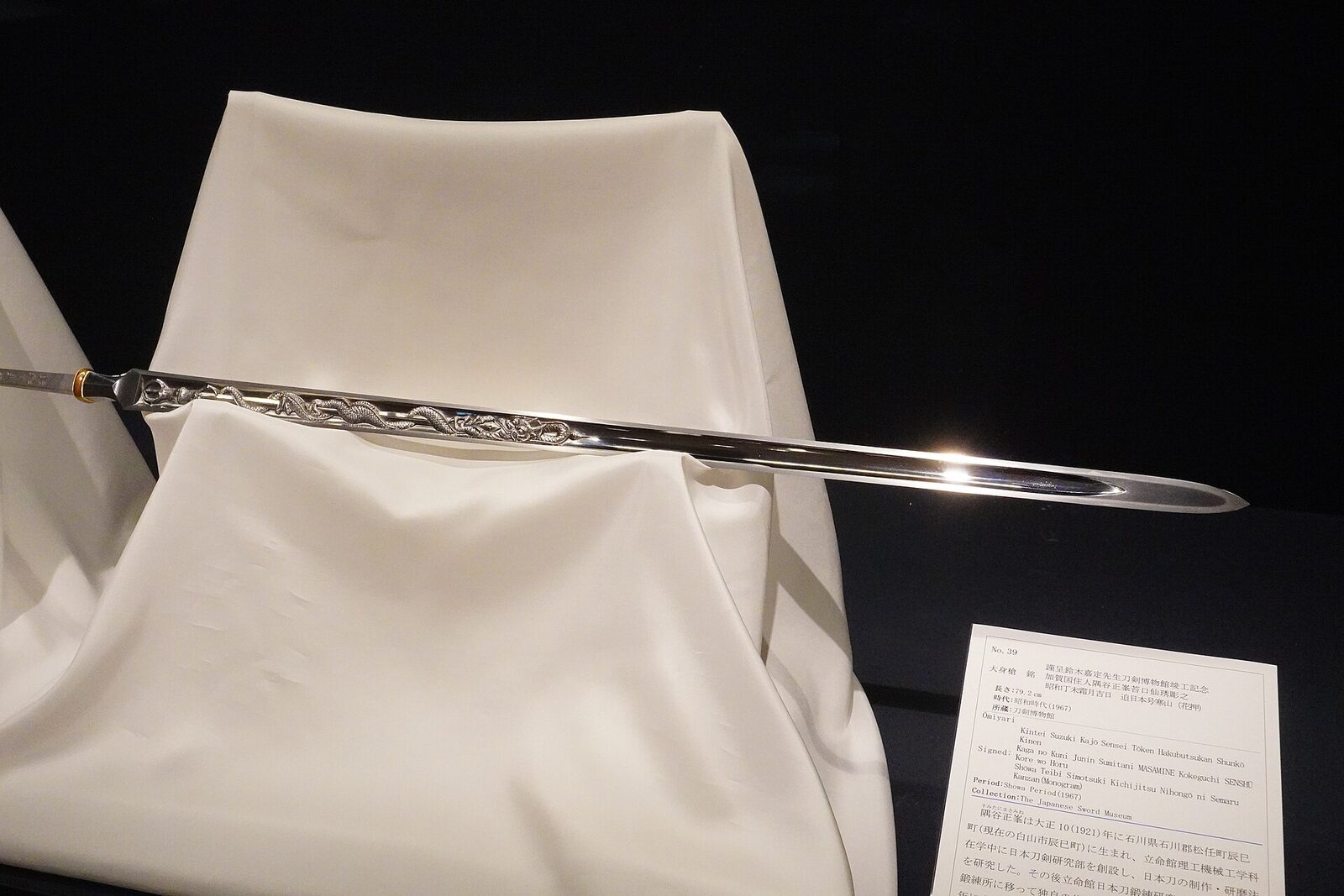 From Ritsumeikan to Mattō
Life and forging
His training as an engineer, his forge in Mattō, his research on iron and his commissions for Ise and the imperial household.
-
Kamakura Bizen · Sumitani chōji
Work and style
His own chōji, the copy of the Nihongō spear and his works in museums.
-
Three Masamune Prizes
Prizes
His prizes year by year, from the NBTHK technical competition to the title of Living National Treasure.
-
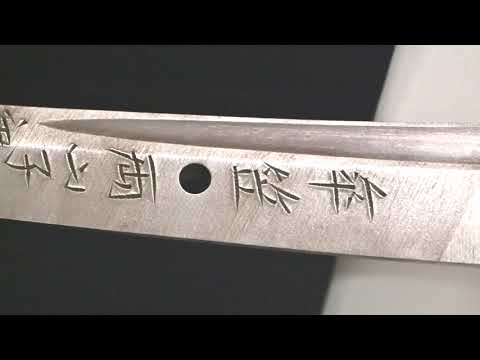 His blades and those of Miyairi Akihira
Videos
A video with his blades alongside those of Miyairi Akihira.
-
Bibliography and credits
Sources
The sources consulted on 4 October 2026, with their link, and the credit for each image.