On this page
Quick profile
- Name
- Awataguchi Kunitsuna AT
- Kanji and reading
- 粟田口国綱 (Awataguchi Kunitsuna) AT
- Period
- Early and middle Kamakura; tradition gives him 1163 to 1255, with a question mark AT
- Province
- Yamashiro (Awataguchi, in Kyoto) and, later, Sagami (Kamakura) AT
- School
- Awataguchi (粟田口派, Awataguchi-ha) AT
- Family and master
- Sixth son of Kuniie, according to tradition; for the Nihon Kokugo Daijiten, grandson of Kuniyori. Brother of Hisakuni and Kunitomo; tradition gives him Shintōgo Kunimitsu as a son AT
- Title
- 左近将監 (Sakon Shōgen) AT
- Documented fact and tradition
- Documented: his signed tachi and their official designations. Tradition: the kinship, the dates, the regent who summoned him and the story of the Onimaru, which varies from one old text to another AT
In short
He is said to have been a rotating smith of the retired emperor Go-Toba and later to have moved to Yamanouchi, in Kamakura, where he forged the Onimaru for Hōjō Tokiyori, according to Japanese Wikipedia. There he worked with smiths from Bizen at the birth of local sword-making, and Markus Sesko recognises two styles in him: the slender and elegant one of Yamashiro and a more powerful one from Kamakura onwards; only eight signed works of his are known. His most famous blade is the Onimaru, which appears in the Kyōhō meibutsuchō (享保名物帳) and has been an imperial object since 1871.
Sections
- Awataguchi · Kamakura · the Hōjō regents Life and times The Awataguchi school, his move to Kamakura, the two versions of the regent who summoned him and the beginning of sword-making in Sagami.
- Two styles · ko-itame · nie Work and style The kantei keys: the slender Kyoto style and the powerful Kamakura style, with sugata, jihada, hamon, bōshi, nakago and signature.
-
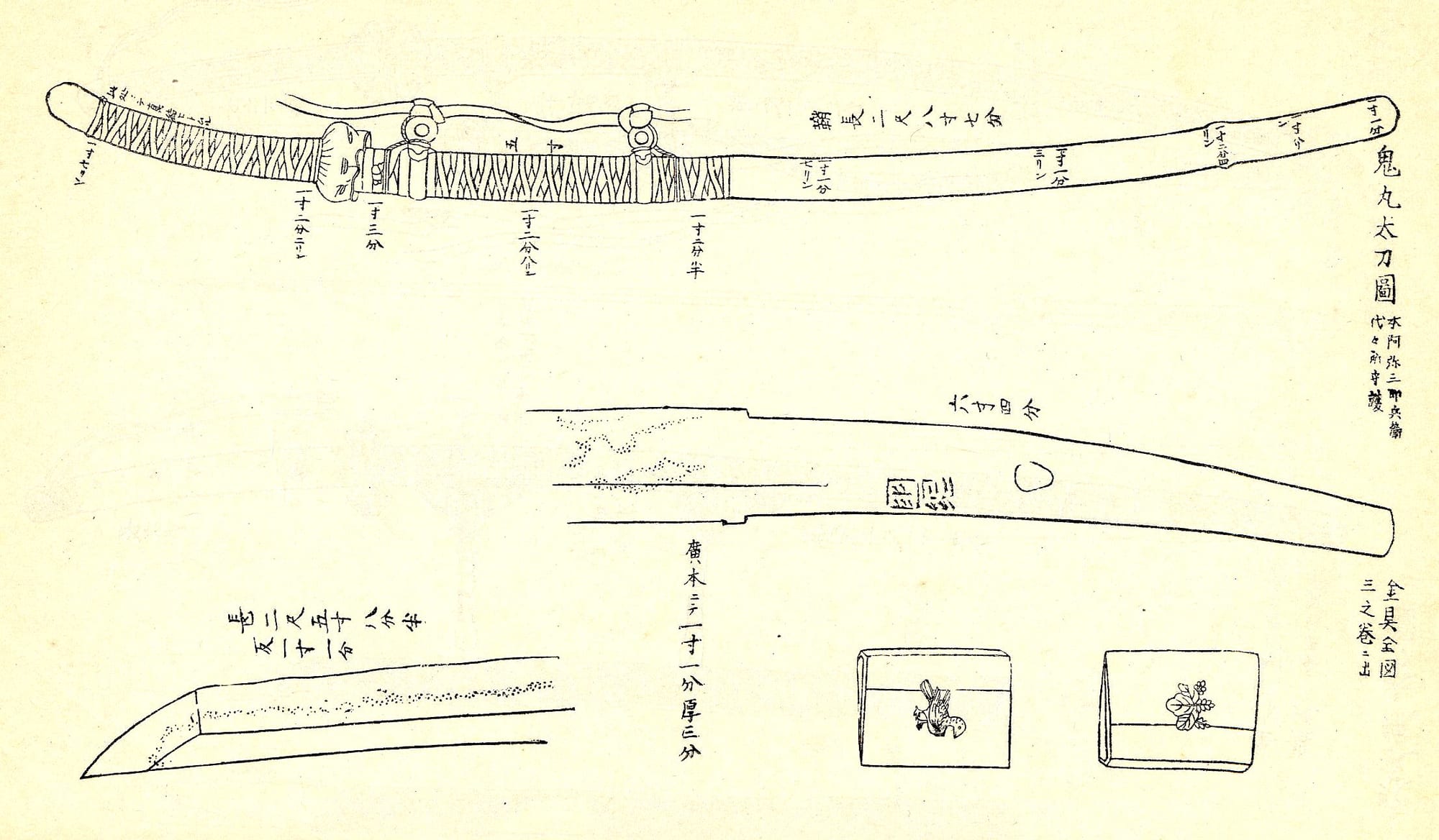 Onimaru · Tenka Goken · Important Cultural Properties
Famous works
The Onimaru, of the imperial collection, the tachi of the Tokugawa Art Museum and of the Hie shrine, and the blades of doubtful attribution.
- Bibliography and credits Sources The sources consulted on 4 October 2026, with their link, and the credit of the image.