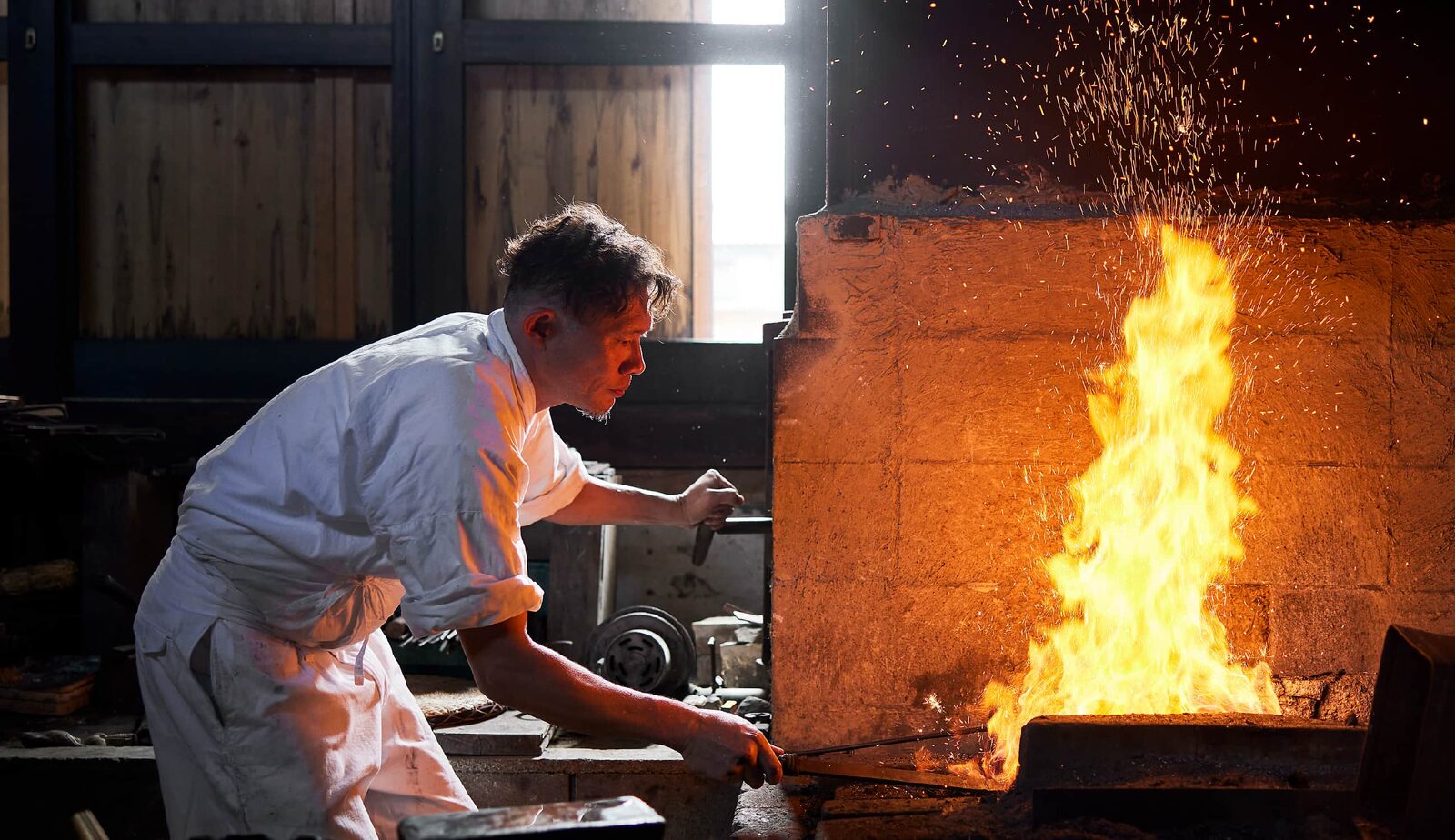
What he is after
For him, “the sword is language”, and its beauty is born of the harmony between the shape (姿, sugata), the hardening (刃文, hamon) and the surface of the steel (地肌, jihada).
In 2005 he worked with a wooden bellows, a power hammer and tamahagane (玉鋼, tamahagane), and hardened with clay, according to the Iaido Journal.
He also makes kitchen knives (包丁, hōchō), among them one with a bōhi (棒樋, bōhi), the long groove of swords.
Two of his blades
Neither of the two carries NBTHK papers.
| Work | Measurements | Model | Steel and hardening |
|---|---|---|---|
| Katana, 2007 | Nagasa 71.2 cm; sori 1.9 cm; 889 g | Replica of Rai Kunitoshi | Very tight koitame; suguha with ko-nie and abundant ko-ashi; bōhi kakinagashi |
| Wakizashi, March 2011 | Nagasa 45.6 cm; sori 1.3 cm; 785 g | Replica of Bizen Fukuoka Ichimonji | Itame; gunome-midare of nioi and nie |
His signature
He signs 濃州住房太郎作 (Nōshū jū Fusatarō saku), “made by Fusatarō, resident of Mino”, with the date in the Japanese era. 濃州 (Nōshū) is Mino, the old province of present-day Gifu.
At the forge
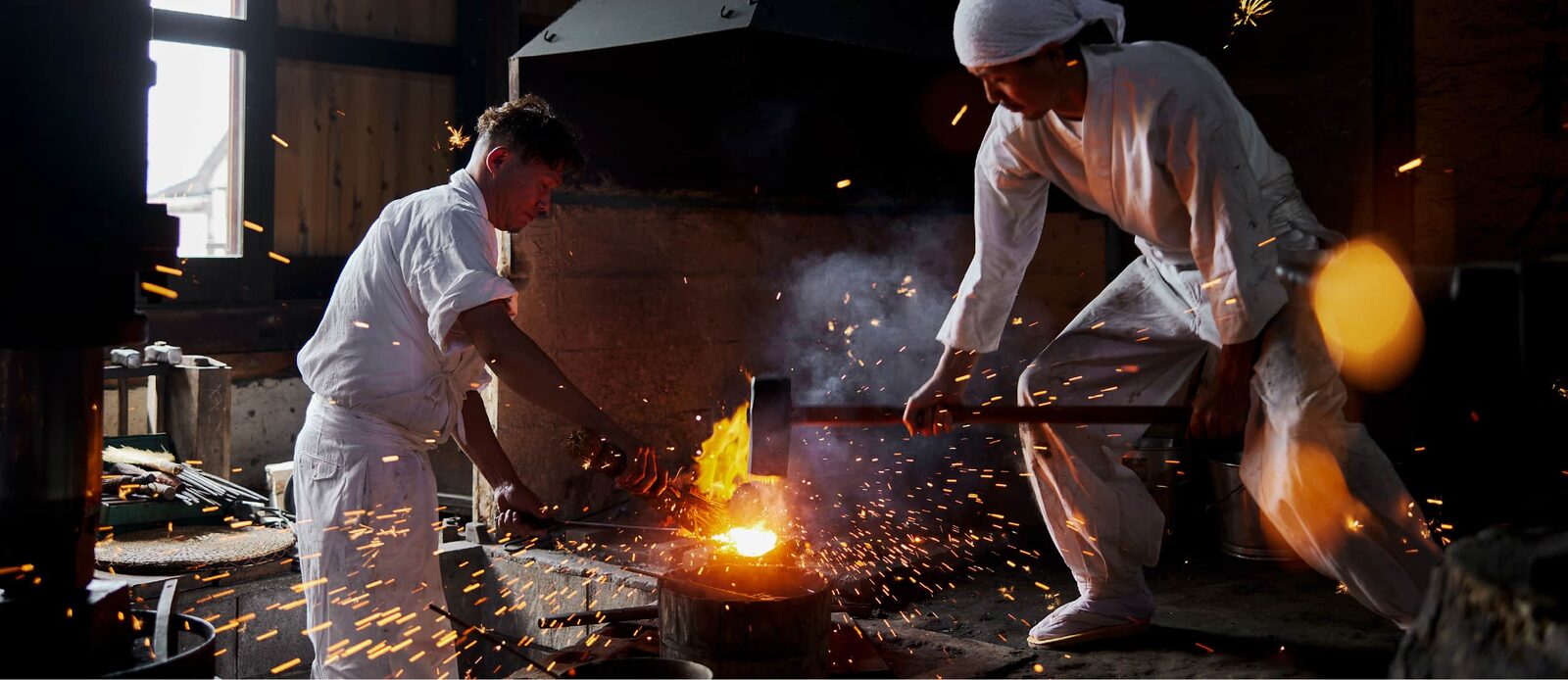
Forging in pairs: Fusatarō holds the piece and an assistant strikes with the sledgehammer. Photo: the smith himself