On this page
Documented works
| Work | Designation | Where it is |
|---|---|---|
| Katana 摂州浪花住月山雲龍子貞一作之 (Sesshū Naniwa-jū Gassan Unryūshi Sadakazu kore o saku), August 1867 (Keiō 3), made at the request of Shibusawa Heikurō | No designation | Sent to the Shibusawa family in 1940 |
| Tantō 浪花月山貞一 彫物同作 (Naniwa Gassan Sadakazu horimono dōsaku), 1870, with its mounting | No designation | Metropolitan Museum, New York (32.100.470) |
| Katana 大阪住月山貞一精錬之 (Ōsaka-jū Gassan Sadakazu seiren kore), December 1894, with the carving by his hand | No designation | Tokyo National Museum (F-68) |
| Katana of 1898 (Meiji 31), signed as an artist of the Osaka branch of the Japan Art Association (日本美術協会, Nihon Bijutsu Kyōkai), with a dragon in relief | No designation | Tokyo National Museum (F-73) |
| Tantō of 1912 with a Navy dirk mounting and the imperial chrysanthemum, signed at the age of 76 | No designation | Tokyo National Museum (F-75) |
| Tantō of 1913, with ayasugi-hada and a carved dragon, made for the museum | No designation | Tokyo National Museum (F-16494) |
| Katana of 1913 in the Bizen manner, with saka-chōji | No designation | Tokyo National Museum (F-16488) |
| Three katana of 1913 for the Nagata family, in the manner of Sōshū, of Kamakura and of Bizen Ichimonji, signed at the age of 78 | No designation | Kyoto National Museum (E甲326, E甲327 and E甲328) |
| Katana of 1915 signed at the age of 81, with the signature inlaid in gold, offered by the Army for the enthronement of the Emperor Taishō | No designation | Tokyo National Museum (F-71) |
| Katana of November 1915 with a dedication in Spanish of 1924 | No designation | Tokyo National Museum (F-69) |
| Iron mirror (鉄鏡, tetsukagami) of July 1915 | No designation | Kyoto National Museum (E甲582) |
Shibusawa Heikurō’s sword
The Japanese Wikipedia relates that one of the three surviving swords of Shibusawa Heikurō, the adopted son of Shibusawa Eiichi killed at the battle of Hannō (1868), is a katana of his signed 摂州浪花住月山雲龍子貞一作之 (Sesshū Naniwa-jū Gassan Unryūshi Sadakazu kore o saku) and dated August 1867 (Keiō 3), with the inscription 應渋澤平九郎需 (Shibusawa Heikurō no motome ni ōzu), “at the request of Shibusawa Heikurō”. In 1940 a resident of Aomori sent it to the Shibusawa family. The other two are by Katsumura Norikatsu.
The Peru katana
Katana F-69 of the Tokyo National Museum is signed 帝室技芸員月山貞一謹作 (Teishitsu gigeiin Gassan Sadakazu kinsaku) and dated November 1915. On the blade it bears an engraved dedication in Spanish: “Presentado por S.E. Señor don Alberto Bresani Rossel E.E. y M.P. del Perú a la ocasión del matrimonio de S.A.I. el día 26 de Enero de 1924”. On 26 January 1924 Crown Prince Hirohito, the future Emperor Shōwa, married: the sword would be the wedding gift of the envoy of Peru, nine years after it was forged and six after the swordsmith’s death. The ColBase record does not explain it.
The Taishō enthronement
Katana F-71 bears the gold-inlaid signature 帝室技芸員月山貞一八十一歳謹作 (Teishitsu gigeiin Gassan Sadakazu hachijūissai kinsaku) and an inscription dedicating it to the emperor’s enthronement on behalf of the soldiers of the imperial Army: 大正乙卯奉祝登極帝国陸軍軍人奉献 (Taishō kinoto-u hōshuku tōkyoku teikoku rikugun gunjin hōken), of the year 1915.
In the lists
He lived after the wazamono list (1797) and the Kyōhō meibutsuchō (1719), which do not include him. His recognition is the title of artist of the imperial household and the prize of the 1895 exhibition.
Gallery

The 1915 katana with the 1924 dedication in Spanish. Tokyo National Museum. Tokyo National Museum, via ColBase · ColBase terms of use · source 
The signature and the dedication: “Presentado por S.E. Señor don Alberto Bresani Rossel…”. Tokyo National Museum, via ColBase · ColBase terms of use · source 
The enthronement katana, of 1915. Tokyo National Museum. Tokyo National Museum, via ColBase · ColBase terms of use · source 
Katana of 1898. Tokyo National Museum. Tokyo National Museum, via ColBase · ColBase terms of use · source 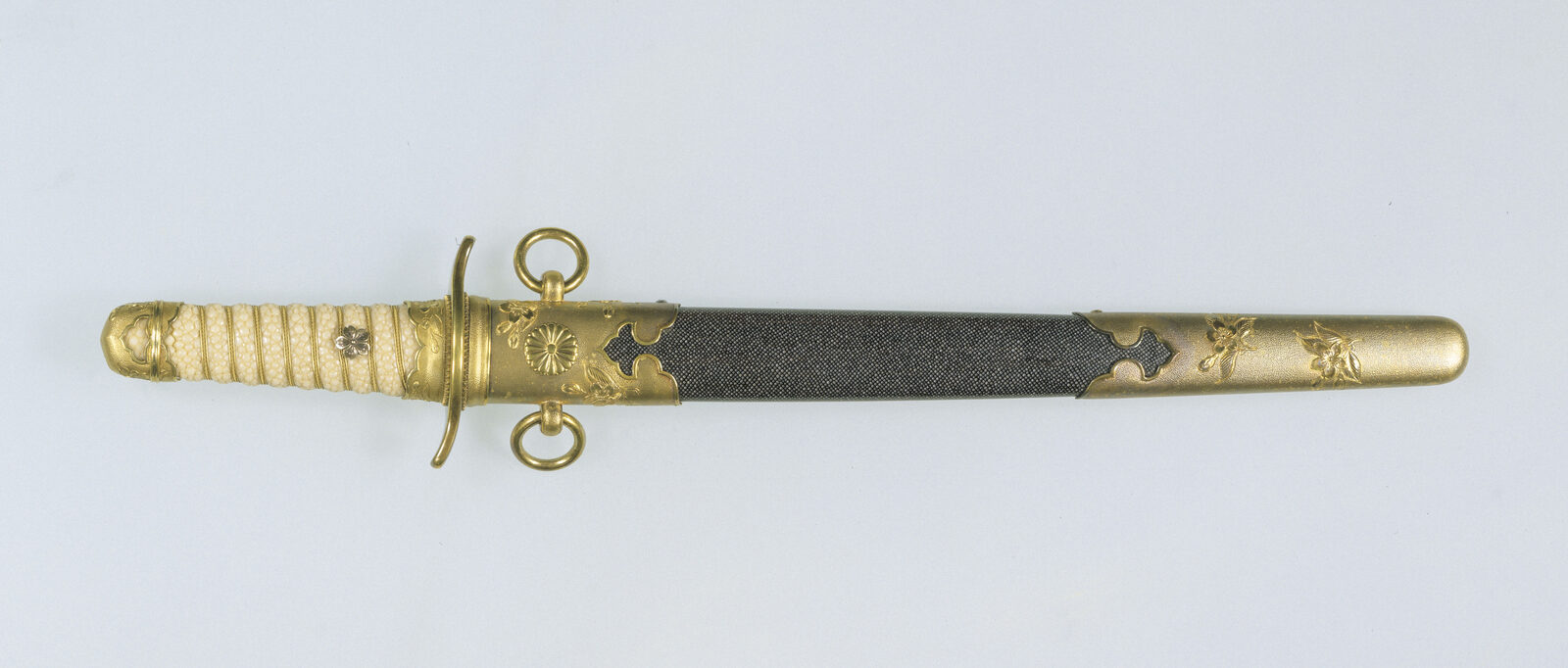
The Navy dirk mounting of the 1912 tantō, with the imperial chrysanthemum. Tokyo National Museum. Tokyo National Museum, via ColBase · ColBase terms of use · source 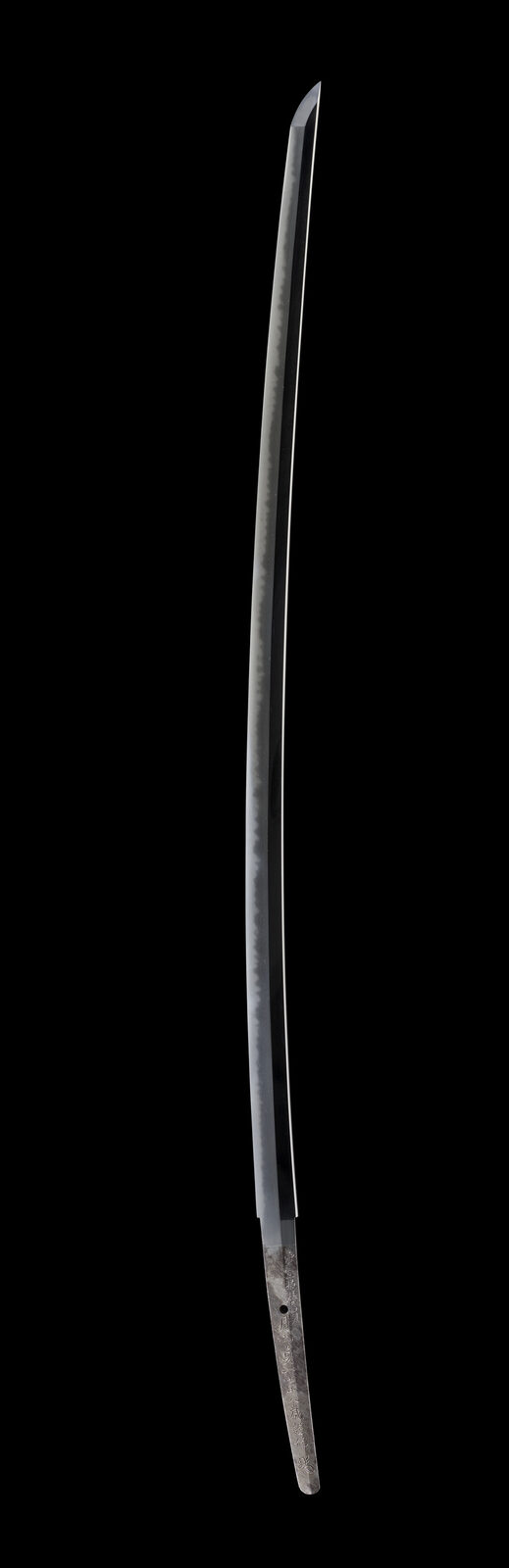
Katana of 1913 in the Bizen Ichimonji manner, one of the three of the Nagata family. Kyoto National Museum. Kyoto National Museum, via ColBase (photo: Okada Ai) · ColBase terms of use · source