On this page
Quick profile
- Name
- Gassan Sadakazu, the first of the family with that name; art name 雲龍子 (Unryūshi); born Tsukamoto AT
- Kanji and reading
- 月山貞一 (Gassan Sadakazu) HD
- Period
- From the end of the Edo period to the Taishō era: his dated blades in museums range from 1870 to 1915. The Japanese Wikipedia also gives him a katana dated August 1867, made at the request of Shibusawa Heikurō. HD
- Province
- Born in Ōmi (近江, Ōmi), in the Inukami district; worked in Osaka, in Settsu (摂津, Settsu) AT
- School
- The Gassan (月山, Gassan) of Osaka, who trace their name back to the old Gassan swordsmiths of Dewa AT
- Master
- His adoptive father, Gassan Sadayoshi (月山貞吉), according to the biographical dictionaries and the Japanese Wikipedia AT
- Title
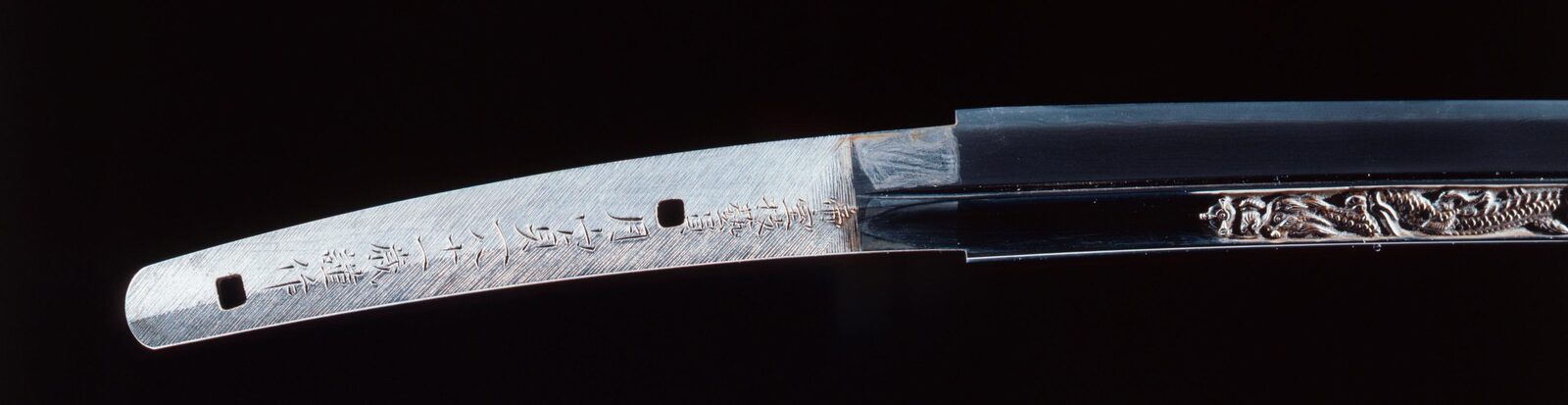
- Artist of the imperial household (帝室技芸員, teishitsu gigeiin) from 4 April 1906, on the same day as Miyamoto Kanenori: the only two swordsmiths with that title AT
- Family
- According to the Japanese Wikipedia, his son was Gassan Sadakatsu (月山貞勝), and his grandson, the second Gassan Sadakazu, a Living National Treasure from 1971 AT
- Cutting rank
- Not applicable: the wazamono list dates from 1797, before his time AT
- Documented fact and tradition
- Documented: his signed and dated blades in the Tokyo National Museum, the Kyoto National Museum and the Metropolitan Museum, with the title and his age in the signature from 1906. From tradition: that he designed the marshal’s sword in the shape of the Kogarasu-maru and forged the emperors’ command swords is said by encyclopaedias that do not agree on which Gassan made each one. HD
In short
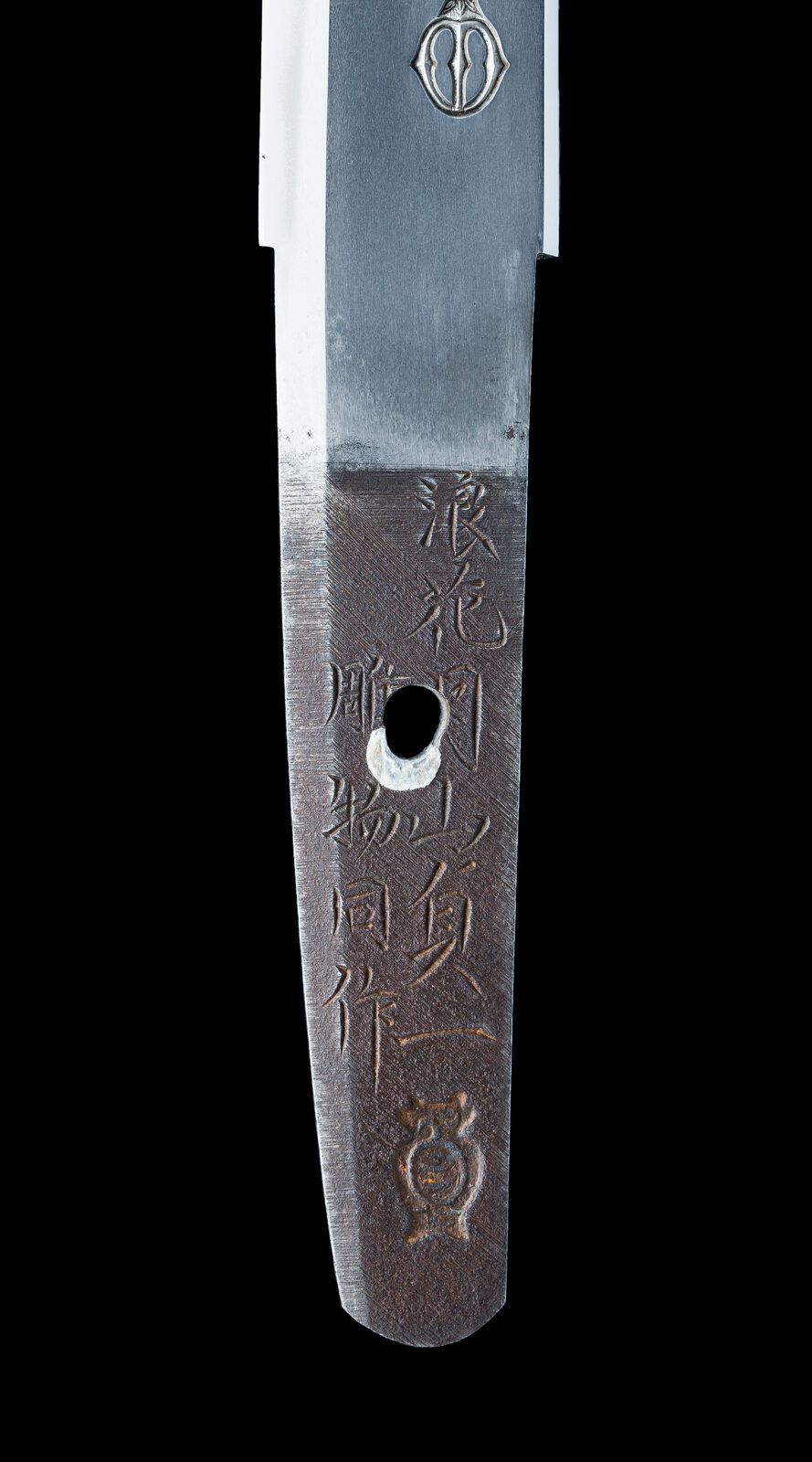
Sadakazu lived through the end of the samurai: he trained in Osaka at the end of Edo, went through hard years after the ban on wearing swords and returned to forging for the court, the army and the shrines. He worked in the manner of Bizen, Sōshū, Yamashiro and Yamato, and is credited with reviving the ayasugi-hada (綾杉肌, ayasugi-hada), the “braided cedar grain” of the Gassan of Dewa. His records at the Tokyo National Museum highlight a very fine carving (彫物, horimono), with dragons in relief, and from 1906 his signatures bear the title of artist of the imperial household and his age.
Sections
-
 From Ōmi to the imperial household
Life and times
The adoption, the years without swords, the commissions from the court and the title of 1906.
-
 Kantei keys
Work and style
Ayasugi-hada, the five manners, the horimono and the signature with his age.
-
 In museums and in the imperial collection
Famous works
The blades of the Tokyo National Museum, those of Kyoto and the one in the Metropolitan Museum.
-
 Bibliography and credits
Sources
The sources consulted and the image credits.