On this page
The five manners
The Nipponica encyclopaedia says that he mastered the manners of Bizen, Sōshū, Yamashiro and Yamato, and that he revived the ayasugi-hada of the old Gassan of Dewa; the 20世紀日本人名事典 (Nijusseiki Nihon jinmei jiten) highlights his hamon of gunome-chōji (互の目丁子, gunome-chōji), his carving and his signature. The museum records confirm it blade by blade: for the Tokyo National Museum, the 1894 katana has jigane and hamon of strong Sōshū flavour, and the 1913 one is a work in the Bizen manner, with a chōji that slants backwards (逆丁子, saka-chōji). In the Kyoto National Museum, three katana of 1913 made for the Nagata family state in the signature itself which tradition they follow: 以相州鎌倉古傳 (Sōshū Kamakura koden o motte), 以鎌倉古傳 (Kamakura koden o motte) and 以備前一文字傳 (Bizen Ichimonji den o motte).
Sugata
According to the Nipponica, his early works are broad and sturdy, and the late ones slimmer, designed for military sabres.
Jihada
His hallmark is the ayasugi-hada (綾杉肌, ayasugi-hada), a forging grain in regular waves that the Japanese Wikipedia also calls 月山肌 (Gassan-hada). For the Tokyo National Museum, the ayasugi-hada and the carved dragon of the 1913 tantō are features characteristic of Sadakazu.
Hamon
Gunome-chōji on the blades in the Bizen manner, according to the 20世紀日本人名事典 (Nijusseiki Nihon jinmei jiten). The 1913 katana of the Tokyo National Museum has saka-chōji, and the 1894 one a temper in the Sōshū manner. The hamon thus changes with the tradition it imitates.
Horimono
The Nipponica considers him a master of carving: dragons, figures of Fudō and banners with spear (旗鉾, hatahoko). On the 1898 katana and the 1915 one of the Tokyo National Museum, a dragon in relief runs along the groove at the base, and the signature of the 1894 one says that the carving is also his: 彫物同作 (horimono dōsaku).
Nakago and mei
The signatures in the museums fall into two periods. Before 1906: 大阪住月山貞一精錬之 (Ōsaka-jū Gassan Sadakazu seiren kore, 1894), 月山貞一謹造之 (Gassan Sadakazu kinzō kore, 1900) or, on the 1870 tantō of the Metropolitan Museum, 浪花月山貞一 彫物同作 (Naniwa Gassan Sadakazu horimono dōsaku), with a stamped seal. From 1906: 帝室技芸員月山貞一謹作 (Teishitsu gigeiin Gassan Sadakazu kinsaku), with his monogram (花押, kaō) and often with his age, such as 七十八歳謹作 (shichijūhassai kinsaku) in 1913.
How to tell him from the second Sadakazu
His grandson also signed 月山貞一 (Gassan Sadakazu). The title 帝室技芸員 (teishitsu gigeiin) on the tang can only be the first’s: the title disappeared in 1947 and no one else in the family held it. The dates help too: the first died in 1918 and the second was born in 1907.
Details

Katana of 1898 (Meiji 31): the tang and the dragon in relief. Tokyo National Museum. Tokyo National Museum, via ColBase · ColBase terms of use · source 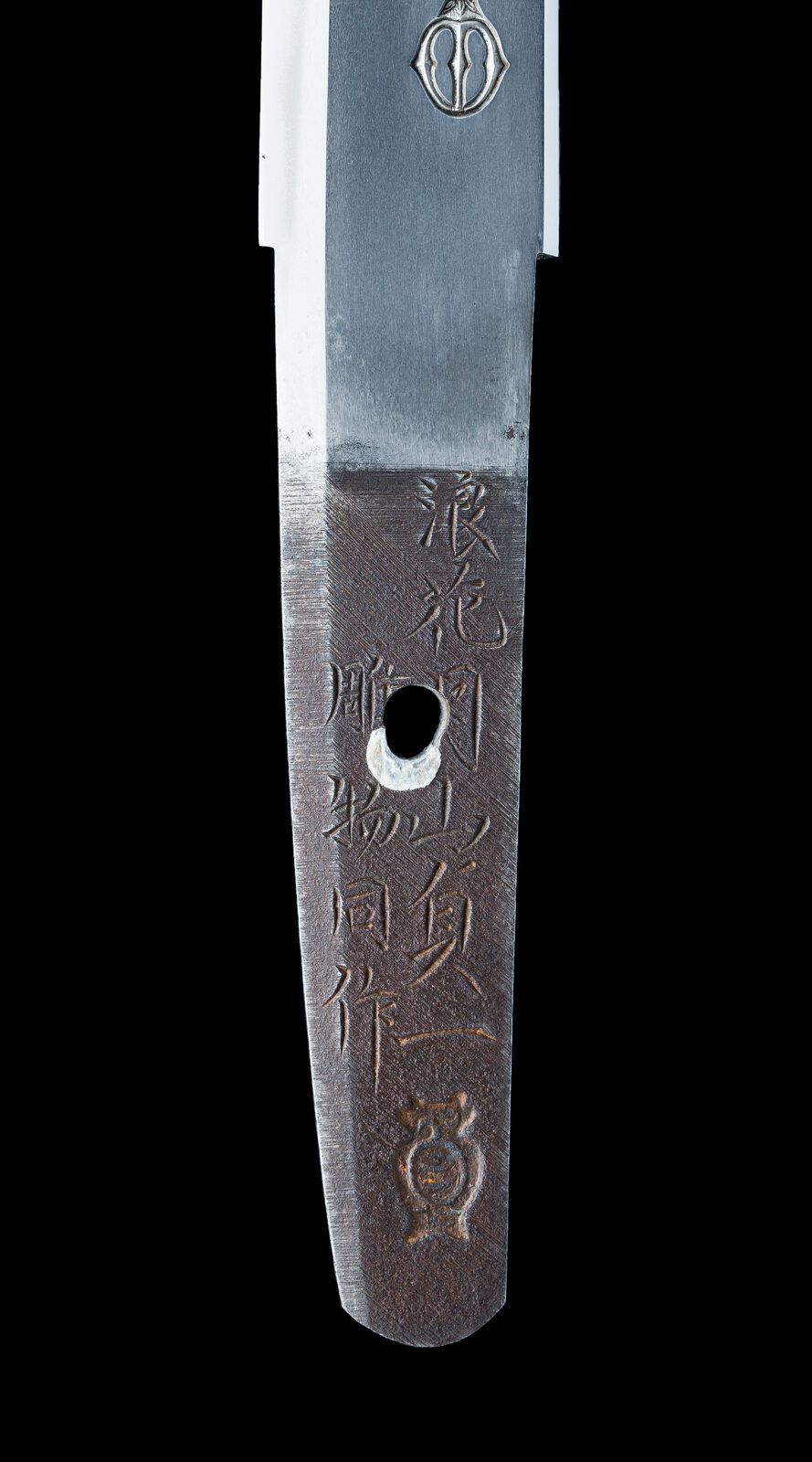
The signature of the 1870 tantō: 浪花月山貞一 彫物同作 (Naniwa Gassan Sadakazu horimono dōsaku), with his seal. The Metropolitan Museum of Art. The Metropolitan Museum of Art, New York · Public domain · source 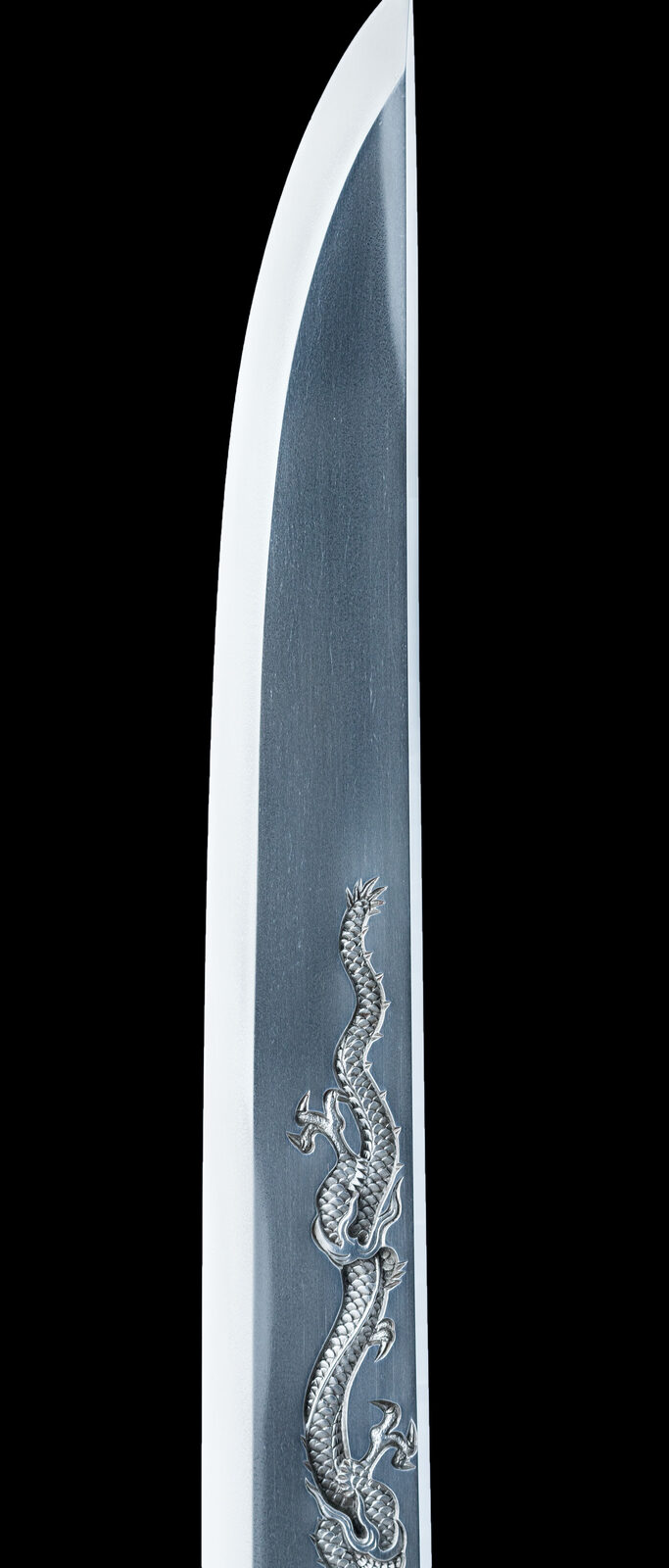
The same tantō: the carved dragon and the point. The Metropolitan Museum of Art, New York · Public domain · source 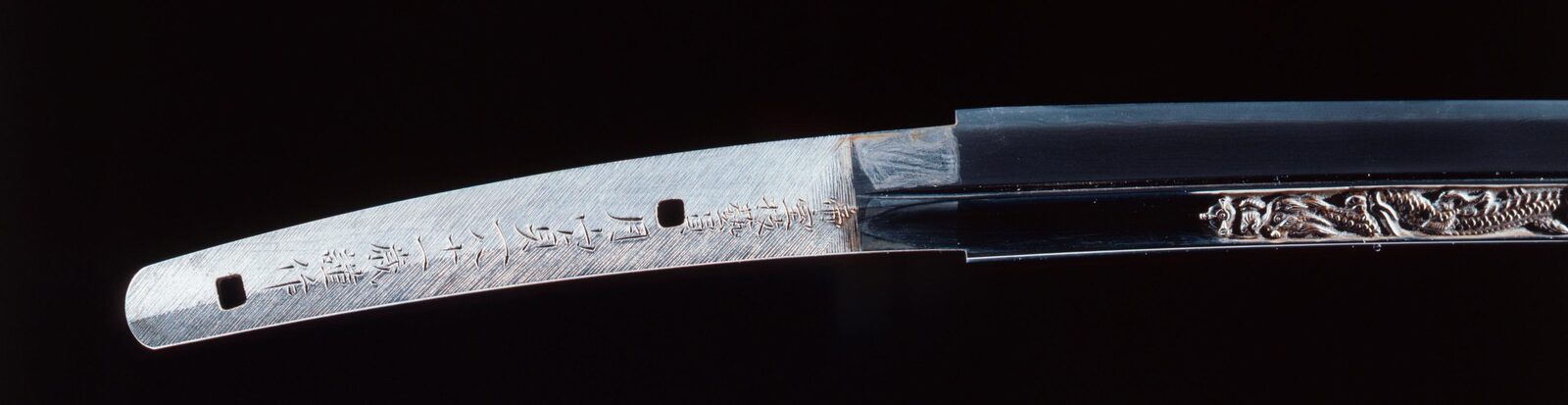
The signature with the title and his age on the 1915 katana. Tokyo National Museum. Tokyo National Museum, via ColBase · ColBase terms of use · source