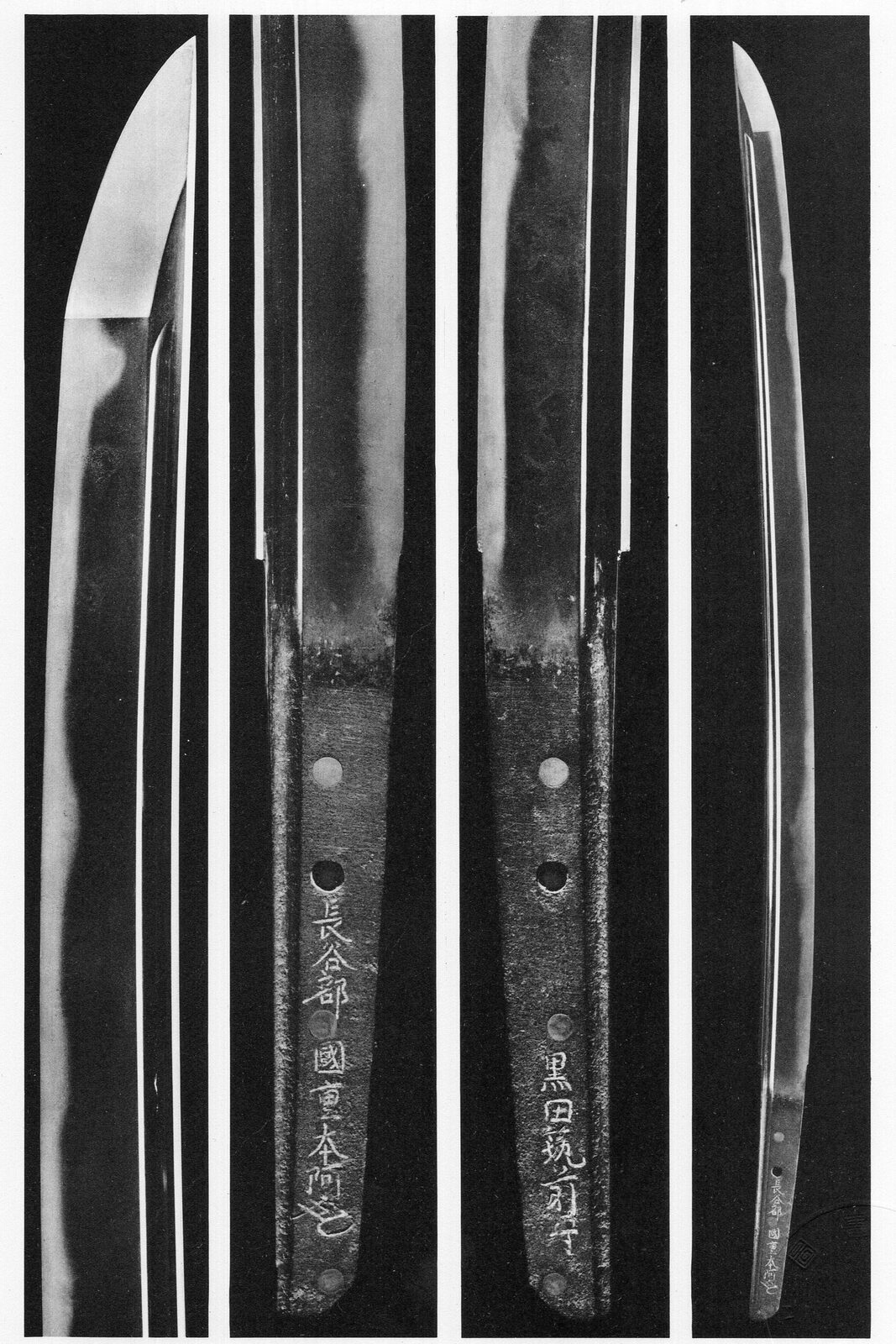
Katana 金象嵌銘長谷部国重本阿(花押)黒田筑前守 (kinzōgan-mei Hasebe Kunishige Hon'a kaō, Kuroda Chikuzen no kami): a large, greatly shortened tachi (ō-suriage) without a signature, which Hon'ami Kōtoku attributed to Kunishige with inlaid gold letters.
Important Art Object (重要美術品, jūyō bijutsuhin) in 1933, National Treasure in 1936 under the law of 1929 (today it would be equivalent to an Important Cultural Property) and National Treasure (国宝, kokuhō) under the current law since 31 March 1953.
The Kuroda donated it to the city of Fukuoka on 19 September 1978; it is in the Fukuoka City Museum, which displays it every year from early January to early February.
Blade of 64.8 cm, sori of 1.0 cm, width of 3.0 cm at the base and 2.5 at the point, kissaki of 5.9 cm and tang of 16.7 cm. Shinogi-zukuri, iori-mune, wide and thin, with little curvature and ō-kissaki; tight ko-itame with ji-nie and chikei; hamon of gunome and ko-notare turning into hitatsura; bōshi midare-komi with a turn-back and hakikake; bōhi on both sides; kurijiri tang with four holes, three of them plugged.
The name, according to the Kuroda Gokaju Kojitsu as recorded by the Japanese Wikipedia: Oda Nobunaga supposedly killed the tea master Kannai, hidden under a shelving cabinet, by pressing the blade against him (へし切る, heshikiru) without cutting the cabinet. The source itself rejects the addition that he also cut the cabinet.
From Nobunaga it passed to the Kuroda by different routes according to the source: through Hideyoshi to Kuroda Nagamasa, directly to Nagamasa, or to Kuroda Yoshitaka for his plan against the Chūgoku.
The Heshikiri Hasebe in the 1957 catalogue of National Treasures: the point, the two sides of the tang with the attribution in gold and the whole blade.Committee for the Protection of Cultural Properties, 国宝図録 (Kokuhō zuroku), 1957, via Wikimedia Commons · Public domain · source
Other blades
Work
Rank
Where
Details
Katana 無銘伝長谷部国重 (mumei den Hasebe Kunishige)
Important Cultural Property, 14 November 1953
Private collection
70.6 cm, sori 1.4; shortened, maru-mune; hamon turning into hitatsura in the upper half
34.2 cm; the oldest secure date, 1355; suken and bonji with futasuji-hi
Gallery
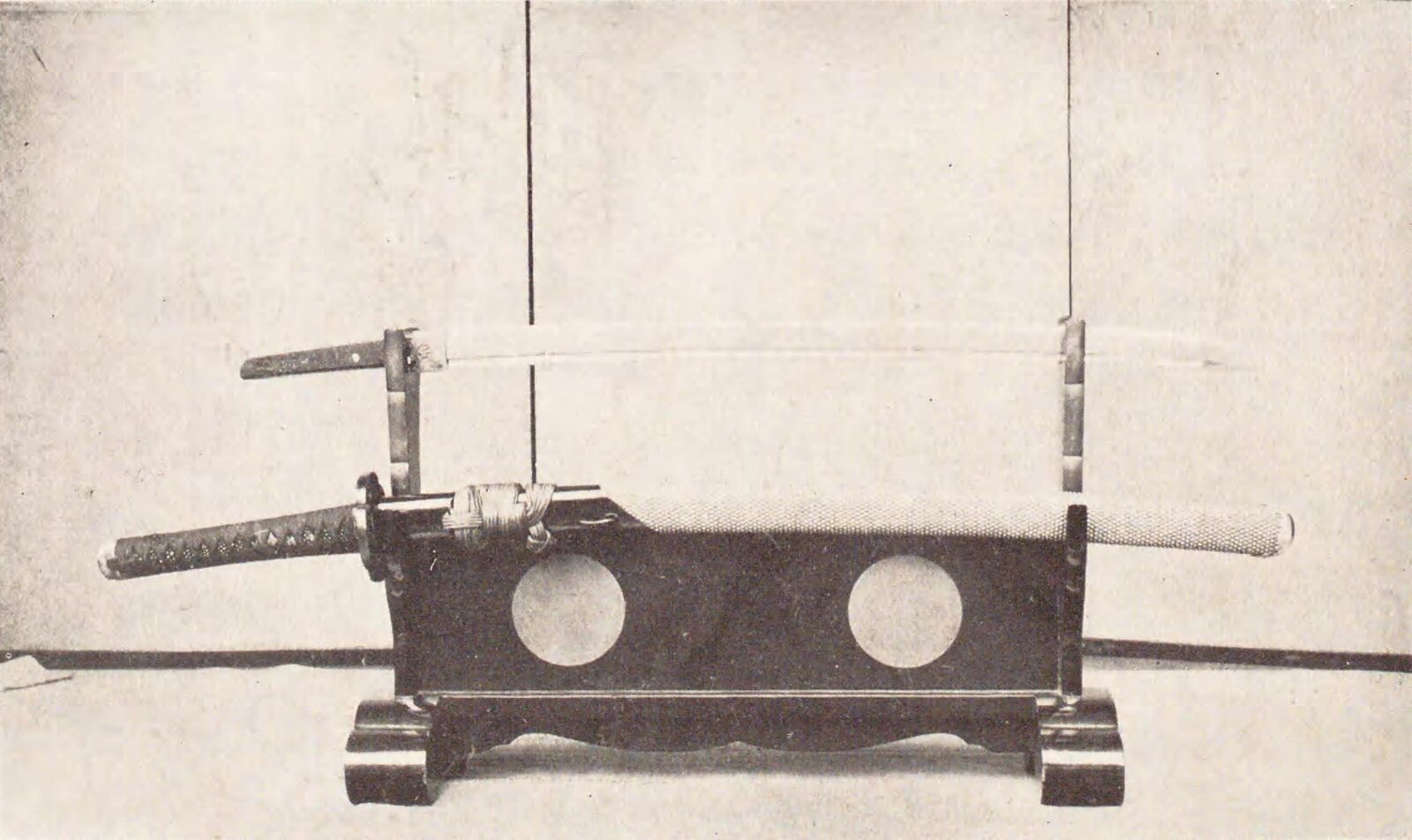
The Heshikiri Hasebe with its mounting, in a 1916 book about Kuroda Josui.金子堅太郎 (Kaneko Kentarō), 黒田如水伝 (Kuroda Josui den), 1916, National Diet Library, via Wikimedia Commons · Public domain · source
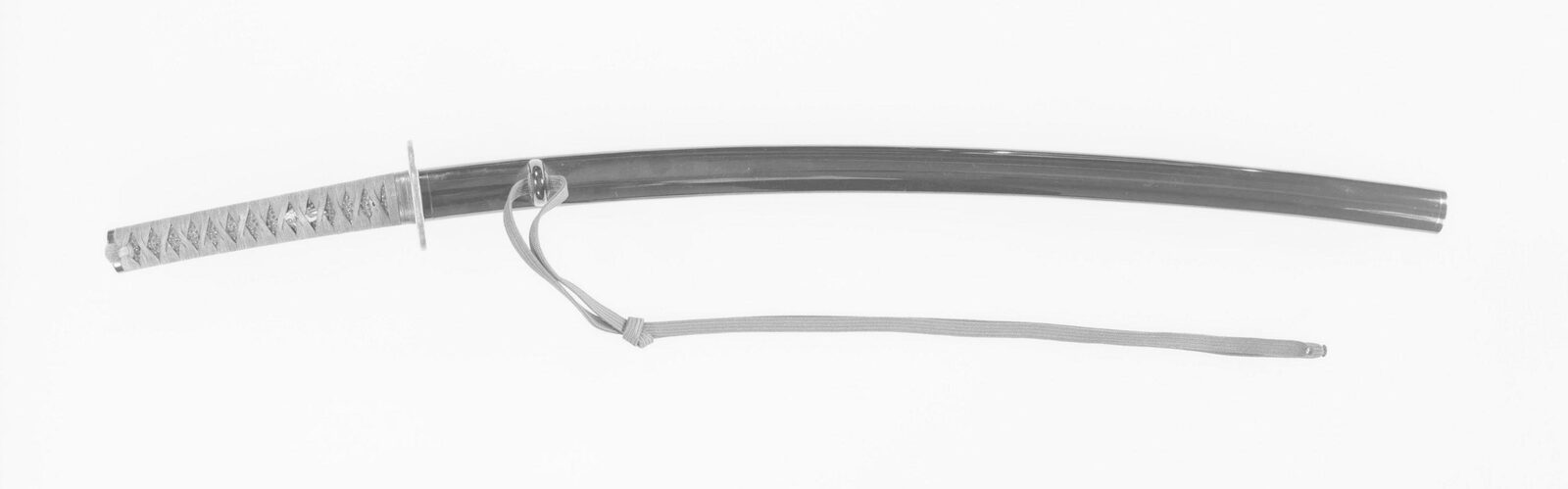
The modern mounting of the tachi dated 1349 in the Tokyo National Museum; the blade is not visible.Tokyo National Museum, via ColBase · ColBase terms of use · source