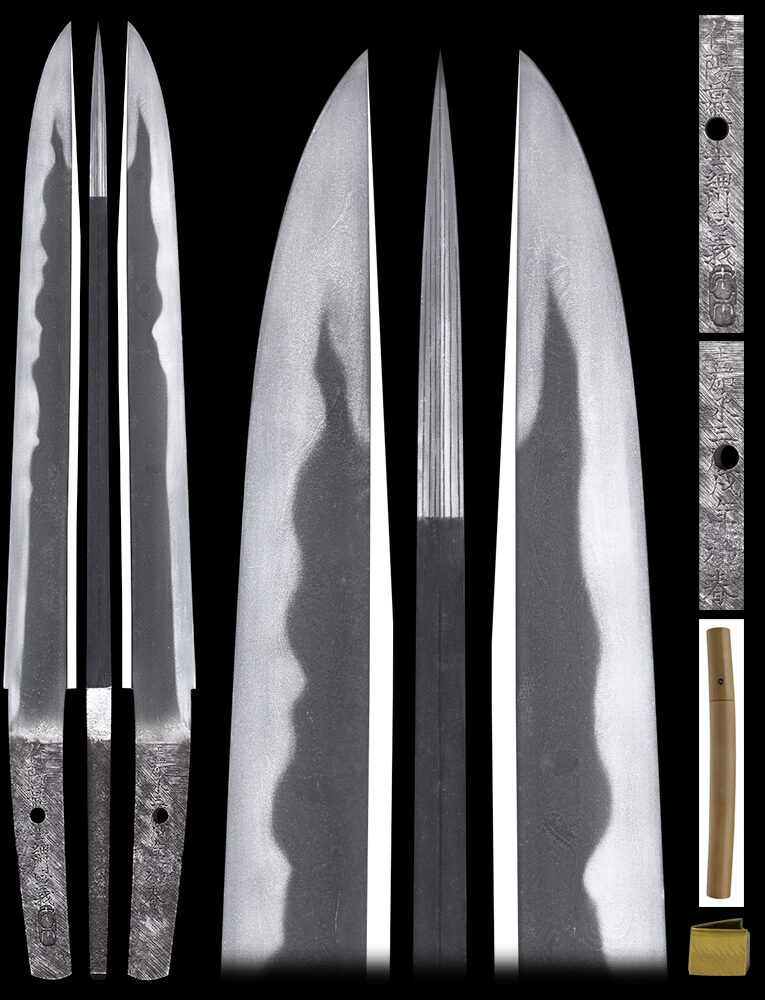
On this page
Quick profile
- Name
- Hosokawa Masayoshi; with him in the family sign Masamori (正守), Masahira (正平), Yoshinori (義規), Masanori (正規) and Morihide (守秀) HD
- Kanji and reading
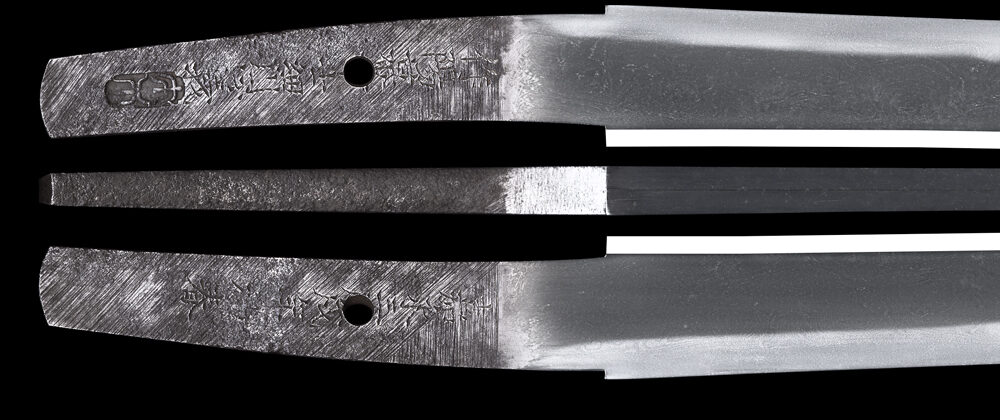
- 細川正義 (Hosokawa Masayoshi); signature 作陽幕下士細川正義 (Sakuyō bakka-shi Hosokawa Masayoshi) HD
- Period
- Shinshintō, late Edo period: a katana by Masayoshi of 1842, one by Masahira of 1840 HD
- Province
- Shimotsuke (下野, Shimotsuke), present-day Tochigi: Masahira and Yoshinori sign 野州住 (Yashū-jū), “resident in Shimotsuke”. Masayoshi worked in Edo, according to Tomita Kiyama’s list. HD
- School
- That of Suishinshi Masahide (水心子正秀), according to the Japanese Wikipedia, which names him among his students with Taikei Naotane AT
- Title
- Masayoshi and Masamori sign 作陽幕下士 (Sakuyō bakka-shi), and Masamori, on a tachi, 主馬佐 (Shume no suke). Sakuyō is the literary name of the province of Mimasaka: the signature declares them retainers of a lord of Mimasaka. HD
- Generations
- The signatures give at least six names in the family, and Masanori’s says “son of Yoshinori”. The sources consulted do not fix the dates of each one or how many signed Masayoshi. HD
- Rank
- Maegashira of the western side in Tomita Kiyama’s list of shintō swordsmiths (1933) AT
- Documented fact and tradition
- Documented: a katana by Masayoshi of 1842 that the NBTHK studied in its Sword Journal, and more than twenty blades of the family designated by Tochigi prefecture. From tradition: his life, his dates and his genealogy are not recorded in the sources consulted. HD
In short
Suishinshi Masahide studied the old forging methods and was, according to the Japanese Wikipedia, an exceptional master: from his school came Taikei Naotane and Hosokawa Masayoshi. The NBTHK recognises his work by a very tight, clustered chōji, with heads that open out like a fan in different directions and legs that cross, and by the shape of an old tachi with a deep curve. The signatures of the blades designated in Tochigi sketch the family: Masamori, who sometimes signs with him; Masahira, in Shimotsuke in 1840; Yoshinori, a retainer of the Utsunomiya domain, and his son Masanori.
Sections
-
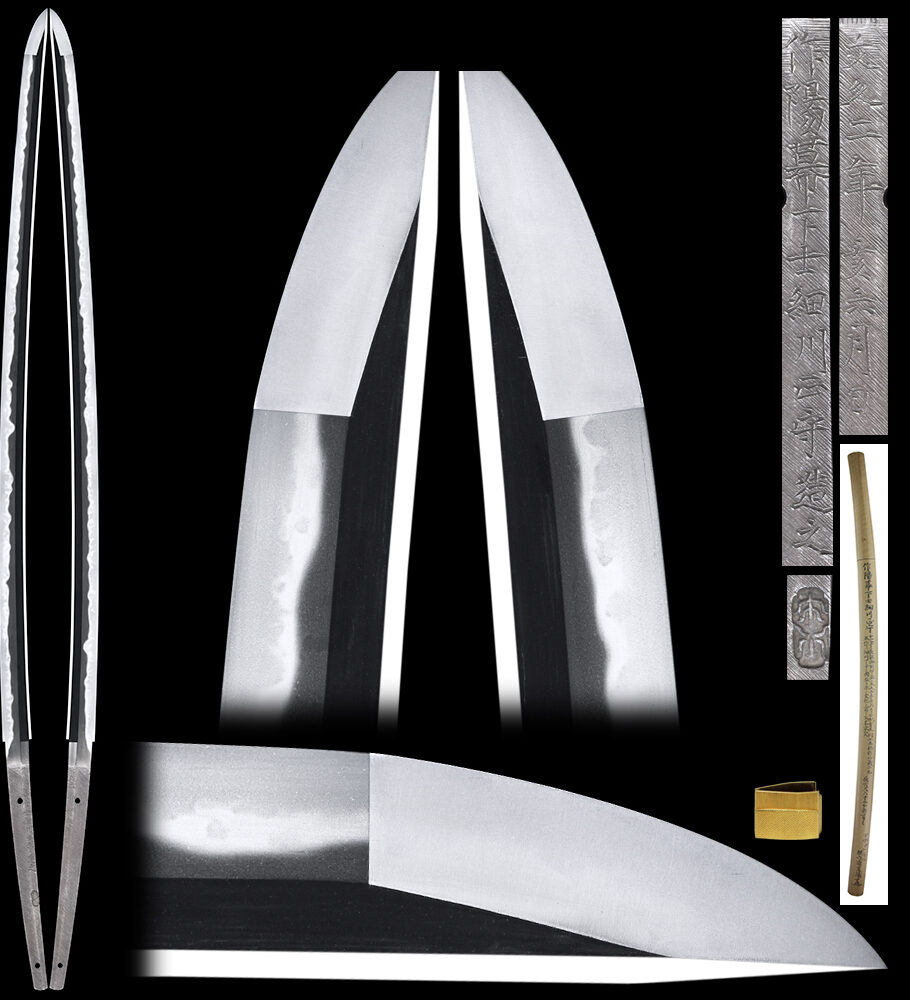 The names of the family
Life and times
Masayoshi, Masamori, Masahira, Yoshinori and Masanori: what their signatures say.
-
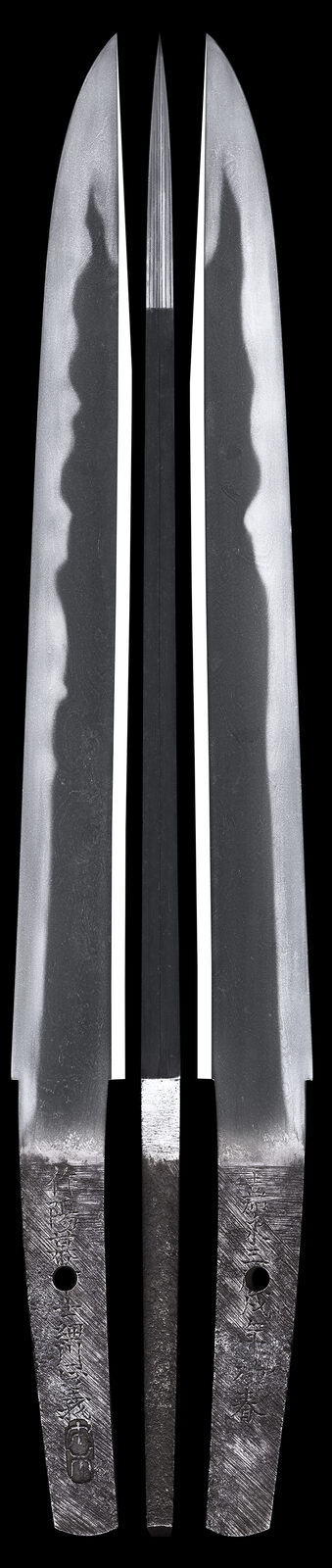 Kantei keys
Work and style
The clustered chōji, the curve of an old tachi and the signature with a seal.
-
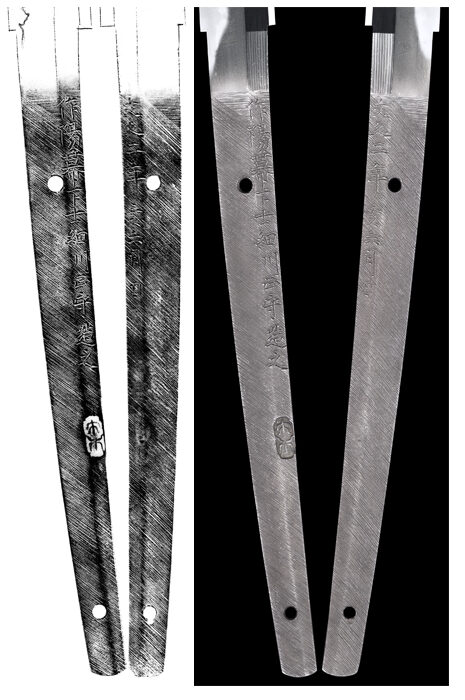 Tochigi cultural properties
Famous works
The family’s blades designated by Tochigi prefecture and the NBTHK katana.
-
 Bibliography and credits
Sources
The sources consulted and the image credits.