On this page
His works, in his own words
- Tachi of 2021: broad mihaba, large kissaki and a bōhi running along it; very tight ko-itame jigane; a notare (湾れ) hamon with large and small gunome.
- Tantō of 2019 for the exhibition of protective swords: kiriba-zukuri on the omote side and shōbu-zukuri on the ura, with an engraved ken and claws; ō-itame jigane mixed with ko-itame; a shallow notare with plenty of ko-nie, kinsuji and sunagashi. Conceived in the manner of Sōshū Sadamune.
- Katana of 2017, 71.2 cm: normal shape, very fine ko-itame with abundant ji-nie, suguha with small ashi and a small, round bōshi (帽子).
He says that since the Nikkō votive tachi he makes more suguha and that he likes the Yamashiro tradition of Awataguchi. No copy of a particular sword is known by him.
In the NBTHK catalogues
- Tachi 慎平作 (Shinpei saku) of February 2016: 78.2 cm, sori 2.8 cm, polished by 押田行廣 (Oshida Yukihiro) and with habaki and saya by 鷺谷政信 (Sagiya Masanobu). It is no. 11 in the Heisei no Meitō Meikōten catalogue (2019).
- In the NBTHK catalogues: a 71.1 cm katana at the 2017 新作名刀展 (Shinsaku Meitōten) and, at the 現代刀職展 (Gendai Tōshokuten), a 74.5 cm tachi and a 30.0 cm tantō (2019); a 74.8 cm tachi (2020); a 71.6 cm tachi and a 22.2 cm tantō (2021); a 79.3 cm katana (2022); an 80.0 cm katana (2023); a 55.9 cm kodachi and a 26.8 cm tantō (2024); a 21.6 cm tantō (2025); a 75.9 cm tachi and a 25.6 cm tantō (2026).
The process, step by step
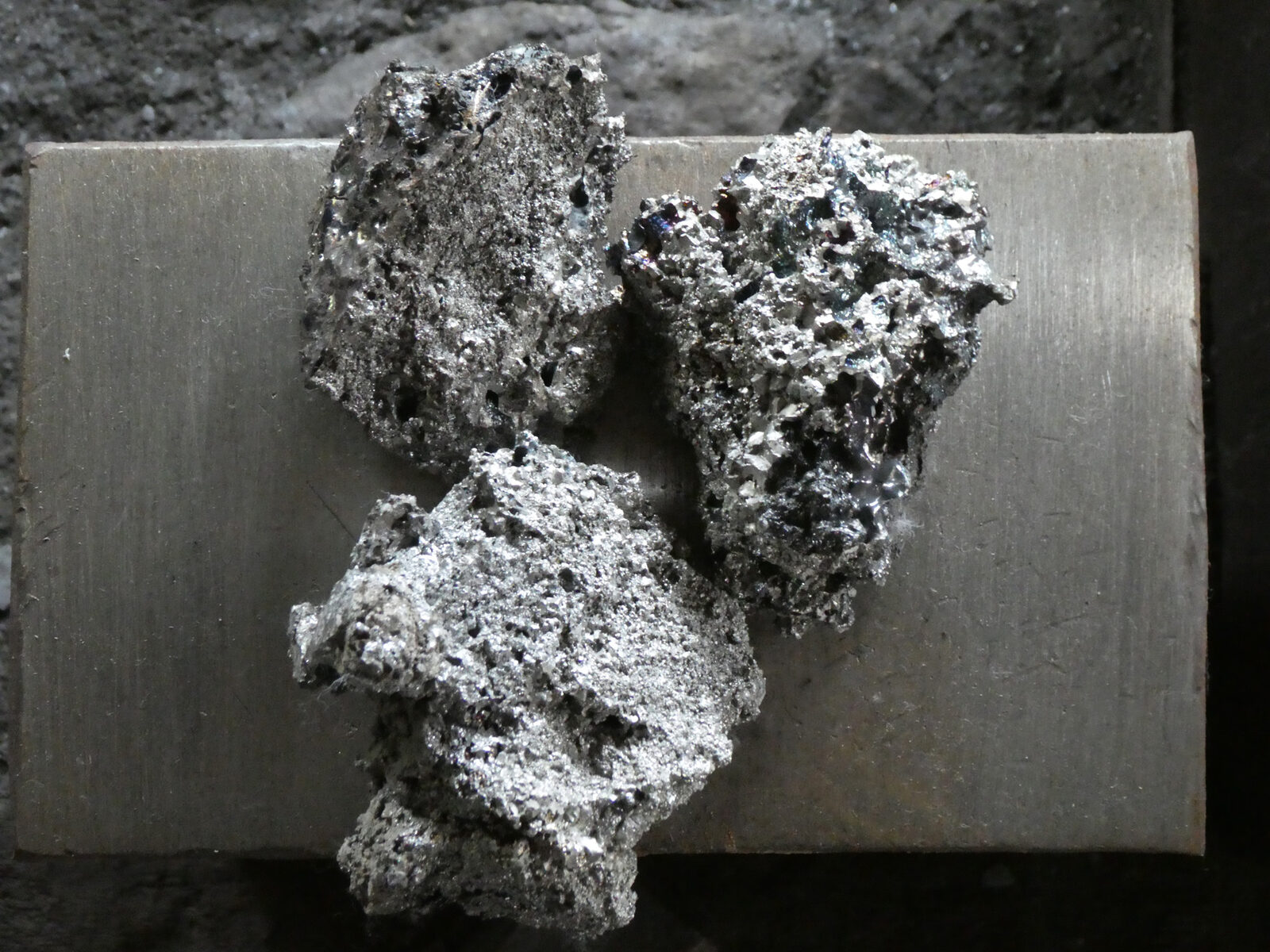
1. The tamahagane (玉鋼, tamahagane). Photo: the smith himself 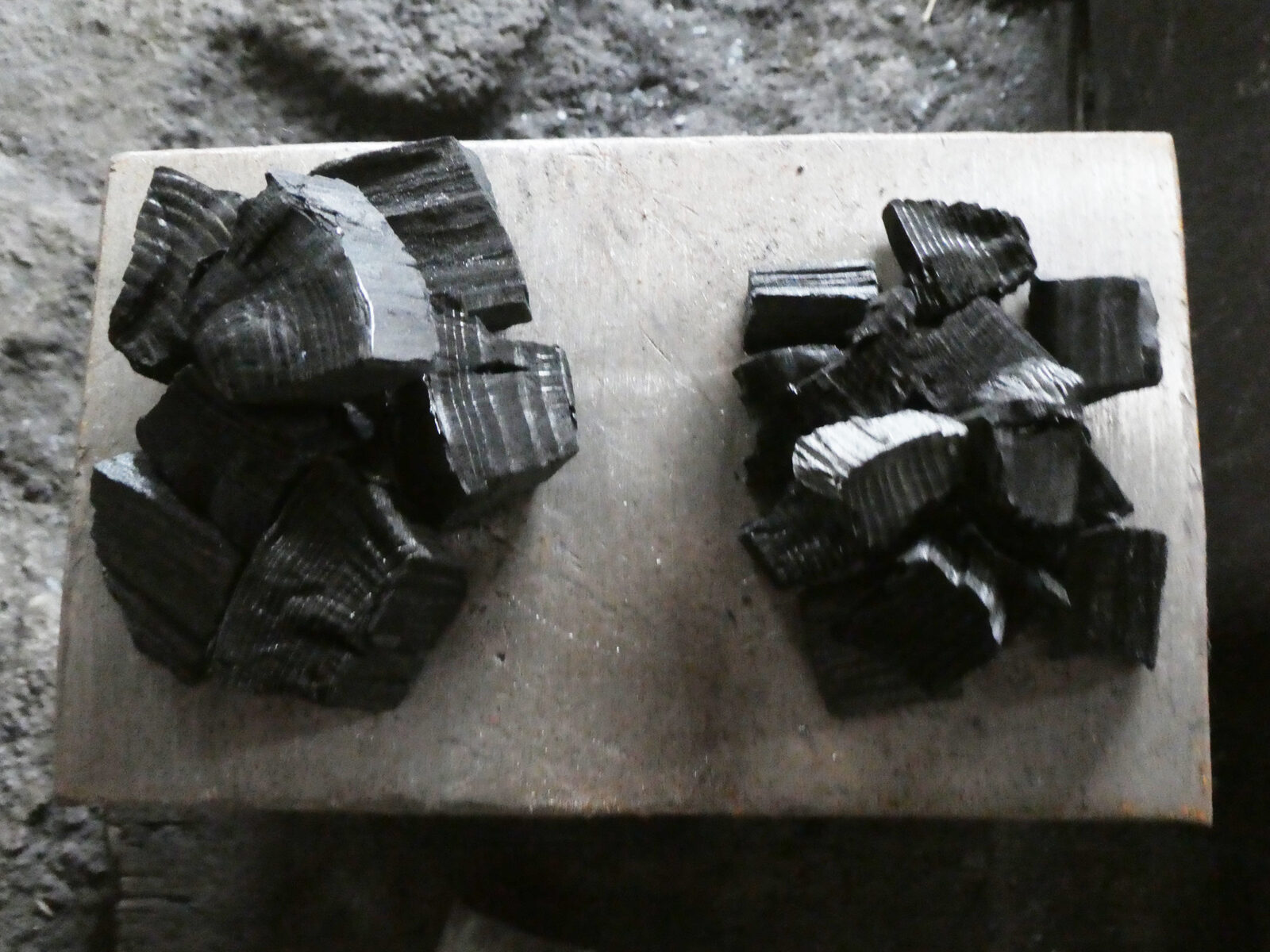
2. The pieces, flattened, broken and sorted. Photo: the smith himself 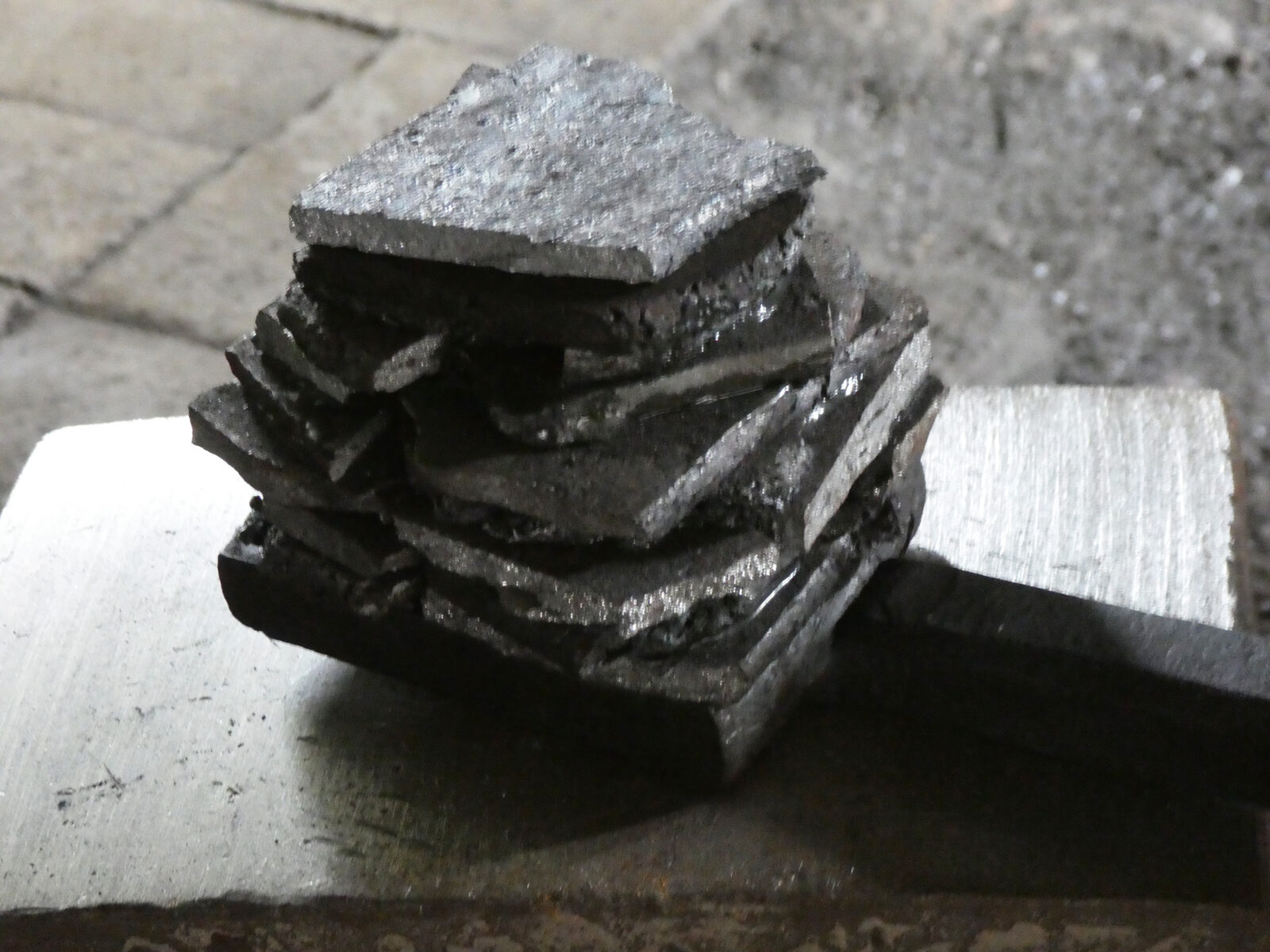
3. The plates, stacked to be welded. Photo: the smith himself 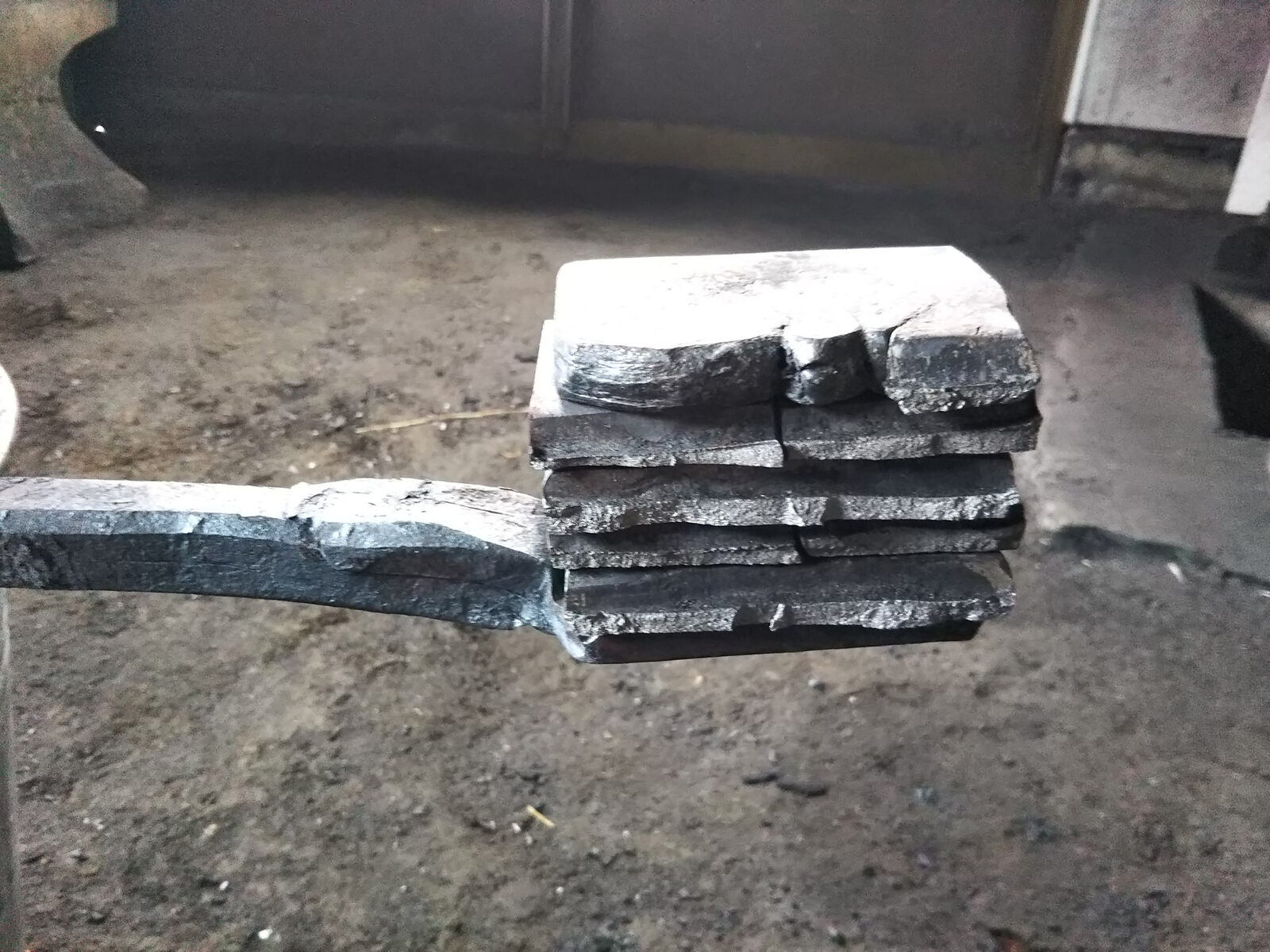
4. The block, ready for forging and folding. Photo: the smith himself 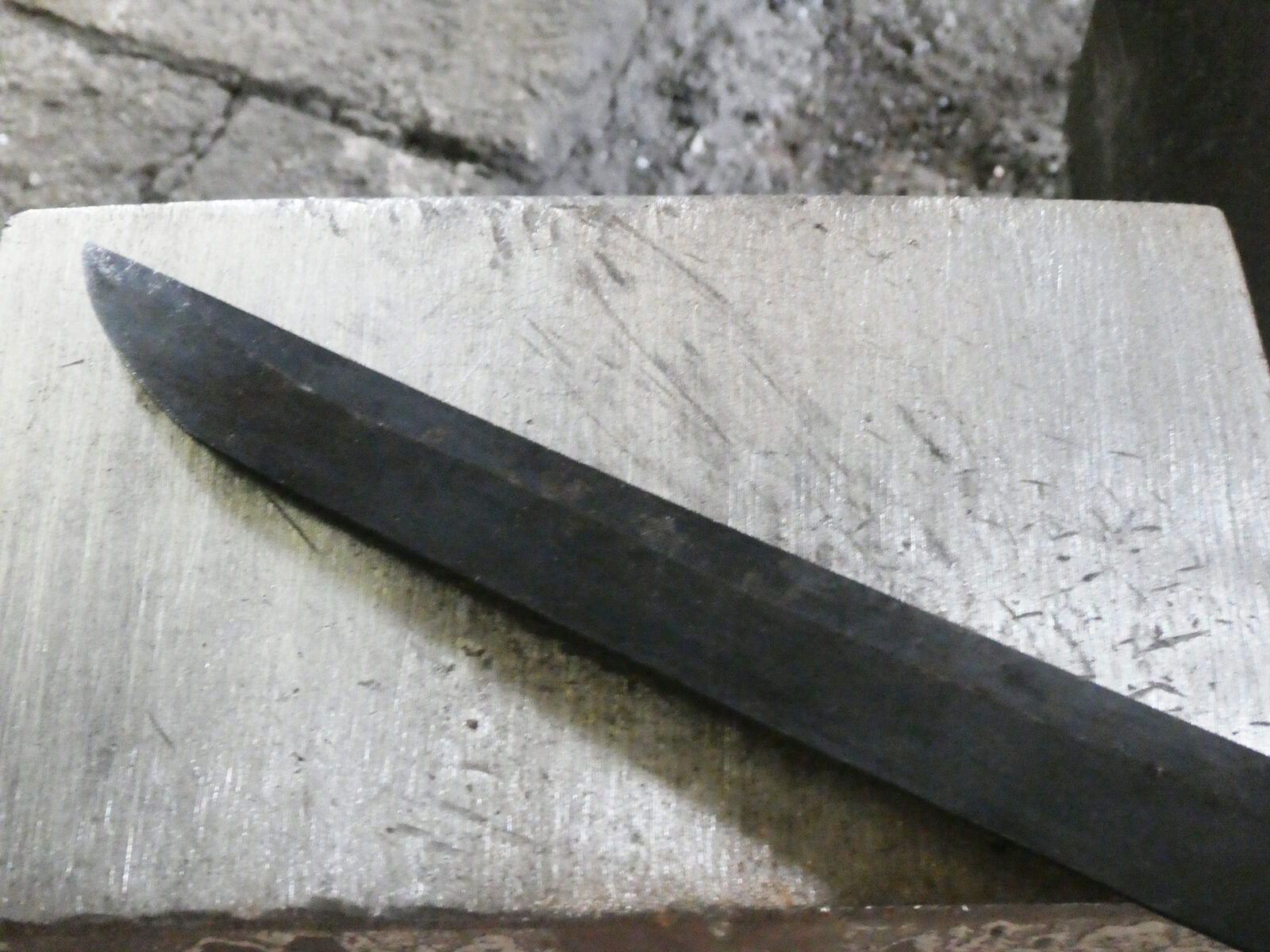
5. The bar, already drawn out into the shape of a blade. Photo: the smith himself 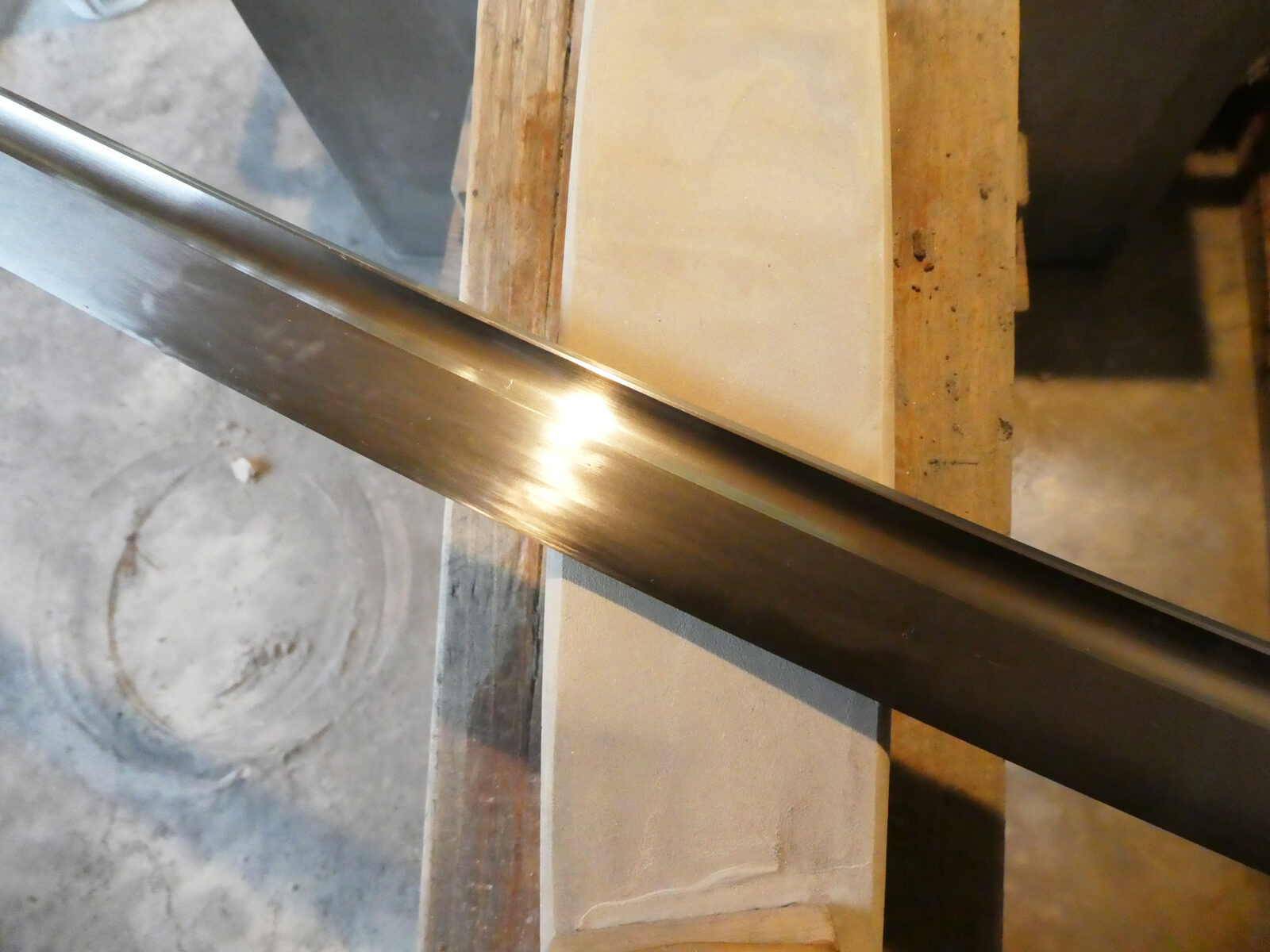
6. The blade, on the polishing stone. Photo: the smith himself
At the forge
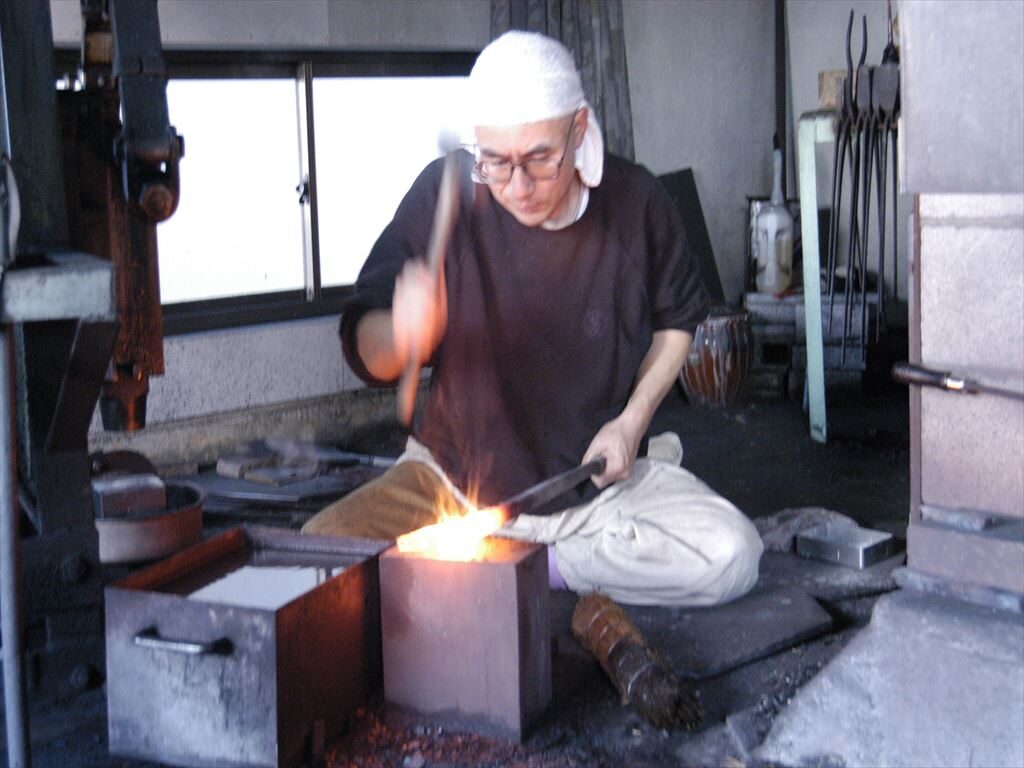
With the hammer over the red-hot piece. Photo: the smith himself 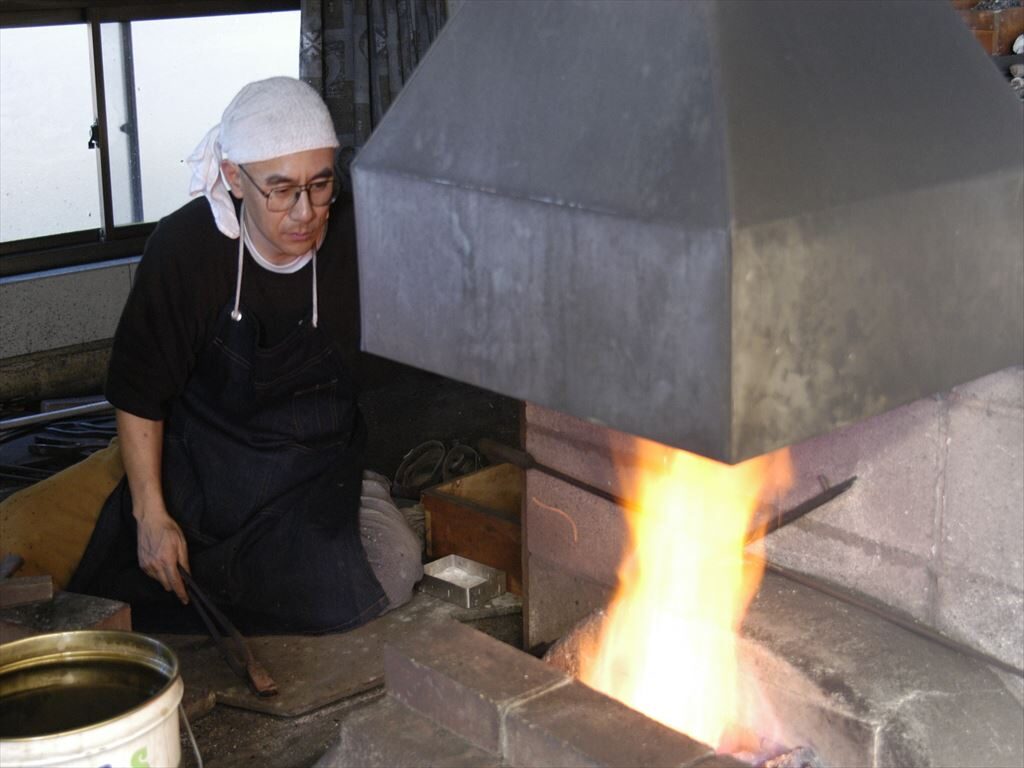
By the forge. Photo: the smith himself 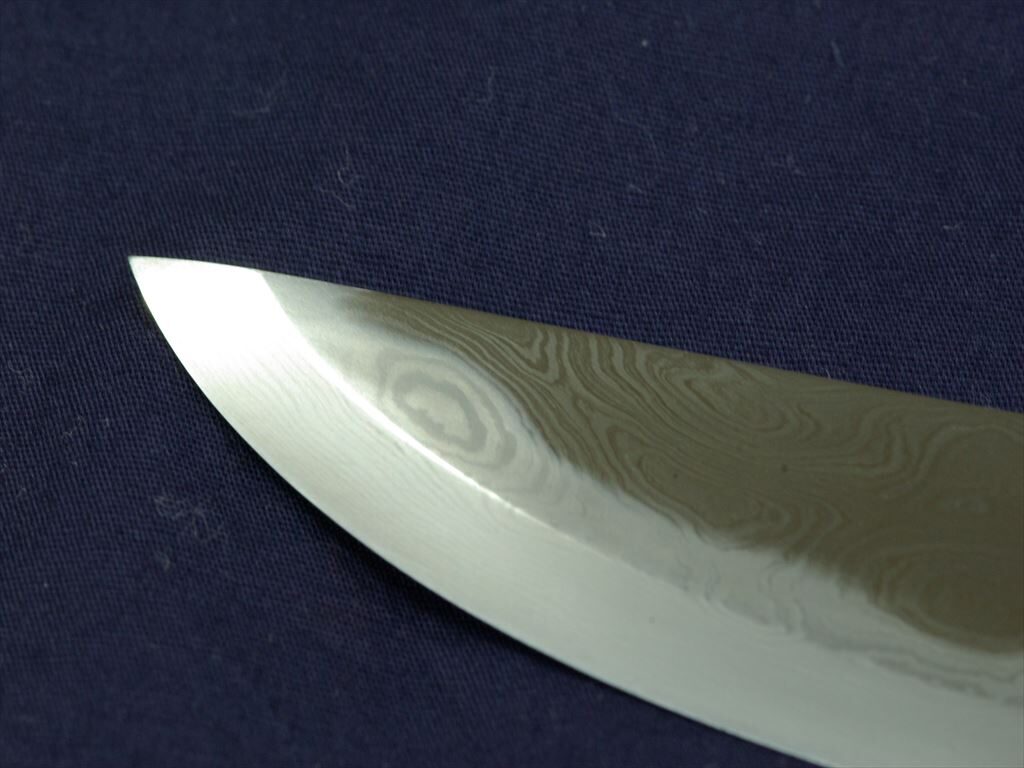
The jihada (地肌, jihada) of one of his blades. Photo: the smith himself 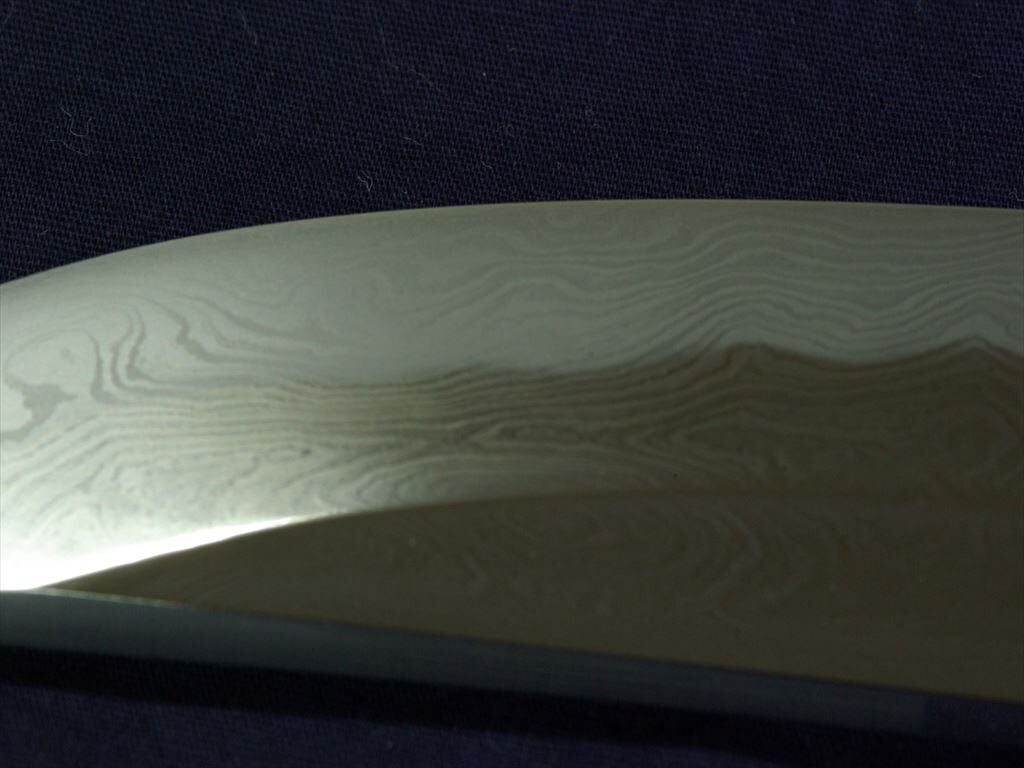
Another detail of the jihada. Photo: the smith himself