On this page
Quick profile
- Name
- Katsumura Norikatsu, also read Tokukatsu; at first he signed 徳一 (Norikazu) AT
- Kanji and reading
- 勝村徳勝 (Katsumura Norikatsu); his usual signature, 水府住勝村徳勝作之 (Suifu-jū Katsumura Norikatsu kore o saku) AT
- Period
- Shinshintō, late Edo period and the first years of Meiji: dated blades from Kaei 3 (1850) to Meiji 4 (1871) AT
- Province
- Hitachi (常陸, Hitachi): Mito (水戸, Mito), which he signs with its literary name, 水府 (Suifu); from 1857, at the domain’s residence in Koishikawa, in Edo AT
- School
- Shinshintō Yamato-den (大和伝, Yamato-den), commissioned by the lord of Mito, Tokugawa Nariaki, according to Toryu-Mon AT
- Master
- According to Toryu-Mon, Norimune (徳宗), in the Mito armoury, and later, in Edo, Hosokawa Masayoshi (細川正義) and Unju Korekazu (運寿是一) AT
- Generations
- Two, according to Toryu-Mon: he and his son, his student, of whom few blades are known because the Meiji Restoration cut short his career AT
- Rank
- He does not appear in Tomita Kiyama’s list of shintō swordsmiths (1933) PC
- Documented fact and tradition
- Documented: his grave in the Tokiwa cemetery, in Mito, and two swords of his belonging to Shibusawa Heikurō, according to the Japanese Wikipedia; no blade of his in a national museum in the sources consulted. From tradition: that he was the swordsmith of the Mito patriots and that his swords were in the Sakurada Gate attack (1860), which Toryu-Mon gives as probable. AT
In short
Norikatsu is the swordsmith of Bakumatsu Mito. He worked for the domain of Tokugawa Nariaki, who forged with him, and Toryu-Mon calls him the favourite swordsmith of the Mito patriots. His work is in the Yamato manner: wide, thick blades, very pronounced masame and suguha in nie with nijūba and long sunagashi, and a long tang with long signatures. For Toryu-Mon, faced with a shinshintō Yamato-den one need think of only three names: Nanki Shigekuni in his last years, Sendai Kunikane in his last years and him.
Sections
-
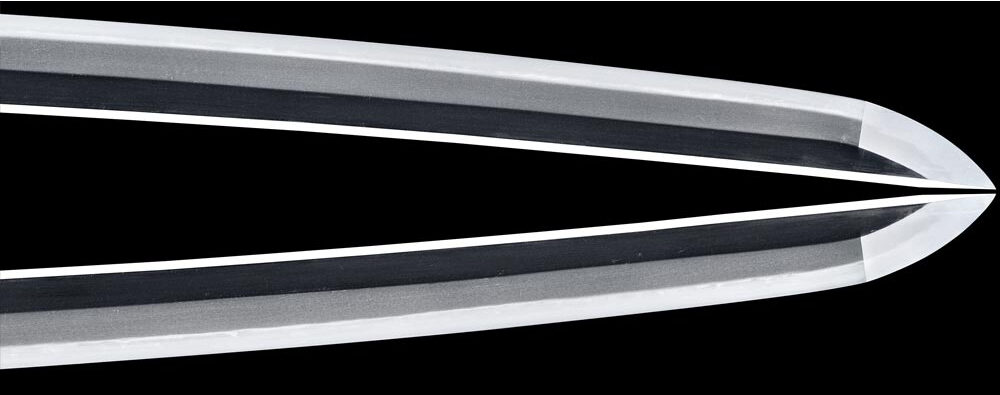 Two generations in Bakumatsu Mito
Life and times
From the Mito armoury to the Koishikawa residence, Nariaki, the Mito patriots and the second Norikatsu.
-
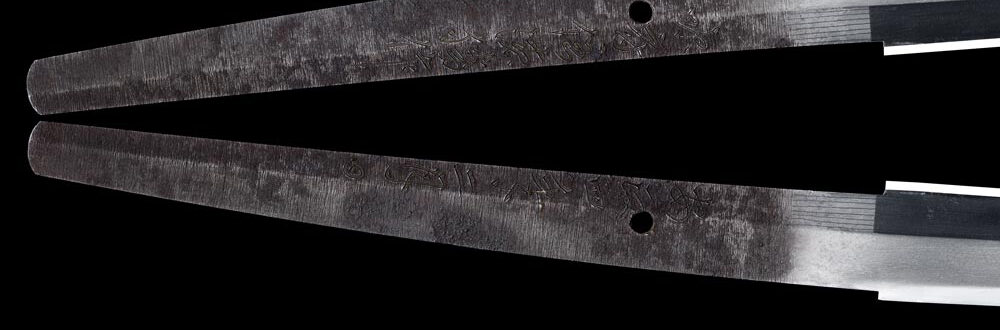 Kantei keys
Work and style
The shinshintō Yamato-den: pronounced masame, suguha in nie and long signatures.
-
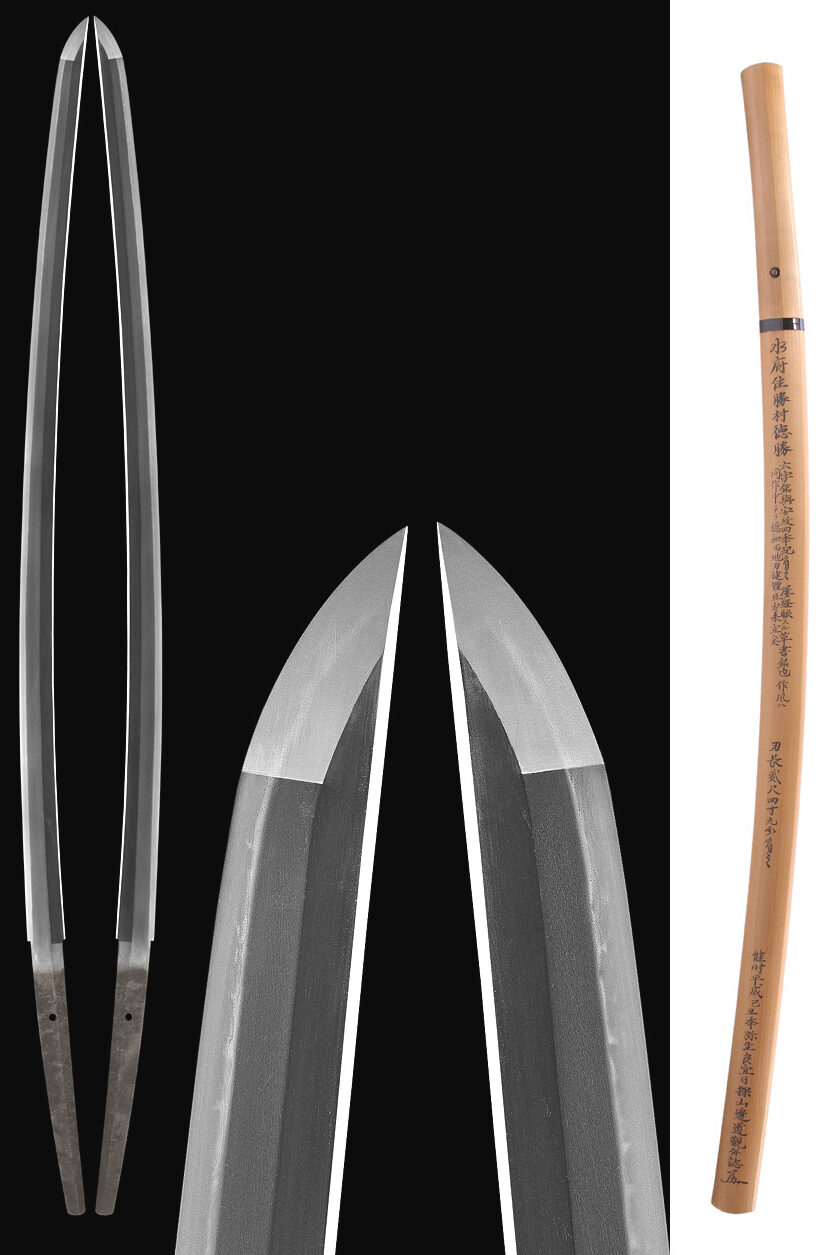 Shibusawa Heikurō’s swords
Famous works
Shibusawa Heikurō’s daishō and what the dates of his blades say.
-
Bibliography and credits
Sources
The sources consulted and the image credits.