On this page
Style
He learned the Sōshū-den from Miyairi, the Bizen-den from Sumitani and, from 1995, the Yamato-den.
In the tachi of the 2014 Masamune Prize he achieved the midare-utsuri (映り, utsuri) of the old swords with present-day tamahagane. The jury, in the NBTHK journal of June 2014, spoke of a vigorous, well-proportioned shape, of a hamon with an old colour, clearly different from modern chōji, and of a crisp utsuri. As he told the press, the jigane of that blade is softer than that of a sword made by the usual method: he changed the temper to give priority to strength as a weapon over a showy hamon.
In the NBTHK catalogues
He exhibits every year as mukansa: a tachi of 75.0 cm in 2021, of 74.2 cm in 2022, of 75.8 cm in 2024, of 75.3 cm in 2025 (signed “Kawachi KUNIHIRA 83 Sai”, with his age) and of 79.8 cm in 2026; in 2017, a tachi of 74.7 cm signed 河内守國助國平 (Kawachi-no-kami Kunisuke Kunihira). In 2023 he sat on the jury of the forging division. In the polishing division (研磨の部, kenma no bu) of those catalogues, blades of his win prizes for his polisher, Kashiwagi Ryō (柏木良), of Tottori: the prize of the NBTHK president (日本美術刀剣保存協会会長賞, Nihon Bijutsu Tōken Hozon Kyōkai kaichōshō) in 2021, with a tachi, and other polishing prizes in 2021, 2022, 2024, 2025 and 2026. Several bear the engraving 重光 (Shigemitsu), the engraver’s signature of 柏木幸治 (Kashiwagi Kōji), who competes in the engraving division (刀身彫の部, tōshinbori no bu).
Works
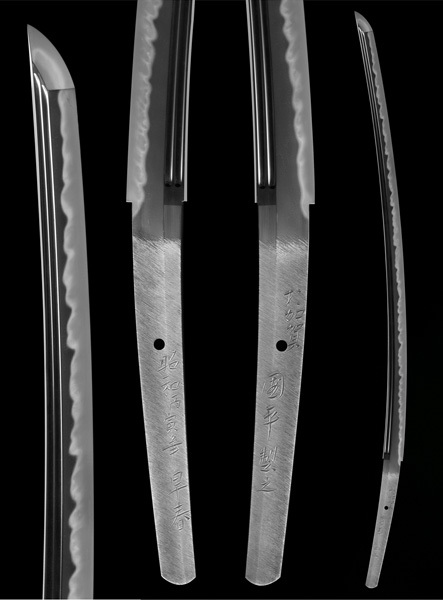
A katana: blade, temper and tang. Photo: the smith himself 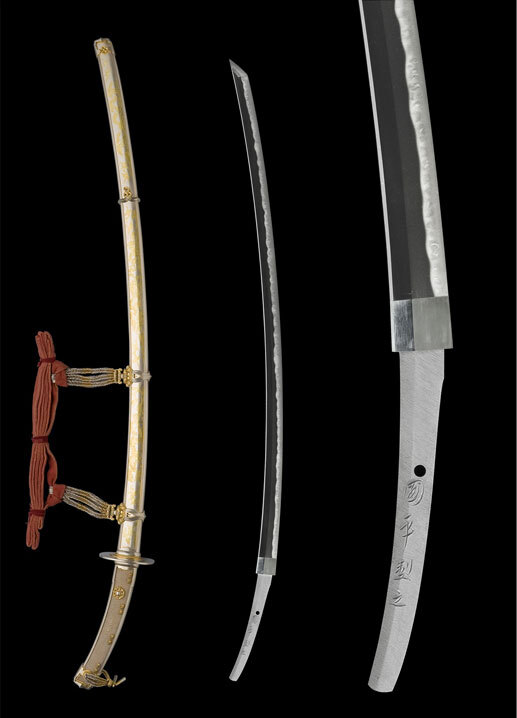
Tachi of 1989 with an ashide-e hyōgo-kusari mounting. Photo: the smith himself 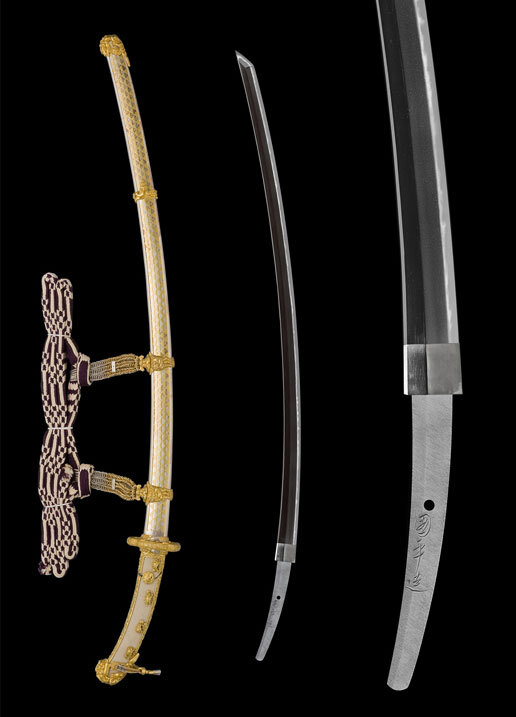
Tachi of 1991 with a shishi-zukuri hyōgo-kusari mounting. Photo: the smith himself 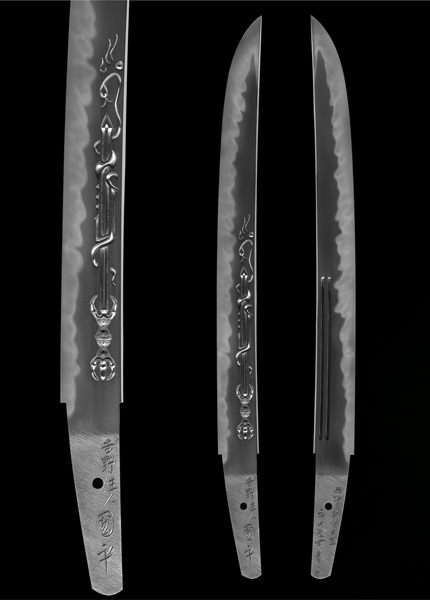
Tantō with horimono. Photo: the smith himself 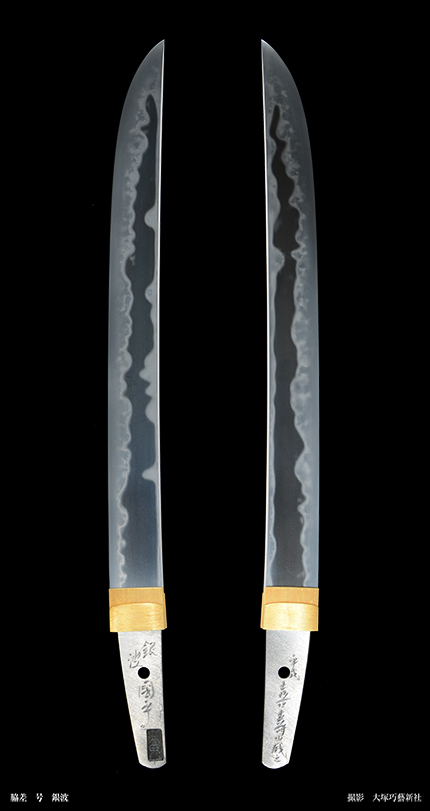
Wakizashi named 銀波 (probable reading: Ginpa). Photo: 大塚巧藝新社 (probable reading: Ōtsuka Kōgei Shinsha) · © 大塚巧藝新社 (probable reading: Ōtsuka Kōgei Shinsha) 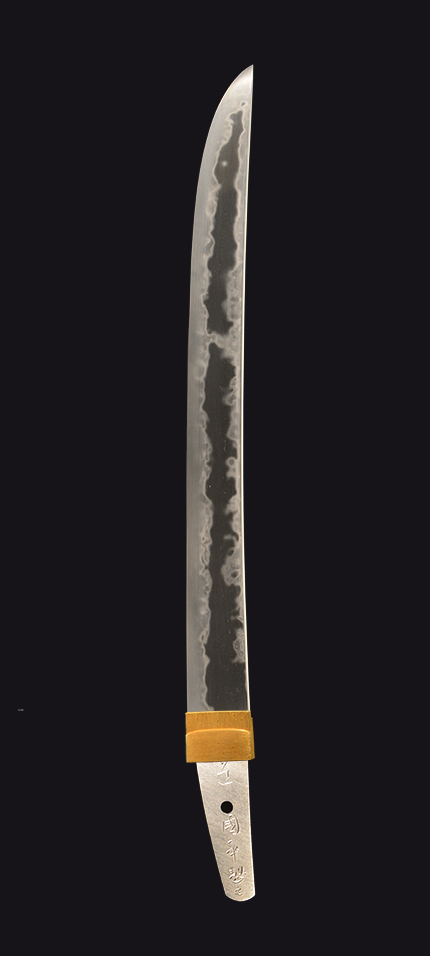
Tantō. Photo: the smith himself
Where his work is
According to him, there is work of his in the NBTHK Sword Museum, the Osaka Museum of History and the museum of the Archaeological Institute of Kashihara, and in shrines such as Ise, Izumo, Atsuta, Katori, Isonokami and Kashihara. The tachi of the 1979 Takamatsu prize is in the Osaka Museum, according to Wikipedia.