On this page
Quick profile
- Name
- Kurihara Nobuhide AT
- Kanji and reading
- 栗原信秀 (Kurihara Nobuhide); signatures 栗原謙司信秀 (Kurihara Kenji Nobuhide), 筑前守信秀 (Chikuzen no Kami Nobuhide) and 栗原筑前守平朝臣信秀 (Kurihara Chikuzen no Kami Taira no Ason Nobuhide) AT
- Period
- Shinshintō, from the late Edo period to the Meiji era: dated blades from 1853 to 1876 AT
- Province
- Works in Edo, in Musashi; a blade of 1853 is signed at Uraga (浦賀, Uraga) AT
- School
- That of Kiyomaro, in Sōshū-den AT
- Master
- Minamoto Kiyomaro (源清麿, Minamoto Kiyomaro) AT
- Title
- Chikuzen no Kami (筑前守); a katana of 1865 (Keiō 1) already bears it in the signature AT
- Generations
- One: no second generation is recorded in the sources consulted PC
- Documented fact and tradition
- Documented: his mature work, with the 1876 katana studied by the NBTHK. What is known of his life comes from the studies and from his signatures. Neither his home province nor the year of his death is recorded with certainty. AT
In short
He was a pupil of Kiyomaro and, for Markus Sesko, one of the best; after the master’s death, together with Saitō Kiyondo, he finished his commissions and paid off his debts, according to the Japanese Wikipedia. The NBTHK sees his hallmark in a temper of square gunome whose heads are split by ko-gunome and small togariba, with long kinsuji and the force of Sōshū-den. Sesko notes that the dragon chasing a jewel (玉追龍, tamaoi-ryū) is relatively frequent on his blades.
Sections
-
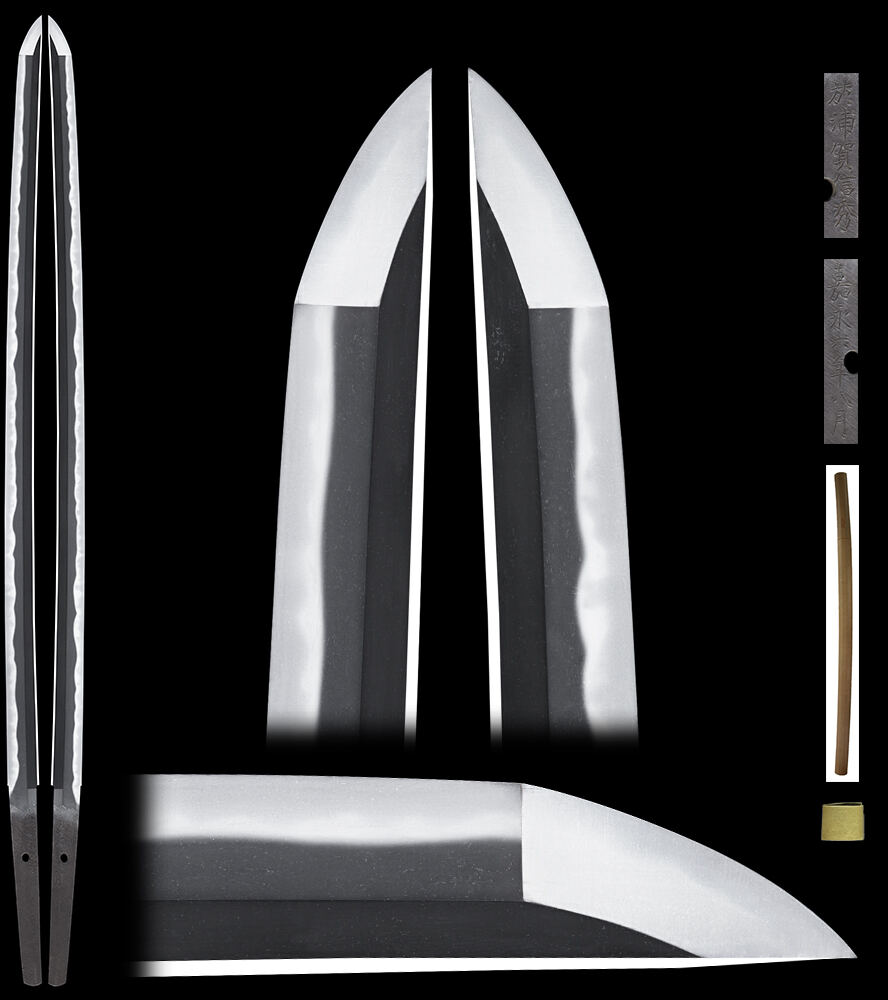 With Kiyomaro and after
Life and times
The master, his signatures and his dates.
-
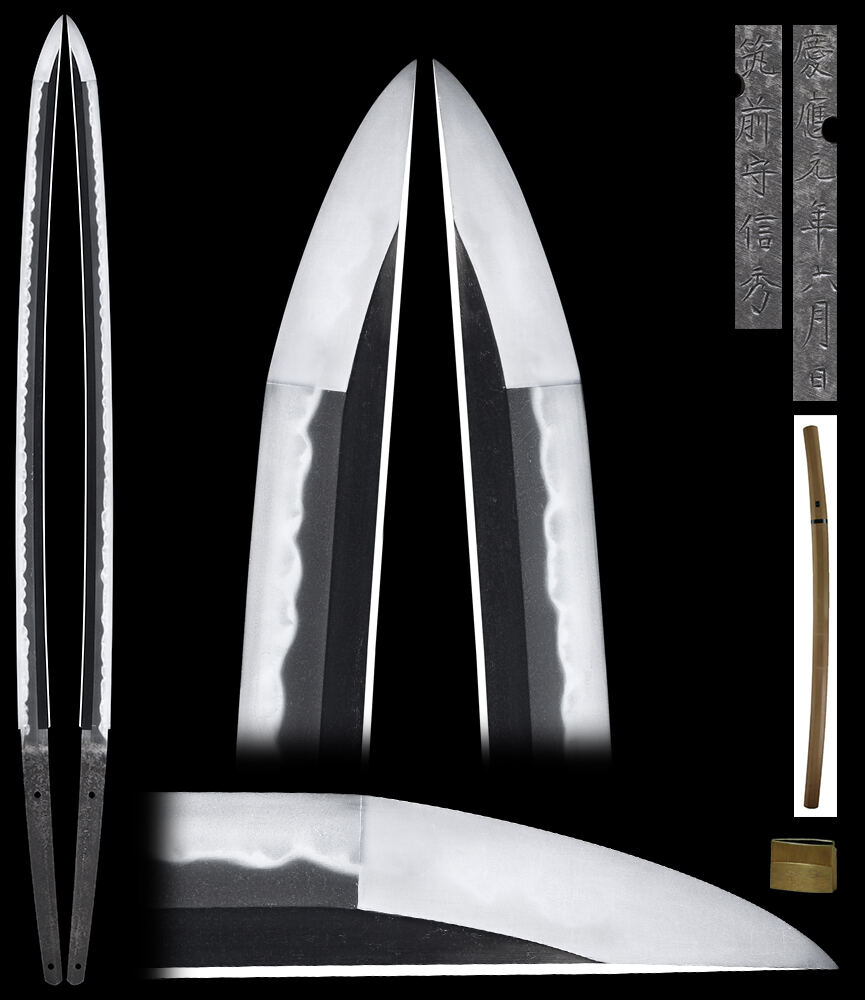 Kantei keys
Work and style
Sugata, jihada, hamon, bōshi, nakago and horimono.
-
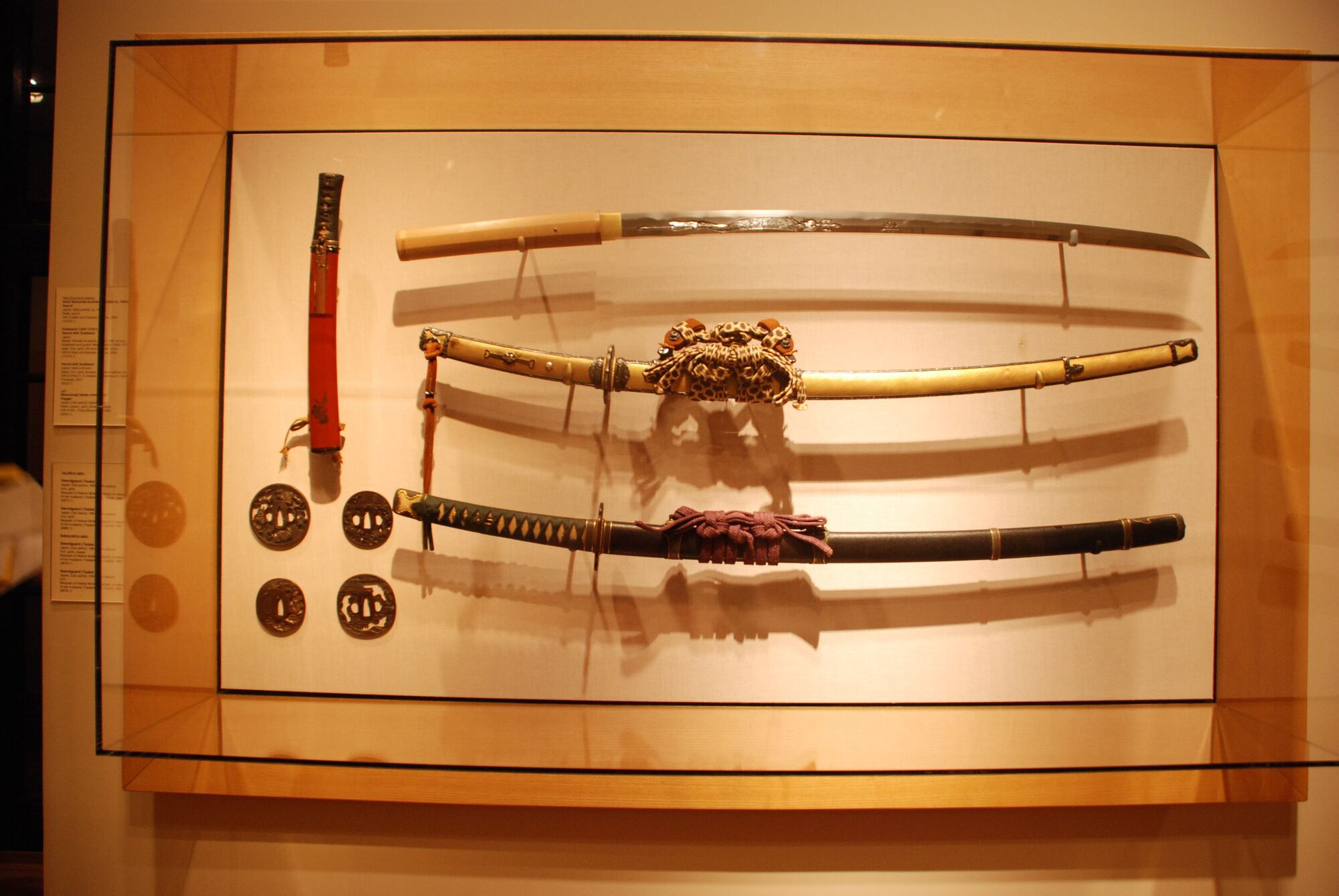 In museums and at the NBTHK
Famous works
His dated blades and those in museums.
-
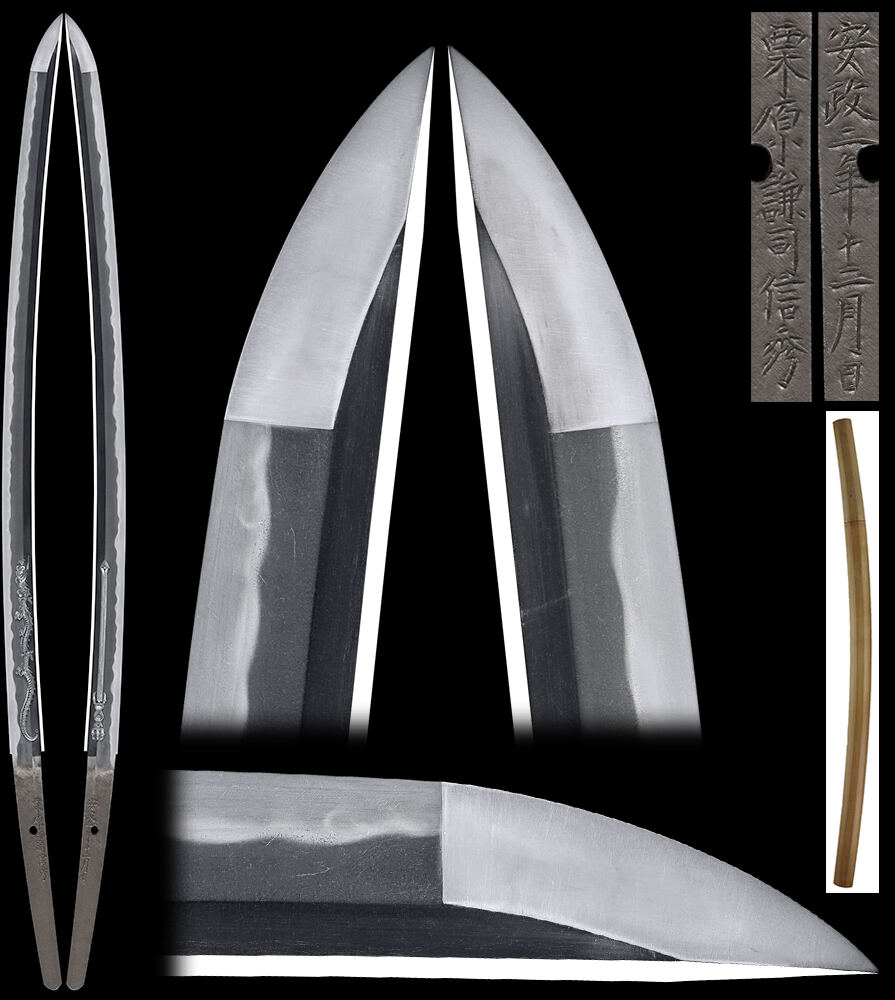 Bibliography and credits
Sources
The sources consulted and the image credits.