On this page
Broad, robust blades
The Japanese Wikipedia describes his blades as broad and robust (身幅が広く豪壮, mihaba ga hiroku gōsō). Markus Sesko cites Miike Tenta Mitsuyo as an extreme example of the strikingly sturdy tachi of the late Heian, against the general image of slender, elegant tachi of that period.
Kantei keys, in the Ōdenta
According to the Japanese Wikipedia:
- Sugata: a very wide mihaba and a short blade for its period; nagasa 65.1 cm, motohaba 3.5 cm, sakihaba 2.4 cm and sori 2.7 cm.
- Hi: in the shinogi-ji, a wide, shallow hi, the “Miike-hi”, which ends as a koshi-hi almost a fifth of the blade from the nakago.
- Jihada: ō-itame with nagare.
- Hamon: hoso-suguha in nie, with hotsure, some ashi and nijūba near the monouchi.
- Nakago and mei: the three-character signature 光世作 (Mitsuyo saku), with a thick chisel, in the centre, below the lowest mekugi-ana.
The sources consulted do not describe its bōshi (帽子).
The wide bōhi
For Markus Sesko, a wide bōhi is typical of Miike Tenta Mitsuyo, as of Osafune Mitsutada and of Higo no Daijō Sadakuni; and the Miike school is one of those that add shōbu-hi, two small hi whose ends meet.
The school, in a 15th-century wakizashi
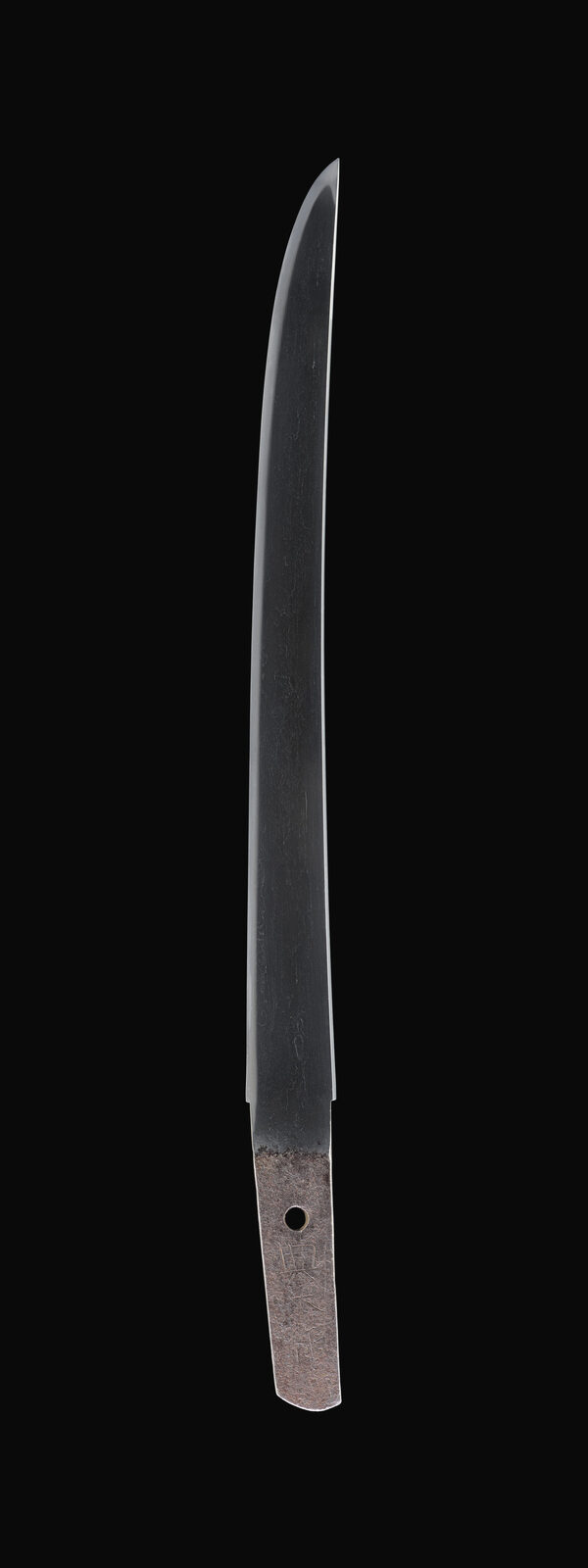
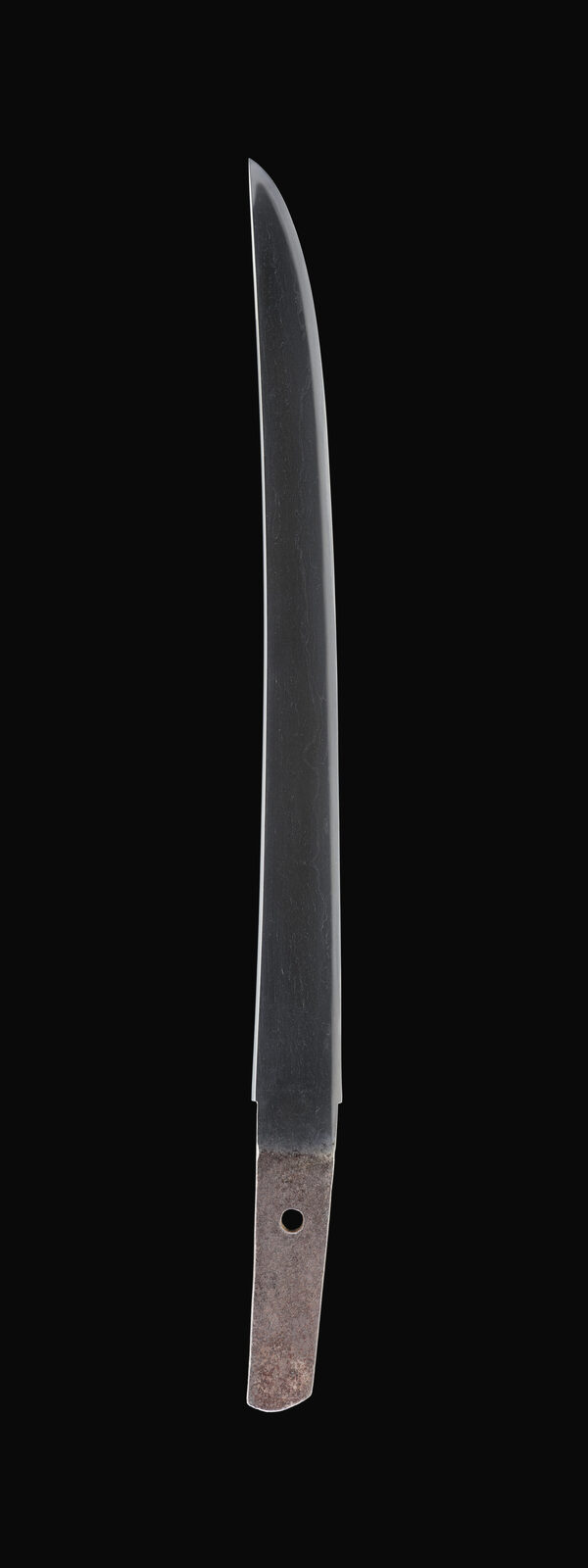
The Kyūshū National Museum holds a wakizashi signed 典太作 (Tenta saku), of the 15th century and from Chikugo, 31.8 cm long. It lacks the wide bōhi, but has a broad mihaba and a shallow sori, a raised, rustic jigane and a clean suguha, in a tradition linked to the classic style of Kyūshū. The museum sees it as a clue to the features of the school.
The wakizashi of the Kyūshū National Museum
A spiritual fame as well
The Japanese Wikipedia adds that the Miike school makes powerful blades and that its blades are held capable of warding off evil: that spiritual quality is part of its fame.