On this page
Quick profile
- Name
- Nankaitarō Tomotaka; his swordsmith’s name is also read 朝尊 (Chōson) AT
- Kanji and reading
- 南海太郎朝尊 (Nankaitarō Tomotaka), as signed on the katana of 1853 in the Kōchi Castle Museum of History HD
- Period
- End of the Edo period (shinshintō) AT
- Province
- Tosa (土佐), today Kōchi; he also worked in Kyoto and in Edo AT
- School
- Founder of his own lineage, from the circle of Suishinshi Masahide (水心子正秀) AT
- Master
- No sword master is recorded. He began as a saw maker, like his father, and in Kyoto he was an assistant to Iga no Kami Kinmichi (伊賀守金道). PC
- Title
- No honorary title is recorded PC
- Generations
- Tomotaka; his son Tomoyoshi (朝良); his nephew Tomokuni (朝国); his grandson Morioka Shōkichi, and his great-grandson, who signed Nankaitarō Masataka AT
- Rank
- He does not appear in the wazamono lists. Tsuneishi Hideaki judges his work inferior to that of Masahide and Minamoto Kiyomaro. PC
- Documented fact and tradition
- Documented: the katana of 1853 in the Kōchi Castle museum, the tantō in the Kyoto National Museum, his treatise Shintō meishūroku (新刀銘集録) in the Tokyo National Museum and a naginata of 1863 by his nephew Tomokuni. Tradition: he claimed descent in the 17th generation from Prince Takayoshi (尊良親王, Takayoshi shinnō), son of Emperor Go-Daigo; his early works are signed with the surname Fujiwara. HD
In short
More than for his blades, Tomotaka matters for his ideas: with Suishinshi Masahide he championed the return to the forging of the old swords, taught it across the country and wrote three treatises. His contemporaries placed him beside Masahide as the two pillars of the east and the west. The Kōchi Castle museum holds a katana of his from 1853 with a signature of 83 characters, the longest in its collection according to the museum’s own video. The craft stayed in the Morioka family until the 20th century.
Sections
-
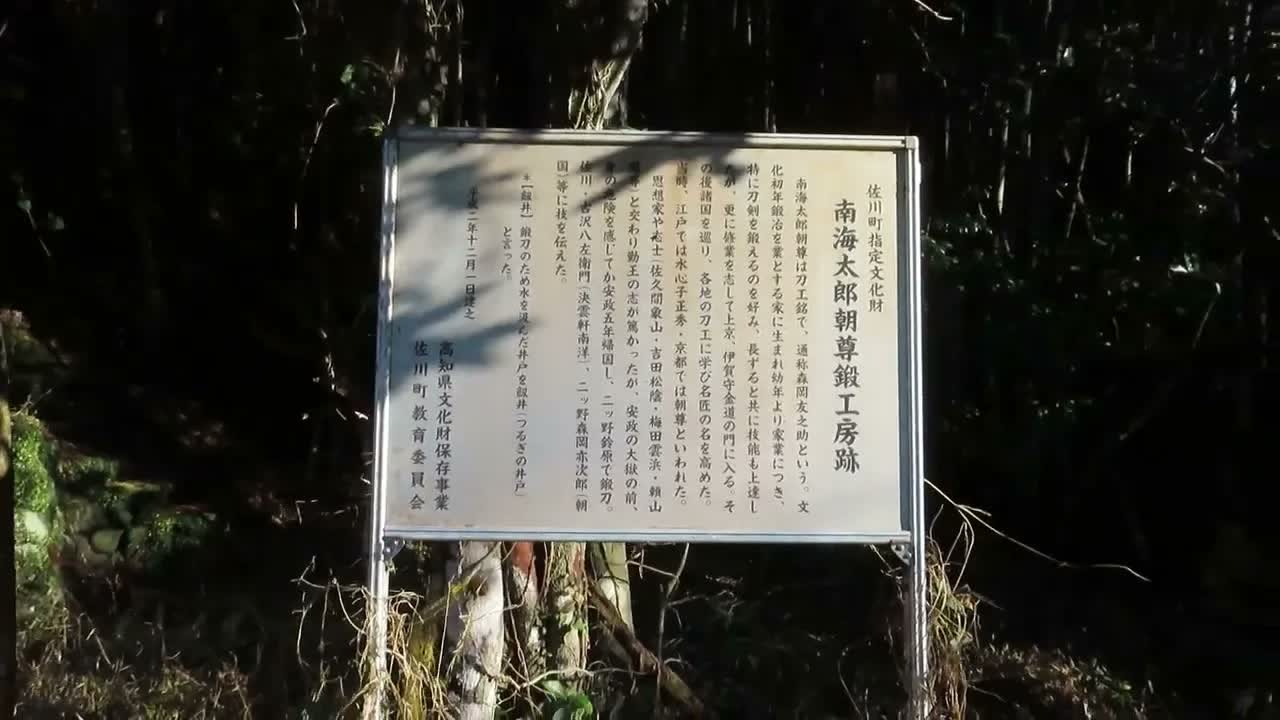 A Tosa lineage, from Edo to Shōwa
Life and times
Tosa, Kyoto and Edo, his treatises, his clients and the four generations of the Morioka.
-
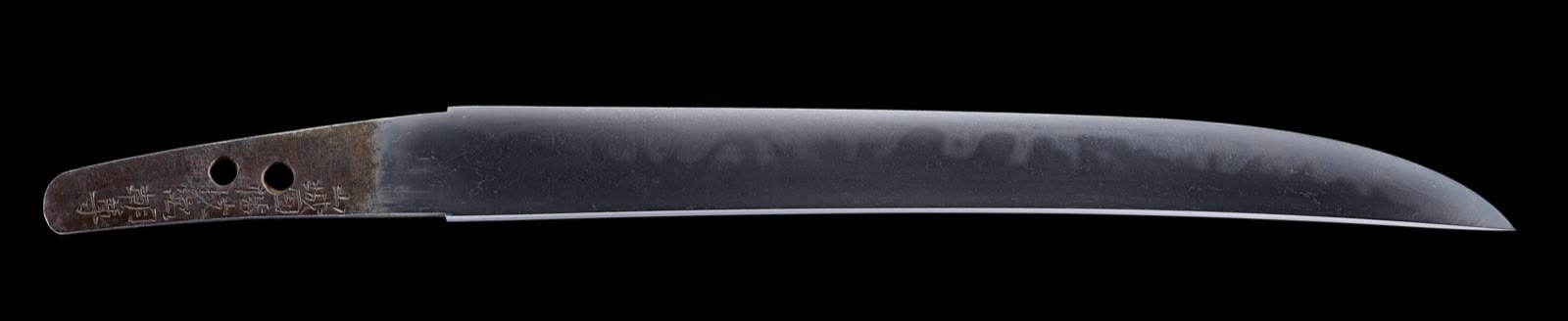 Suguha, ko-itame and long signatures
Work and style
What his blades show and how he signed.
-
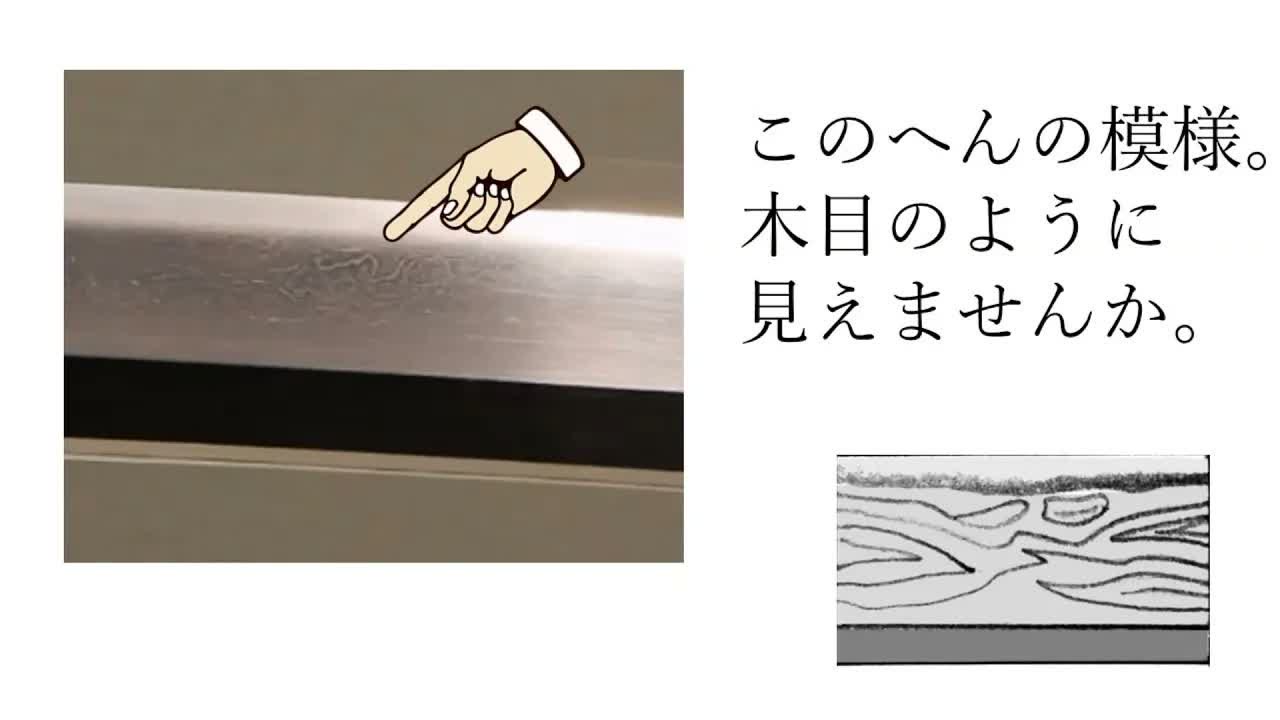 Museums of Kōchi, Kyoto and Tokyo
Famous works
His works in museums, his treatise and the swords of his clients.
-
Kōchi and Sakawa
Videos
The katana of 1853 explained by its museum, and the site of his workshop.
- Bibliography and credits Sources The sources consulted on 5 October 2026, with their link, and the credit for each image.