Documented works
| Work | Designation | Where it is |
|---|---|---|
| Katana of 1853 (Kaei 6), with the 83-character signature | No known designation | Kōchi Castle Museum of History |
| Ōdachi, “Nankaitarō’s big one” | No known designation | Kōchi Castle Museum of History |
| Tantō 山城国幡枝寓朝尊 (Yamashiro no kuni Hataeda gū Tomotaka) | No designation | Kyoto National Museum (E甲555) |
| Shintō meishūroku (新刀銘集録), five volumes, preface of 1850 | No designation | Tokyo National Museum (QA-3794) |
| Naginata by his nephew Tomokuni (朝国), 1863 (Bunkyū 3) | No designation | Tokyo National Museum (F-20251) |
| Katana of Takechi Hanpeita (武市半平太), around 1860 | No designation | Whereabouts not given |
| Katana of Andō Hayatarō, 1826, broken at the Ikedaya | No designation | Whereabouts not given |
In the lists
In Bunka Isan Online no work of his is recorded as designated a National Treasure or Important Cultural Property, and he does not appear in the wazamono lists or in the Kyōhō meibutsuchō (享保名物帳), of 1719.
The katana of 1853
The Kōchi Castle museum presents it in its video as the sword with the longest name in its collection. He made it in Kyoto for Taniwaki Shigeyuki, of Tosa, in the twelfth month of 1853.
Gallery
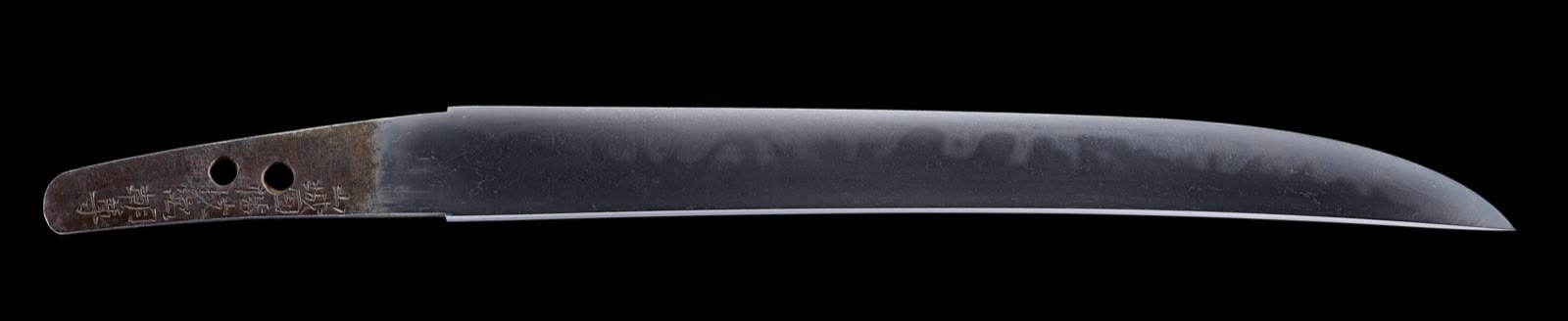
Tantō signed 山城国幡枝寓朝尊 (Yamashiro no kuni Hataeda gū Tomotaka), from his last years in Hataeda. Kyoto National Museum. Kyoto National Museum, via ColBase · ColBase terms of use · source