On this page
Kantei keys
According to the Japanese Wikipedia and the NBTHK Sword Journal:
- Sugata: mostly tachi and tantō, and a single confirmed naginata. The tachi have the shape of the late Kamakura, with koshizori, funbari and an elongated kissaki. The tantō, about 24 cm long, have a thick kasane, a narrow mihaba, a spare fukura, an uchizori called 筍反り (takenoko-zori) and a furisode nakago.
- Jihada: ō-itame with mokume, with a visible, dark hada; through the wear of polishing it looks like layers of pine bark, the matsukawa-hada. Coarse ji-nie, rounded yubashiri and chikei that cross into the edge as kinsuji and inazuma.
- Hamon: a suguha base with ko-notare, strong ha-nie and a sunken nioiguchi (匂口), which blurs the boundary between ji and ha; many kinsuji and sunagashi, and uchinoke.
- Bōshi: midare-komi with yakizume, or with a deep kaeri.
- Nakago and mei: nakago almost ubu, furisode, with a kurijiri tip and yasurime mostly kiri; a two-character signature in large characters, 則重 (Norishige), with a thick chisel and in the centre. Long dated signatures are known, 越中国佐伯則重 (Etchū-no-kuni Saeki Norishige).
What sets him apart
For the NBTHK, his jiba takes Ko-Bizen and Ko-Hōki as its model, but with a larger, visible hada and matsukawa-hada over the whole surface; a komidare in which strong and weak nie alternate, thick chikei interwoven with yubashiri and tobiyaki, up to hitatsura. That highly variable hataraki is his own feature, which neither Yukimitsu nor Masamune have. The NBTHK also describes his tantō of small shape and poor fukura, with takenoko uchizori, and the mune that the treatises call “an iori-mune like a hill”, with a sharp angle.
Whom he is confused with
NBTHK Sword Journal no. 746 warns of a common mistake: voting Ko-Bizen or Ko-Hōki for his tachi, because besides obvious Sōshū work he made classic ko-midare in his own way. The clues are a wide, thick, heavy blade, plenty of hiraniku, bright ha-nie with frequent kinsuji and sunagashi, and the absence of the jifu-utsuri of Ko-Bizen. In no. 767, an unsigned tachi attributed to Norishige is compared with Ko-Hōki Yasutsuna and with Sanekage: an old sayagaki hesitated between Ko-Hōki, Norishige and Yukimitsu.
The tantō of the Kyoto National Museum
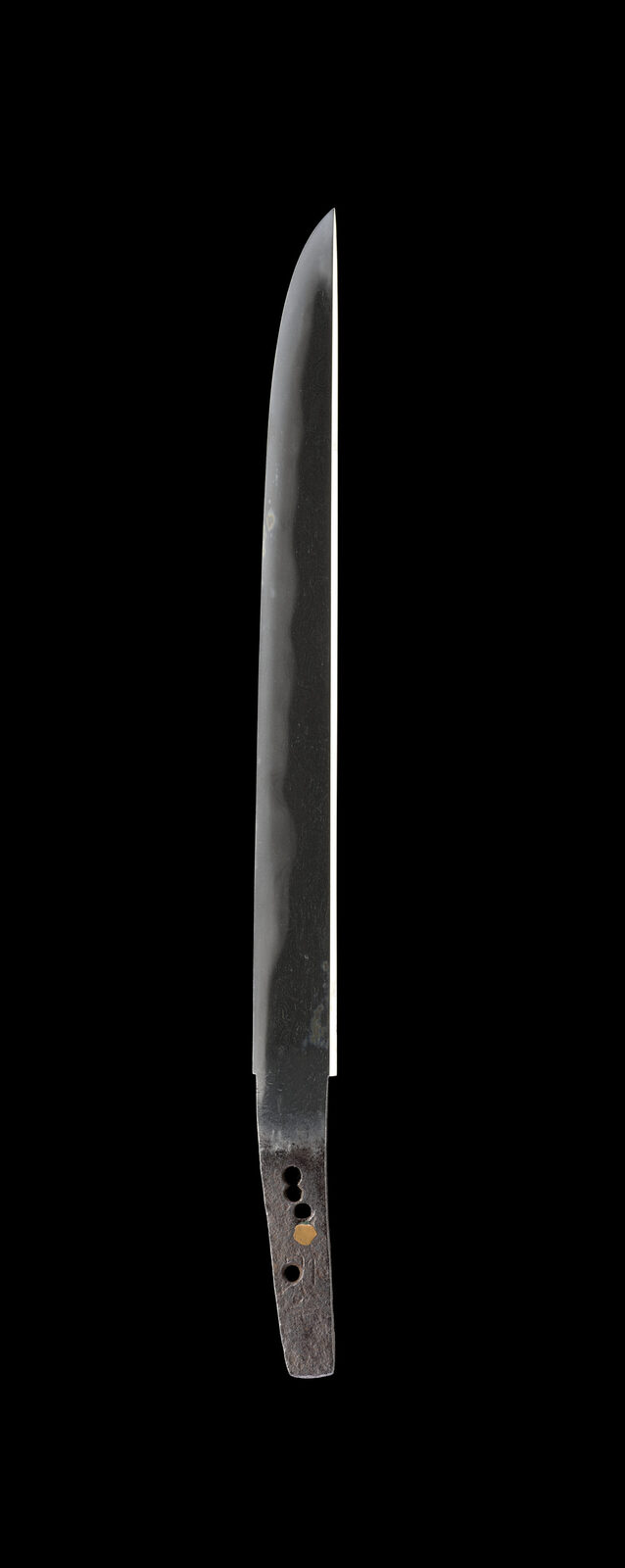
Tantō signed 則重 (Norishige), Kamakura period, 14th century. Kyoto National Museum. Kyoto National Museum, via ColBase · ColBase terms of use · source 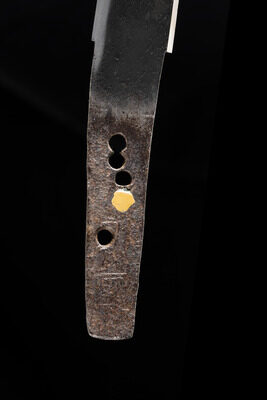
The nakago of the same tantō, with the two-character signature at the bottom. Kyoto National Museum, via ColBase · ColBase terms of use · source 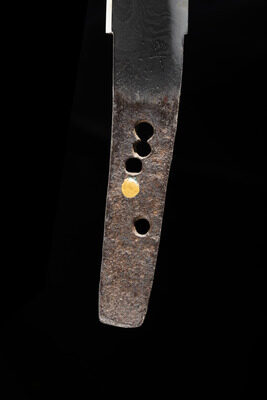
The nakago, from the other side. Kyoto National Museum, via ColBase · ColBase terms of use · source