On this page
Quick profile
- Name
- Norimitsu, of Osafune; on the katana of 1459 he signs with the title 左衛門尉 (Saemon-no-jō) and the surname 藤原 (Fujiwara) HD
- Kanji and reading
- 長船則光 (Osafune Norimitsu) · 則光 (Norimitsu) HD
- Period
- Mid and late Muromachi: the NBTHK places the peak of his work around the Kanshō era (1460–1466), with much work between the Eikyō and Bunmei eras (1429–1486). HD
- Province
- Bizen (備前, Bizen): Osafune HD
- School
- Osafune (長船派, Osafune-ha): Eikyō-Bizen, the step between Ōei-Bizen and Sue-Bizen, and Sue-Bizen AT
- Master
- The first of the name, a pupil of 長光 (Nagamitsu), according to the old catalogues AT
- Generations
- Nine, according to the old catalogues (銘鑑, meikan), without their names; the best documented, the one of the Kanshō era, called 寛正則光 (Kanshō Norimitsu) AT
- Documented fact and tradition
- Documented: the katana of 1459, with its signature, its client, its place and its date. From tradition: the nine generations and that the first was a pupil of Nagamitsu. HD
In short
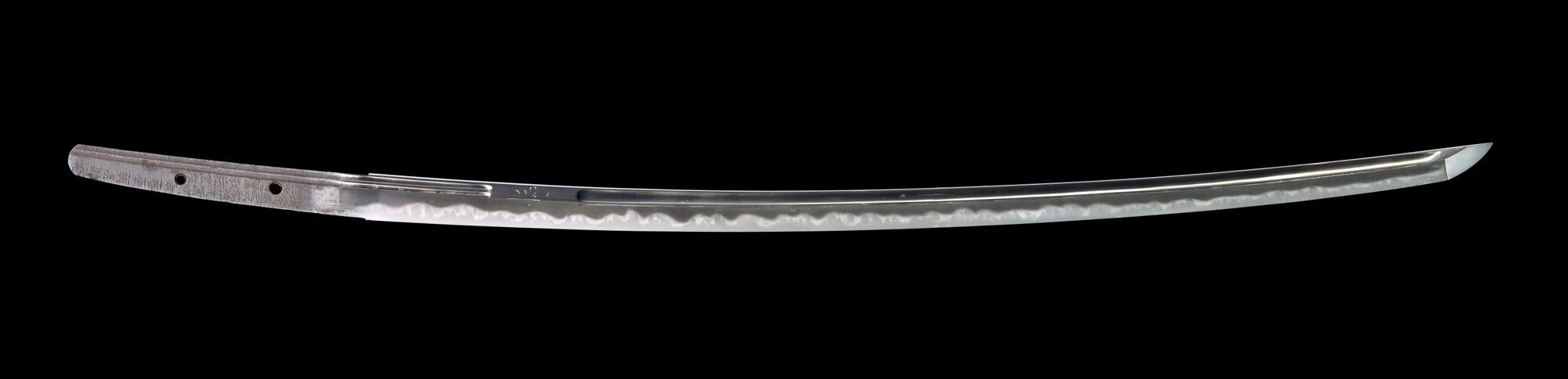
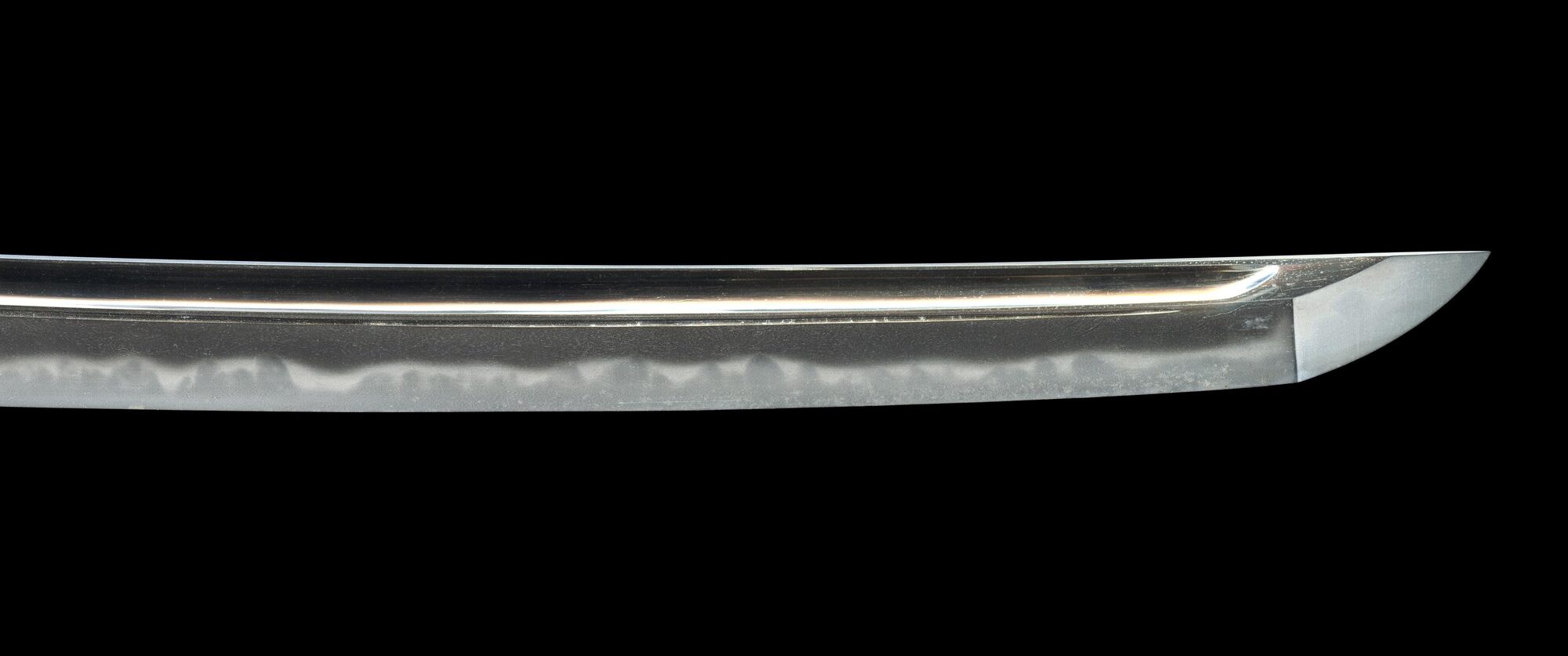
What we know. A Norimitsu of Osafune with the title of Saemon-no-jō forged at the end of 1459 (6 January 1460 in the Gregorian calendar) a katana for Takatori Taisuke, local lord of Takatori, in Mimasaka, and engraved all of it on the tang: it has been an Important Cultural Property since 1958. The NBTHK places the peak of Norimitsu’s work in the Kanshō era (1460–1466).
How we know it. From the blade itself, from its record in the database of the Agency for Cultural Affairs and in ColBase, and from the NBTHK. The generations come from the old catalogues, through the Japanese Wikipedia.
What we do not know. The dates of birth and death of any Norimitsu, the names of his nine generations and how many works by each survive.
Sections
-
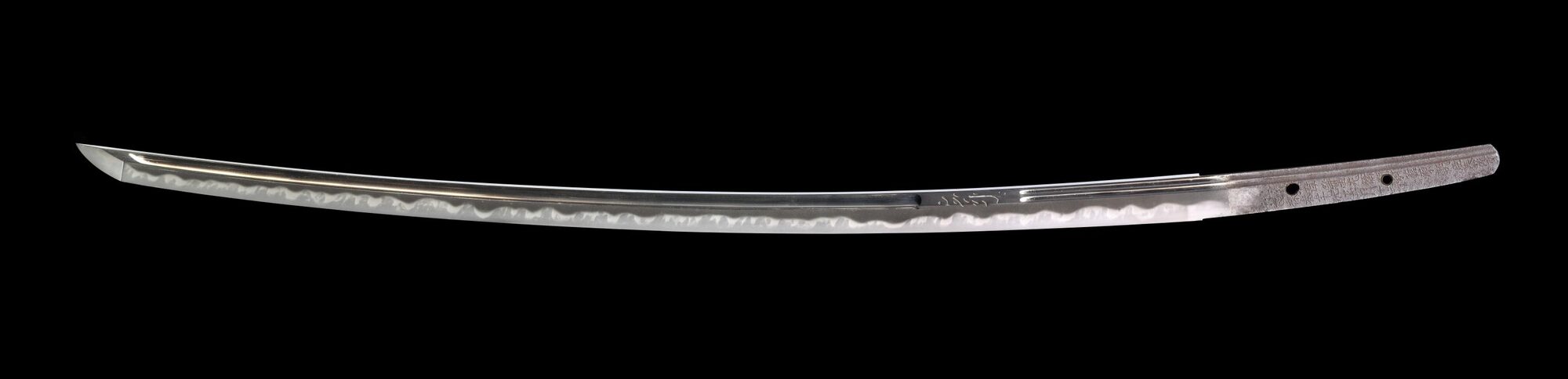 Eikyō · Kanshō · Bunmei
Life and times
The generations of the name, the Norimitsu of the Kanshō era and the Osafune school in the 15th century.
-
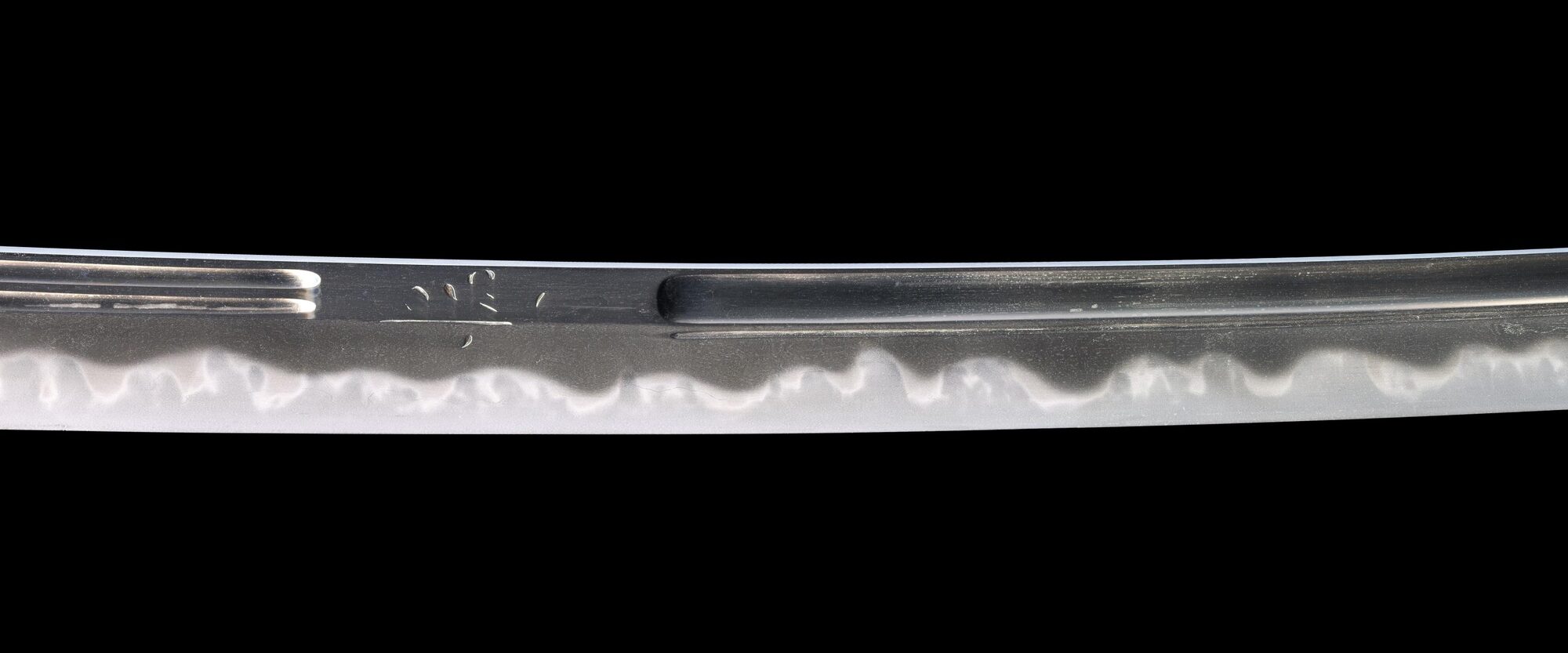 Eikyō-Bizen · gunome-midare
Work and style
Kantei keys to his work: the shape, the steel, the temper, the point and the signature.
-
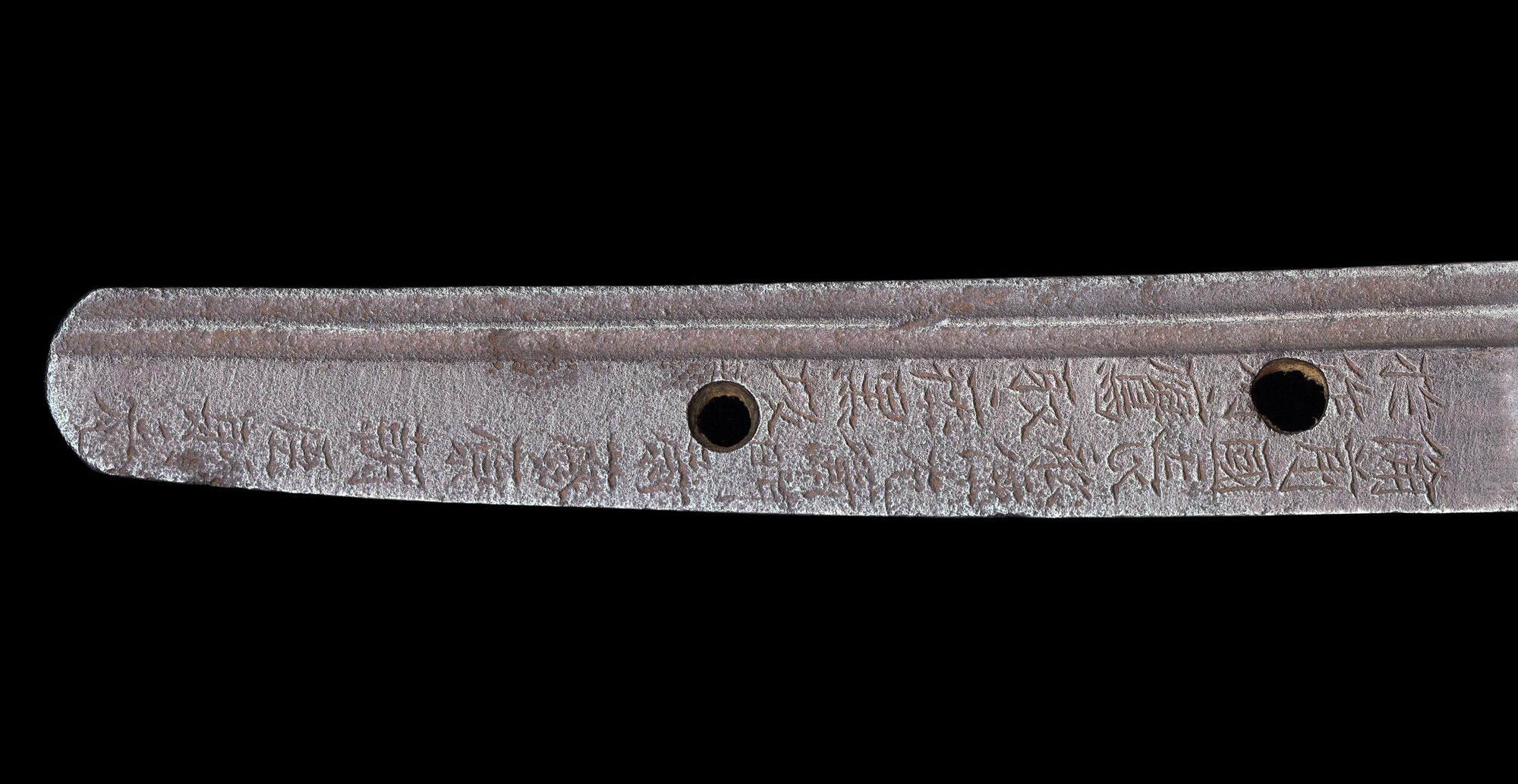 The Kurosaka katana (1459)
Famous works
His Important Cultural Property, its long inscription and his place in the old lists.
-
 Bibliography and credits
Sources
The sources consulted on 4 October 2026, with their link, and the credit for each image.