One name, several generations
- The old catalogues of swordsmiths (銘鑑, meikan) count nine Norimitsu, from a first who would have been a pupil of 長光 (Nagamitsu) to the ninth.
- The best documented is the one of the Kanshō era (1460–1466), the second on the list, who is called 寛正則光 (Kanshō Norimitsu).
- In Osafune, according to the Japanese Wikipedia, relatives and pupils worked under one name, in a kind of collective workshop.
- The dates of birth and death of none of them are known: their working years can only be deduced from the dated blades.
From Eikyō to Bunmei
- The NBTHK places the peak of Norimitsu’s work around the Kanshō era (1460–1466), with much work between the Eikyō and Bunmei eras (1429–1486).
- Markus Sesko places him, with 祐光 (Sukemitsu), 利光 (Toshimitsu), 賀光 (Yoshimitsu) and 久光 (Hisamitsu), among the representatives of Eikyō-Bizen (永享備前, Eikyō-Bizen), the step between Ōei-Bizen and Sue-Bizen, and also cites him among the swordsmiths of Sue-Bizen. The Japanese Wikipedia counts him in Sue-Bizen with Tadamitsu, Katsumitsu, Munemitsu, Sukesada and Kiyomitsu.
- From the Sengoku period on, the Osafune workshops also produced in series (数打, kazu-uchi). The village of Osafune was destroyed by the great flood of the Yoshii River of 1590 (Tenshō 18), according to a local chronicle, or of 1591, according to others: the Norimitsu discussed here came before it.
A forge far from home: Kurosaka, 1459
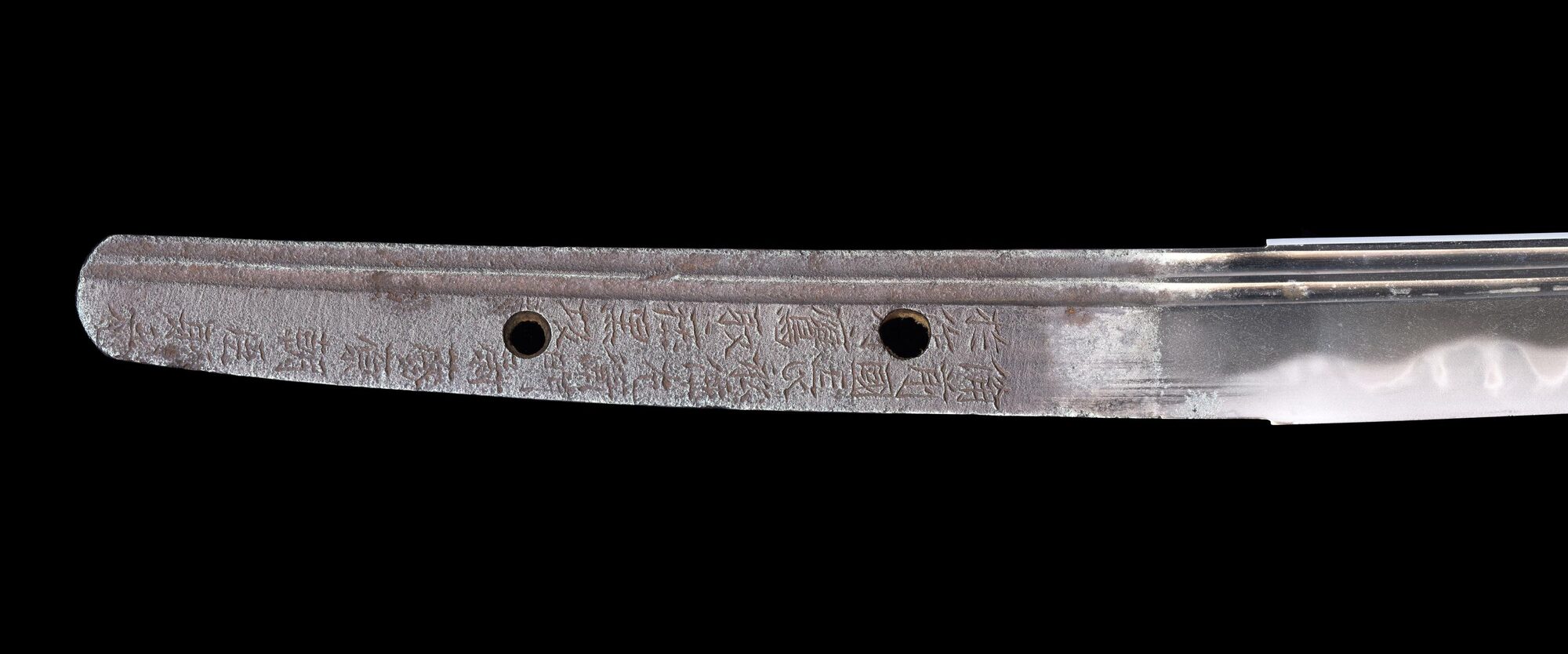
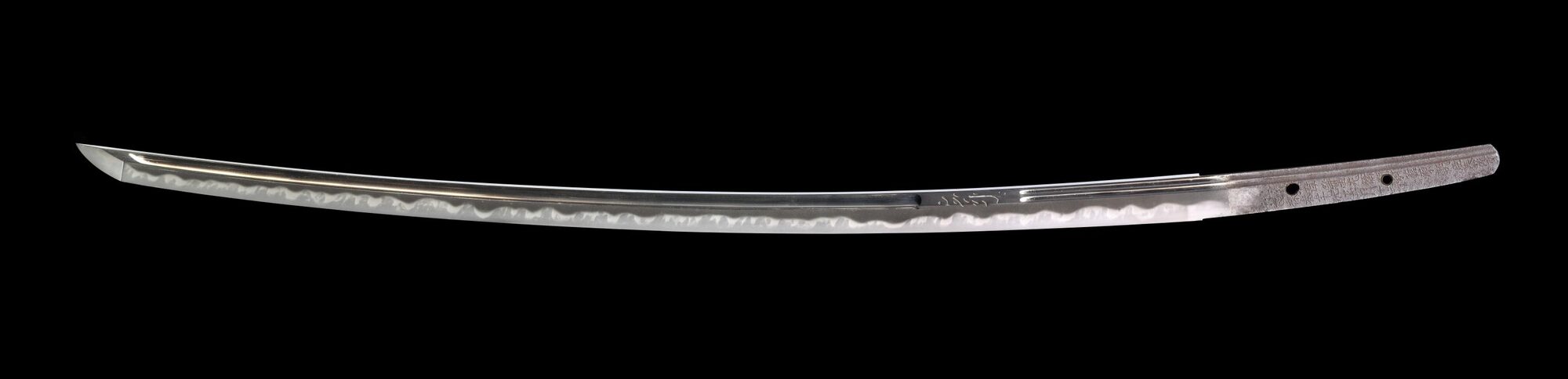
The tang of his best-known work says that Norimitsu, “resident of Osafune, in Bizen Province”, with the title of Saemon-no-jō and the surname Fujiwara, forged it at Kurosaka (黒坂, Kurosaka), in the estate of Takatori, Mimasaka Province, for the local lord Takatori Taisuke (鷹取泰佐, Takatori Taisuke), on the 13th day of the twelfth month of Chōroku 3 (長禄, Chōroku): the end of 1459, 6 January 1460 in the Gregorian calendar. Kurosaka is today in Shōō, in Katsuta District (Okayama). The lord had him come from Osafune.