Kantei keys
- Sugata
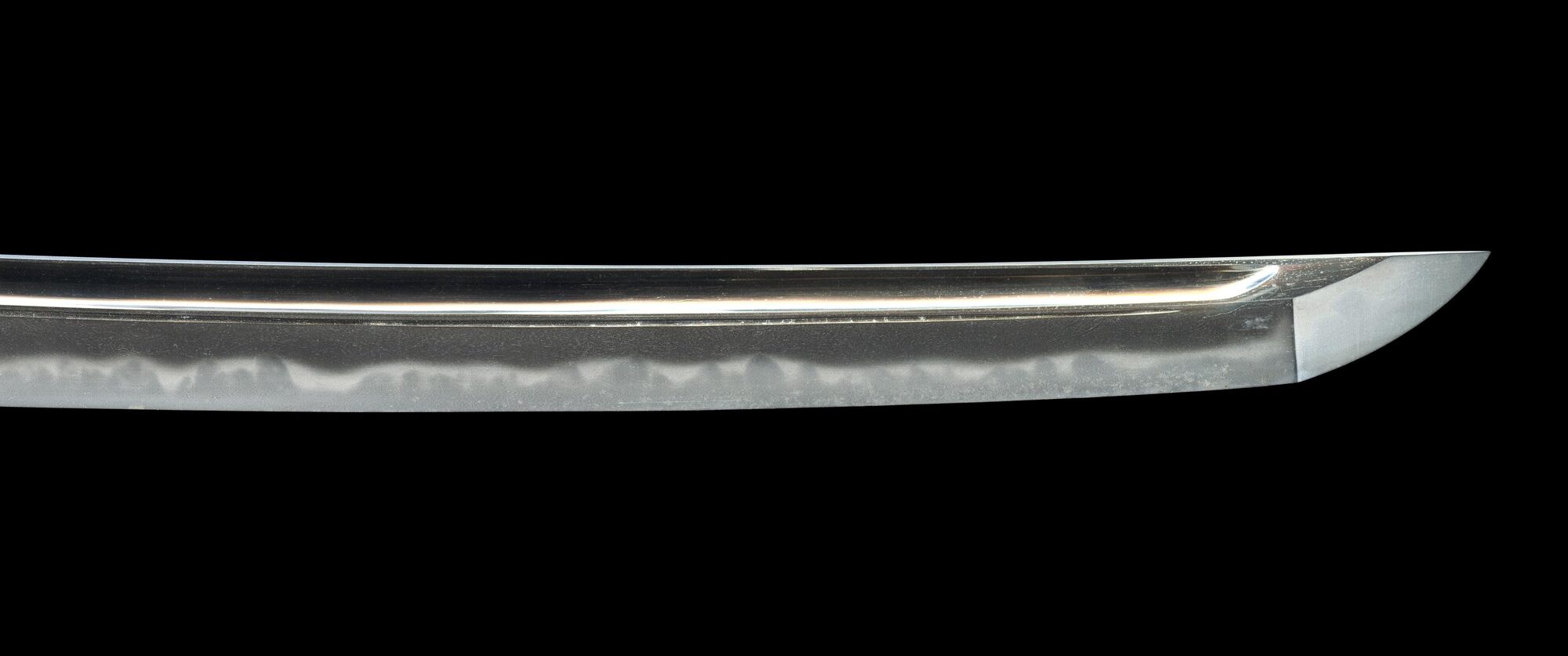
- Many short and narrow blades, with a difference in width between the base and the point, a somewhat small point and a small, elegant shape, according to the NBTHK. For Sesko, the shape of the mid-Muromachi period: shorter nagasa, more taper towards the point, thicker kasane and more sakizori, in the passage from tachi to katana. HD
- Jigane
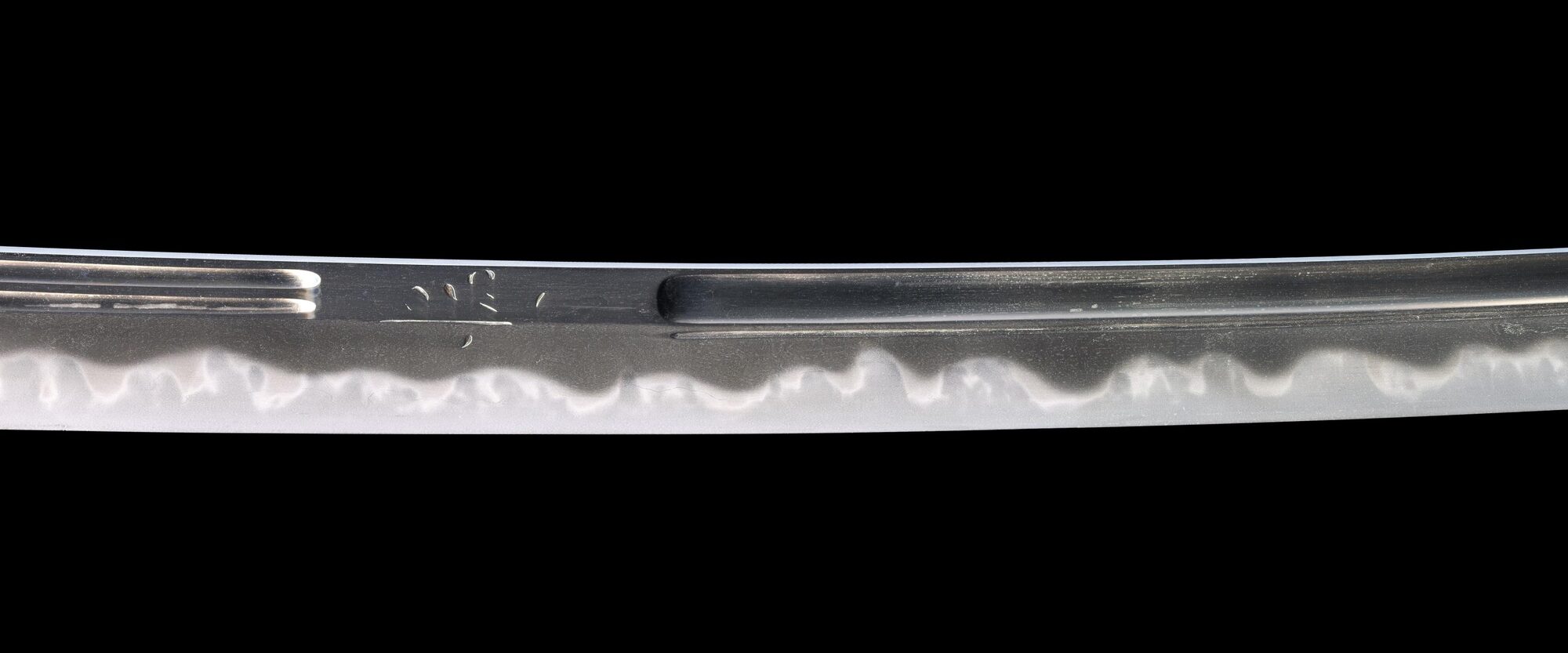
- Well-tightened ko-itame with fine ji-nie, in the katana of 1459 HD
- Hamon
- A small, narrow midare, with the peaks somewhat apart and some angular stretches, ko-ashi and yō, gentle in feel, according to the NBTHK. Sesko cites him among the Sue-Bizen swordsmiths with elements that open towards the base (腰の開いた, koshi no hiraita) and among those who temper nioi suguha. HD
- Bōshi
- Of a not very wide temper, according to the NBTHK; on the katana of 1459, midare-komi with a ko-maru turn-back. HD
- Nakago and mei
- On the katana of 1459, an unshortened tang (ubu), kurijiri tip, katte-sagari file marks and two holes, with a long inscription on both sides HD
The katana of 1459, piece by piece
- Shinogi-zukuri, iori-mune, a slight sakizori and a medium point (chū-kissaki); 68.1 cm long according to ColBase, with 1.9 or 2.0 cm of curvature. The Japanese Wikipedia gives it 68.2 cm, and Sesko 71.6 cm.
- A gunome-midare hamon with ko-notare, with a tight nioiguchi, with many ko-ashi and yō.
- A bōhi with soe-hi on both sides and, below, an engraved bonji and goma-bashi.
- The Japanese Wikipedia describes it as somewhat slender but of very good steel and very good temper, and as one of the most representative works of Sue-Bizen. ColBase highlights its clear steel and its showy hamon.
The change of the Eikyō era
According to Sesko, from the Eikyō era (1429–1441) the elements of the Ōei-Bizen gunome-midare become smaller and narrower, and the valleys drop towards the edge; the hamon tends to carry yō. That Eikyō-Bizen is the intermediate step towards Sue-Bizen, and Norimitsu one of its names.